

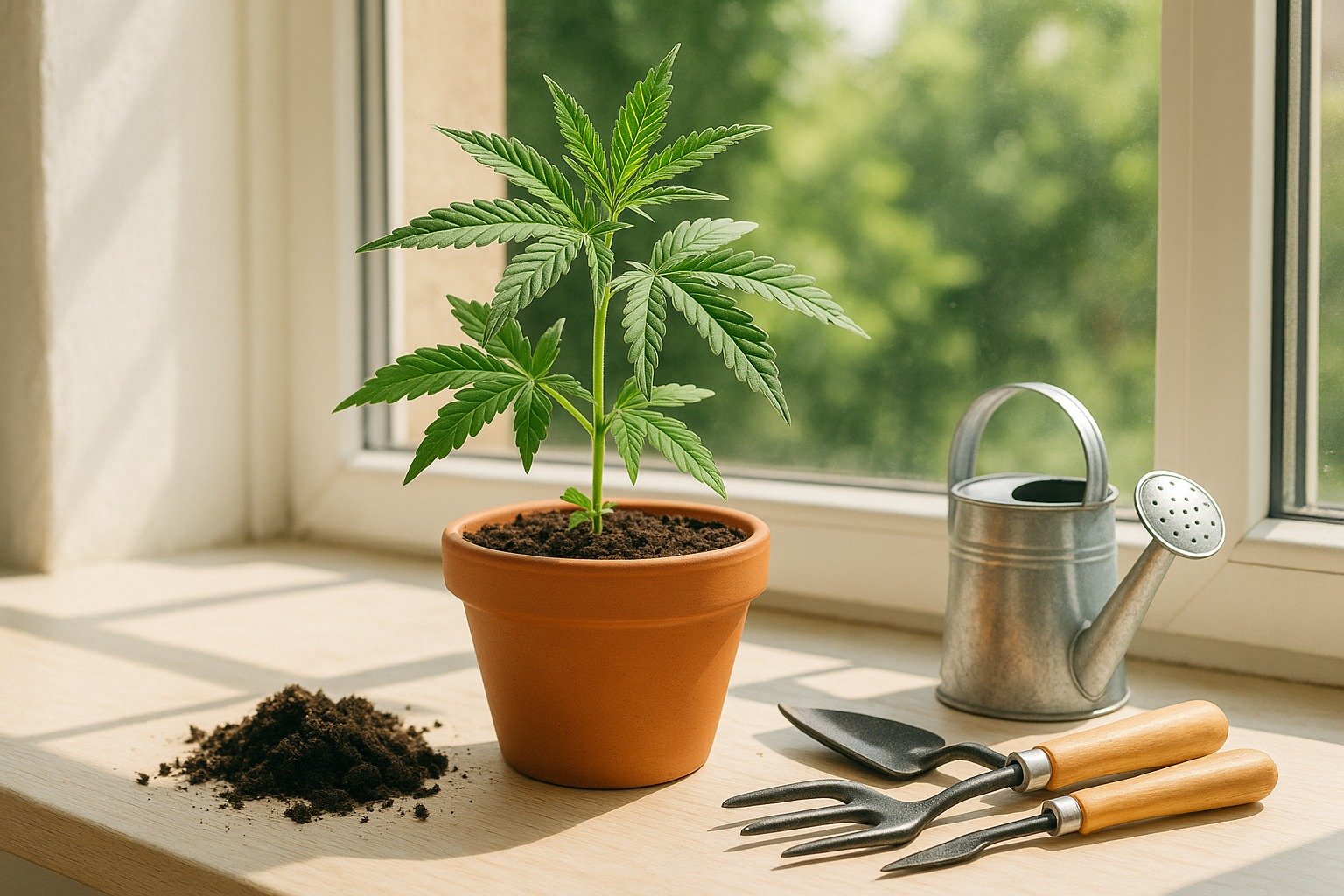
Homegrown weed simply means cannabis that you cultivate yourself at home rather than buying it from a dispensary. For many growers, it’s about saving money, knowing exactly what goes into their plants, and enjoying the satisfaction of producing a personal supply. Whether you want organic buds, unique strains, or just a deeper connection with your cannabis, home cultivation offers full control over quality and growing methods.
But before you start, it’s important to understand local laws, since regulations for homegrown cannabis differ widely by country and state. In this guide, we’ll cover what homegrown weed really means, why people choose it, how it compares to store-bought cannabis, and the essentials you’ll need to get started—so you can decide if growing your own is right for you.
Homegrown weed refers to cannabis cultivated personally at home instead of bought from a dispensary. It offers cost savings, quality control, and the satisfaction of growing your own plants. However, laws vary by region, so always check local regulations before starting a home cannabis grow.
What Does Homegrown Weed Mean?
Homegrown weed refers to cannabis that is cultivated personally at home instead of being purchased from a dispensary or dealer. It usually involves small-scale, non-commercial growing for personal use. For many, the term goes beyond just planting seeds—it represents self-sufficiency, quality control, and the freedom to choose how cannabis is cultivated.
Unlike large-scale commercial farms, homegrown cannabis is often grown in small batches, which allows growers to focus on specific strains, organic methods, and personal preferences in taste, aroma, and potency. Some growers prefer soil-based methods, while others experiment with hydroponics, but the core idea remains the same: cannabis grown by you, for you.
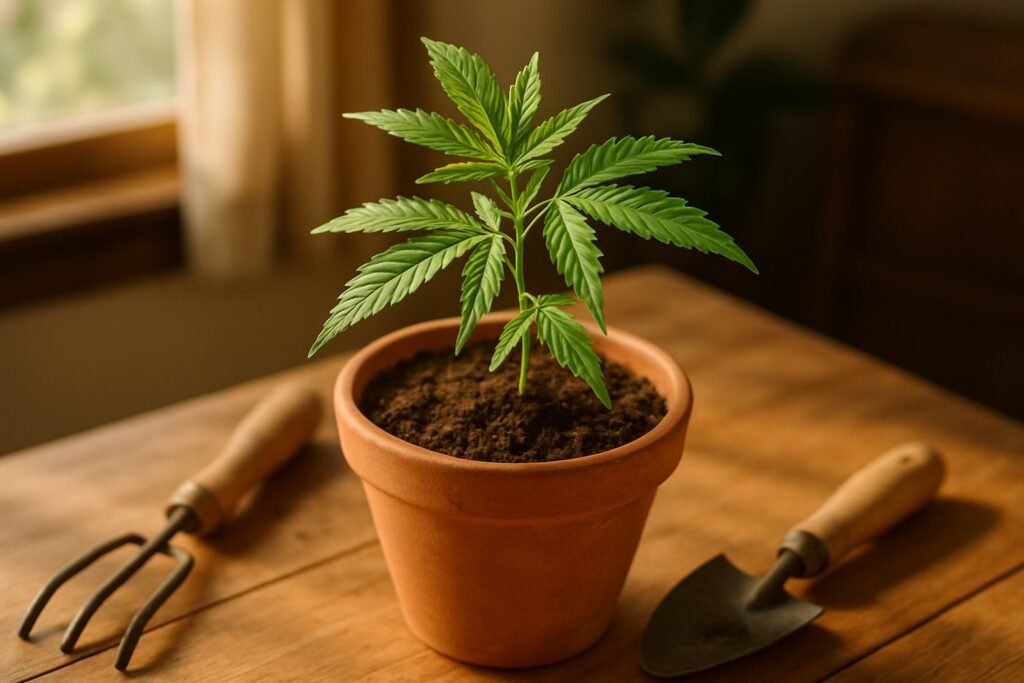
From a cultural standpoint, “homegrown weed” also carries connotations of authenticity. Many enthusiasts see it as fresher, more natural, and often more affordable than store-bought alternatives. However, it’s important to note that in many regions, cultivating cannabis at home may still be restricted or illegal—so always check local laws before starting.
Is Homegrown Weed Legal?
The legality of homegrown weed depends entirely on where you live. In some countries and U.S. states, adults are allowed to grow a limited number of cannabis plants for personal use. For example, states like California, Colorado, and Canada permit home cultivation under specific guidelines. In these regions, laws typically set plant limits (for example, 4–6 plants per household) and require that the grow remains private and not for sale.
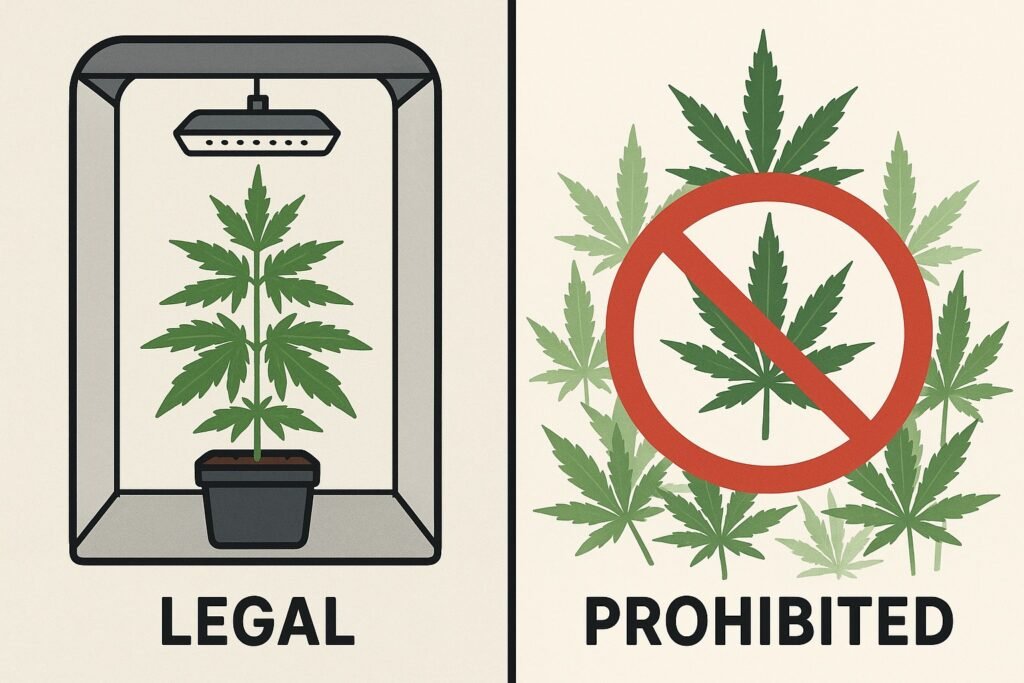
On the other hand, many places still consider cannabis cultivation—even for personal use—illegal. Growing without authorization can lead to fines, property confiscation, or even criminal charges. That’s why it’s essential to always check local cannabis laws before starting your homegrown journey.
Even where it is legal, restrictions may apply. Some regions allow outdoor growing, while others require cannabis to be grown indoors, away from public view. Rules may also cover age restrictions, licensing, and possession limits. Staying compliant with these regulations is the best way to enjoy homegrown weed without legal risk.
Why People Choose Homegrown Weed
Many cannabis enthusiasts prefer homegrown weed because it gives them complete control over the quality, process, and cost of their cannabis. Unlike store-bought cannabis, which can be expensive and sometimes inconsistent, cultivating your own ensures you know exactly how your plants were grown. This means you can choose organic methods, avoid harmful chemicals, and tailor your grow to your preferred flavor, potency, and aroma.
Another major reason people choose homegrown weed is cost savings. Once the initial setup is done—buying soil, lights, or a small grow tent—producing your own cannabis becomes much cheaper than purchasing it regularly from a dispensary. Over time, a home garden can supply enough buds to cover personal use, making it an affordable alternative.
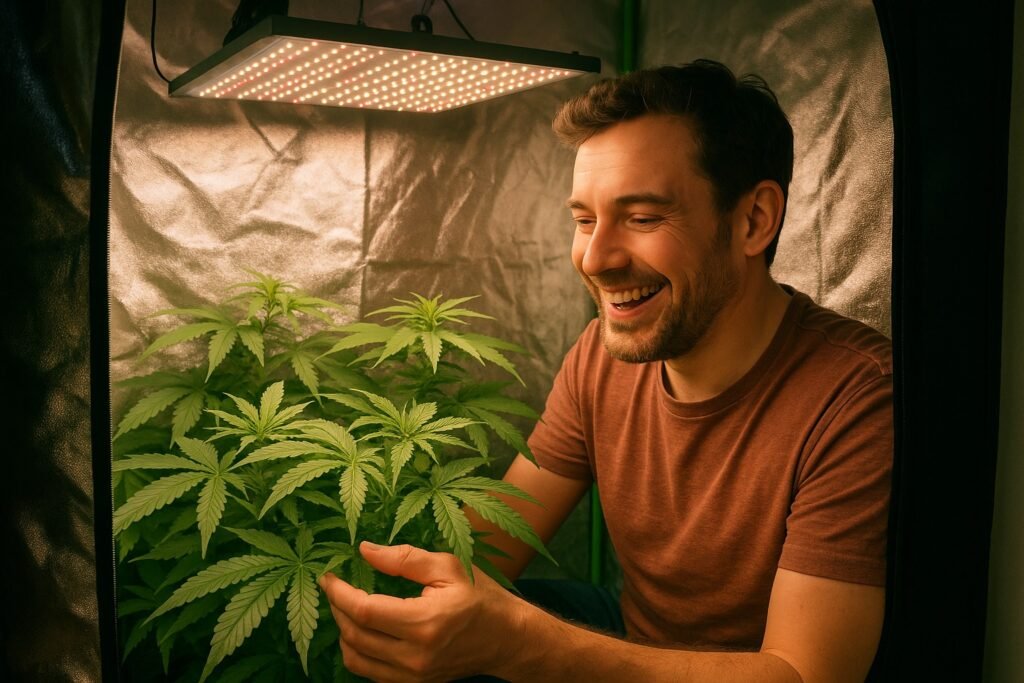
Homegrown weed is also about self-sufficiency and personal satisfaction. Growing cannabis is often seen as a rewarding hobby that teaches patience and responsibility. Many growers enjoy the process as much as the final product, seeing it as a connection to nature and their own wellness. For those who want rare or unique strains, growing at home opens the door to genetics not always found in local shops.
Homegrown Weed vs. Dispensary Cannabis
When comparing homegrown weed to dispensary cannabis, the biggest differences come down to quality, cost, and control. Dispensaries often provide professionally grown and lab-tested cannabis, which ensures consistency in potency and safety. However, this level of quality control usually comes with a higher price tag, making dispensary cannabis expensive for regular consumers.
On the other hand, homegrown weed gives growers the freedom to control every aspect of the process—from choosing strains and nutrients to deciding whether to grow organically. This means you can tailor the plant to your preferences in flavor, aroma, and effects. While it may not always have the same polished look or guaranteed THC levels as dispensary buds, homegrown cannabis often feels fresher and more authentic.
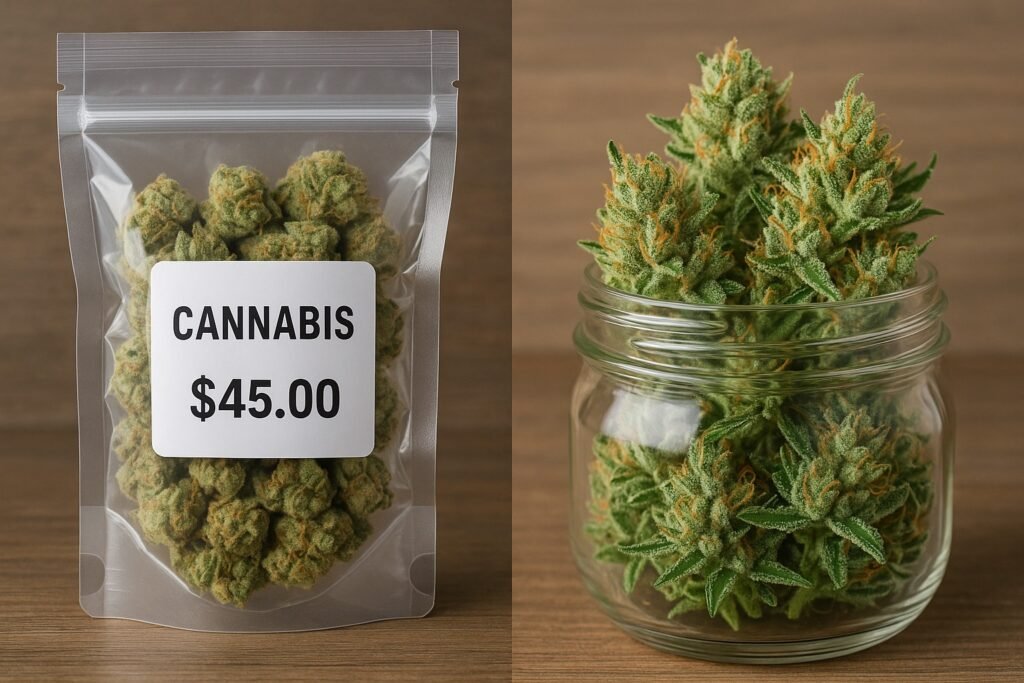
Another key factor is variety and availability. Dispensaries stock popular strains, but they may not always carry rare or unique genetics. Growing your own cannabis allows you to experiment with different seeds and cultivate strains that are harder to find in stores. For many enthusiasts, this makes homegrown weed not only cheaper but also more rewarding.
That said, dispensaries still provide value in terms of convenience and safety—especially for beginners who may not have the time, space, or knowledge to grow at home. Ultimately, choosing between homegrown weed and dispensary cannabis depends on your priorities: cost savings and personal satisfaction vs. tested quality and convenience.
How to Grow Weed at Home (Indoor vs. Outdoor Basics)
Growing weed at home can be done in two main ways: indoors or outdoors. Each method has its own benefits, challenges, and setup requirements. Choosing the right one depends on your space, budget, and climate.
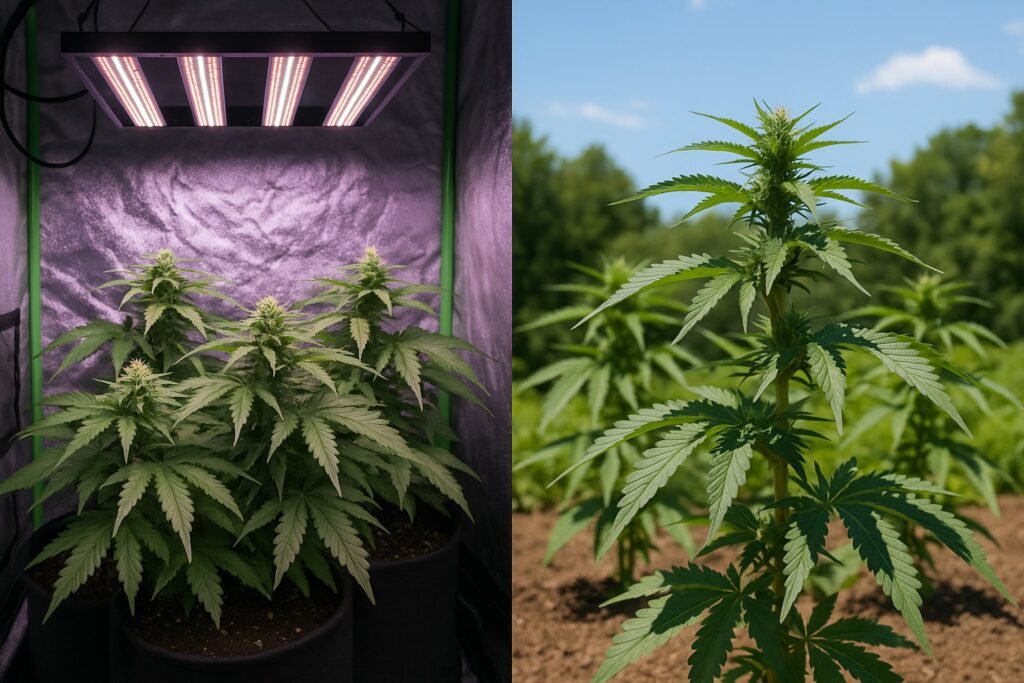
Indoor Growing Basics
Indoor growing gives you full control over the environment—light, temperature, humidity, and airflow. A common setup includes a grow tent, LED grow lights, ventilation fans, and carbon filters to manage odor. Indoor cultivation allows year-round growing and protection from pests, but it requires a higher upfront investment in equipment and electricity costs.
- Pros: Consistent results, year-round harvests, control over conditions.
- Cons: Expensive setup, higher energy use, limited space.
Outdoor Growing Basics
Outdoor growing relies on natural sunlight and soil, making it more affordable and eco-friendly. A good outdoor spot should provide at least 6–8 hours of direct sunlight daily, rich soil, and protection from pests or prying eyes. While outdoor cannabis often grows larger and more robust, harvests depend heavily on climate and season.
- Pros: Low cost, large plants, natural growth.
- Cons: Dependent on weather, risk of pests, limited growing season.
Which Method Is Right for You?
If you live in a colder climate or want to grow discreetly, indoor setups may be the best option. If you’re in a sunny region with a private yard or garden, outdoor growing can save money and produce impressive yields. Many growers even combine both methods—starting seedlings indoors and moving them outside when the weather is right.
Essential Supplies for Homegrown Weed
To start a successful home cannabis garden, you’ll need some basic supplies. Having the right tools not only improves plant health but also ensures better yields and quality. Here are the essentials every beginner grower should consider:
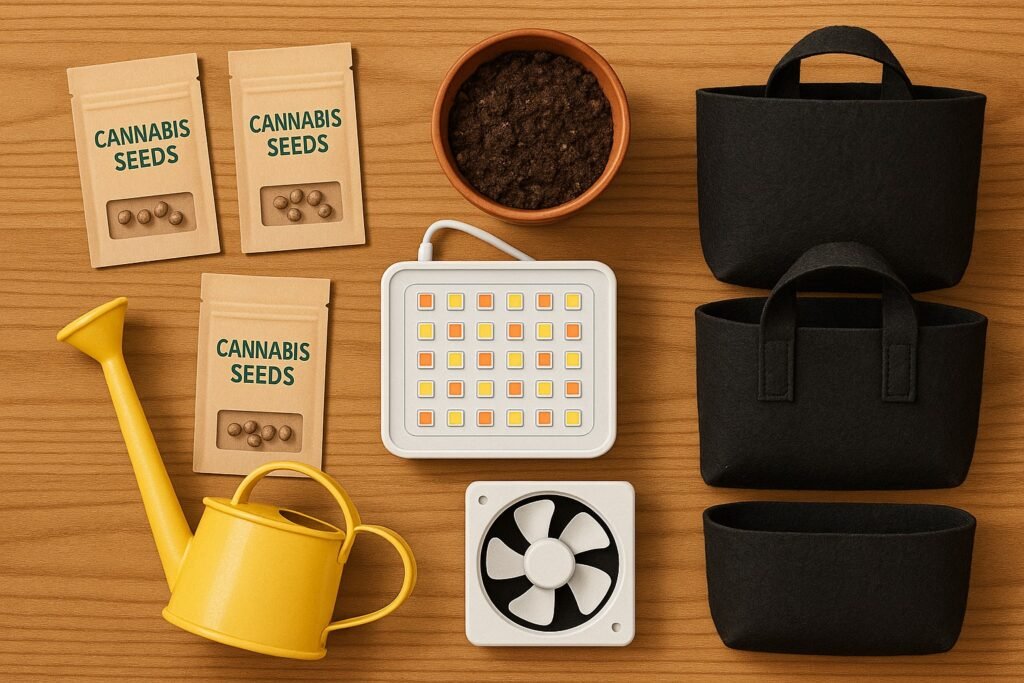
1. Cannabis Seeds or Clones
The first step is choosing between seeds and clones. Seeds allow access to a wide variety of strains, including feminized and autoflowering types that make growing easier. Clones, on the other hand, are cuttings from a mature plant, giving you a genetic head start with guaranteed results.
2. Soil and Nutrients
Healthy cannabis starts with a strong growing medium. Many beginners use organic soil enriched with compost or “super soil,” which already contains nutrients. Others prefer hydroponics, where plants grow in water with nutrient solutions. Whichever method you choose, make sure your plants get the right balance of nitrogen, phosphorus, and potassium (NPK) during each growth stage.
3. Grow Lights (for Indoor Setups)
Since indoor plants don’t have access to natural sunlight, LED or HID grow lights are essential. LEDs are energy-efficient and cooler, making them ideal for beginners. Proper light cycles (18 hours for vegetative stage, 12 hours for flowering) are critical for healthy growth.
4. Ventilation and Humidity Control
Good airflow prevents mold, pests, and stagnant air. A basic setup includes inline fans, oscillating fans, and carbon filters to manage odor. Humidifiers or dehumidifiers may also be needed depending on your climate.
5. Containers and Watering Tools
Use breathable containers like fabric pots to promote healthy root development. A pH meter is also recommended since cannabis thrives when water pH stays between 6.0–7.0 in soil. Overwatering is a common beginner mistake, so simple watering cans or drip irrigation systems can help regulate moisture.
Common Mistakes Beginners Make
Even with the right setup, many first-time growers run into problems when cultivating homegrown weed. Avoiding these mistakes can make the difference between a healthy harvest and a disappointing one.
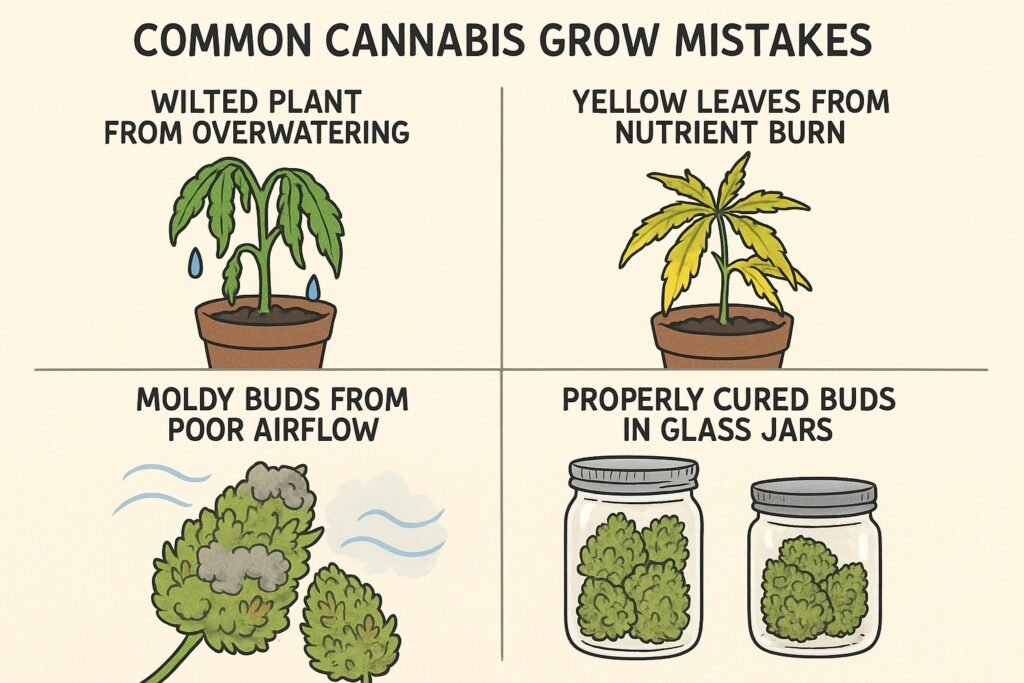
1. Overwatering or Overfeeding
New growers often assume that more water and nutrients equal faster growth. In reality, cannabis roots need oxygen as much as water. Overwatering leads to root rot, while overfeeding can cause nutrient burn, leaving leaves yellow or crispy.
2. Ignoring pH Levels
Cannabis plants are sensitive to water and soil pH. If the pH is too high or too low, plants can’t absorb nutrients properly, leading to deficiencies. Keeping pH around 6.0–7.0 in soil or 5.5–6.5 in hydroponics is essential.
3. Poor Light Management
Light cycles directly control how cannabis grows. Beginners sometimes use weak bulbs or leave plants under light 24/7. For best results, use proper grow lights and follow recommended schedules—18 hours on / 6 off for vegetative growth and 12/12 for flowering.
4. Lack of Airflow and Humidity Control
Without proper ventilation, cannabis plants are prone to mold, mildew, and pests. Stagnant air creates hotspots that weaken growth. Simple fans, filters, and humidity control tools can prevent these issues.
5. Rushing the Drying and Curing Process
Many beginners get excited and smoke their buds too early. Skipping or rushing the drying and curing stage reduces potency, flavor, and smoothness. Proper curing in airtight jars for at least 2–4 weeks ensures top-quality buds.
The Pros & Cons of Growing Weed at Home
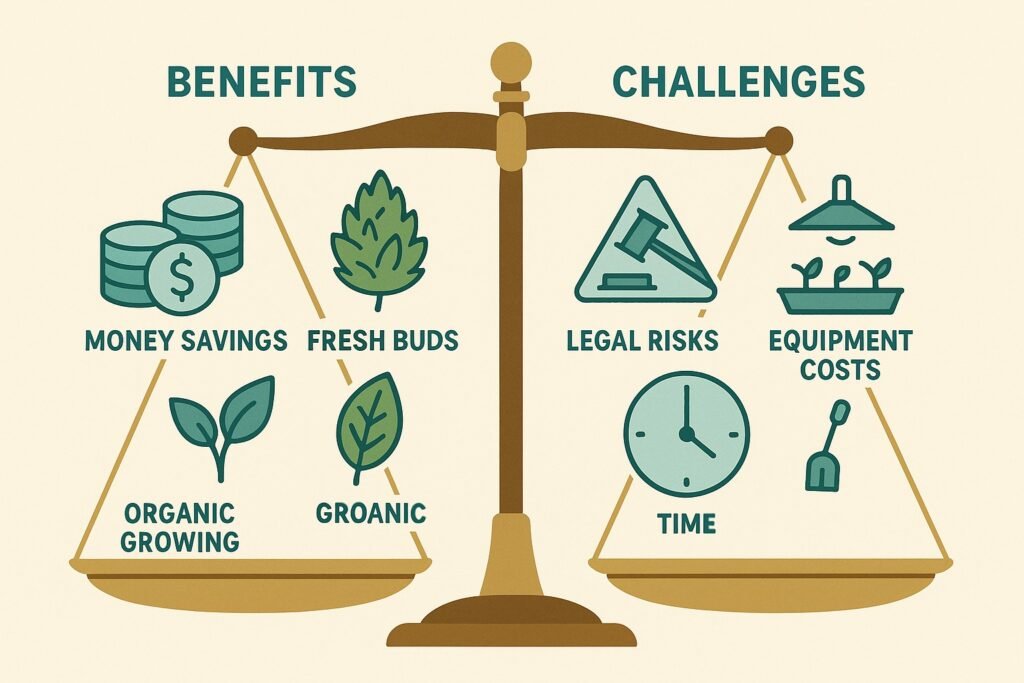
Deciding whether to grow your own cannabis depends on your personal goals, space, and resources. Like any hobby, homegrown weed comes with both advantages and challenges.
Pros of Growing Weed at Home
- Cost Savings – After the initial setup, producing cannabis at home is often cheaper than buying from dispensaries. A single plant can yield enough to cover months of personal use.
- Quality Control – You decide what goes into your plants. From organic soil to pesticide-free methods, home growers can ensure clean, chemical-free buds.
- Strain Variety & Customization – Growing at home allows you to experiment with rare strains not available locally and tailor THC or CBD levels to your preference.
- Personal Satisfaction – For many, cultivating cannabis is a rewarding hobby. Watching your plants grow from seed to harvest provides a sense of pride and connection.
Cons of Growing Weed at Home
- Legal Risks – In many regions, home cultivation is still illegal or heavily restricted. Breaking laws can result in fines or penalties.
- Time & Effort – Cannabis growing requires patience, daily care, and attention to detail. It isn’t a “set and forget” process.
- Upfront Costs – Equipment like grow tents, lights, and ventilation can be expensive, especially for indoor grows.
- Risk of Mistakes – Beginners often face issues like nutrient burn, mold, or weak yields if conditions aren’t right.
Final Thoughts: Is Homegrown Weed Right for You?
Homegrown weed isn’t for everyone, but for many cannabis enthusiasts it offers freedom, savings, and a deeper connection to the plant. If you value quality control, affordability, and the satisfaction of cultivating your own cannabis, growing at home can be a rewarding experience.
That said, successful cultivation requires time, patience, and responsibility. From learning about soil and nutrients to managing light cycles and curing your harvest, it takes consistent effort to achieve good results. For beginners, starting with just a few plants can make the process less overwhelming.
The most important factor is legality. Always check local cannabis laws before planting. In regions where home cultivation is legal, even a small setup can supply you with fresh, chemical-free buds. But in areas where it remains restricted, dispensary cannabis may be the safer option.
👉 If you’re ready to take the next step, check out our detailed guides on how to Grow Weed Outdoors and how to Grow Weed Indoors. These step-by-step resources dive deeper into setup, equipment, and seasonal tips so you can master cannabis cultivation in any environment.
FAQs
Homegrown weed is cannabis you cultivate yourself at home for personal use instead of buying from a dispensary. It emphasizes control over quality, cost, and growing methods.
It depends on your location. Some regions allow limited home cultivation with plant caps and privacy rules; others prohibit it. Always check local laws before you start.
Plant limits vary by region (often 2–6 plants for personal use). Verify your local/state/provincial rules, including indoor vs. outdoor restrictions.
After initial setup (lights, soil, ventilation), homegrown can be significantly cheaper per gram and offers fresher buds tailored to your preferences.
Beginners typically need seeds or clones, quality soil or super soil, nutrients, pots, pH meter, and—if growing indoors—a small grow tent, LED light, fans, and a carbon filter.
Indoors = full environmental control and year-round grows; outdoors = lower cost and bigger plants but weather/pest exposure. Choose based on climate, space, and privacy.
Overwatering, nutrient burn, ignoring pH, weak lighting, poor airflow, and rushing drying/curing. Mastering these basics dramatically improves yield and quality.
Most photoperiod grows take 3–5 months from seed to cured bud. Autoflowers can finish faster (8–12 weeks), but timelines vary by strain and environment.
Seeds offer more strain variety (including feminized/autos) and strong taproots. Clones are genetic copies that skip germination and can finish faster if healthy.
Use a sealed tent plus inline fan and activated carbon filter. Maintain negative pressure, good ducting, and regular filter changes.
Dry in a dark room with gentle airflow ~7–10 days, then cure in airtight jars 2–4+ weeks, burping early on to manage humidity for optimal flavor and potency.
Yes—if you dial in genetics, environment, nutrients, and curing. Lab testing ensures labeled potency at dispensaries, while home growers control inputs and freshness.
