Growing Weed with LED Lights: The Ultimate Guide to Higher Yields and Lower Costs


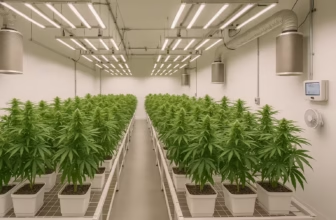
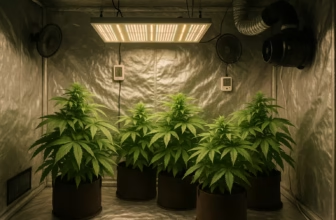
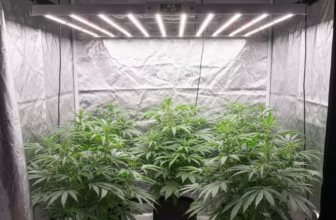
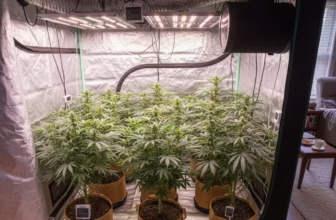
If you’ve been growing weed for a while, you’ve probably noticed how much the game has changed in the last few years — and LED grow lights are leading that revolution. Once seen as a gimmick, today’s full-spectrum LEDs deliver the perfect balance of blue, red, and white light that cannabis plants need from seedling to harvest. Whether you’re a small home grower working out of a tent or running a full indoor setup, LEDs are now the go-to choice for energy-efficient cannabis cultivation.
Unlike old-school HID or HPS lamps that blast heat and rack up your electric bill, modern LED grow lights stay cool, last for years, and mimic the natural sunlight spectrum that cannabis thrives under. You’ll get tighter buds, better resin production, and more consistent results — without turning your grow room into a sauna.
With LEDs, you can fine-tune light intensity, PAR levels, and coverage area to suit each strain’s needs. That means denser flowers, higher THC levels, and healthier plants with less stress and fewer light burns. The days of bulky ballasts and constant bulb replacements are fading fast — LEDs are the future of cannabis growing.
Whether you’re chasing big yields or clean, flavorful buds, understanding how to grow weed with LED lights can transform your harvests. This guide will walk you through everything — from lighting spectrum and wattage per plant to setup tips, mistakes to avoid, and the best LEDs for your grow room.
Growing weed with LED lights is one of the most efficient ways to produce healthy, high-yield cannabis indoors. Full-spectrum LEDs provide the ideal balance of blue and red wavelengths for every growth stage, use less electricity, generate less heat, and help maximize trichome production. Proper setup involves choosing the right wattage, adjusting light distance, and maintaining consistent light cycles for best results.
💡 How LED Grow Lights Work for Weed
To grow killer buds indoors, your plants need more than just water and nutrients — light is their fuel. And this is where LED grow lights completely change the game. Unlike traditional HPS (High-Pressure Sodium) or MH (Metal Halide) bulbs that waste tons of energy as heat, LEDs convert almost every watt into usable Photosynthetically Active Radiation (PAR) — the exact spectrum of light your cannabis plants use to photosynthesize and grow dense, resin-rich flowers.
Each LED chip emits a specific wavelength, and when combined, they create a full-spectrum light that mimics natural sunlight. Blue wavelengths (around 400–500 nm) drive strong vegetative growth, while red wavelengths (620–700 nm) boost flowering and bud development. Some advanced grow lights even add UV and IR diodes to increase trichome production and terpene intensity — a must for growers chasing quality over quantity.
The key to LED performance is PPFD (Photosynthetic Photon Flux Density) — it measures how much light actually reaches your canopy. A higher PPFD means your plants are getting more usable light, but it’s all about balance. Too much intensity can cause light burn or bleaching, while too little leads to stretchy, weak plants. That’s why top growers use adjustable LED fixtures or dimmable drivers to fine-tune light levels for each growth stage.
Another major win with LEDs is efficiency and control. You can run a 300W LED that performs like a 600W HPS while producing minimal heat — no need for massive ventilation systems or extra AC. LEDs keep your grow tent temperature stable, which helps maintain optimal humidity and VPD (Vapor Pressure Deficit) levels for explosive growth.
In short, LED grow lights work by giving your cannabis plants the exact light spectrum and intensity they crave — all while using less power, producing less heat, and delivering more control over your grow environment. Once you switch, you’ll never look back.
🌞 Benefits of Growing Weed with LED Lights
When you switch to LED grow lights, you’re not just changing your gear — you’re upgrading your entire grow game. LEDs have transformed indoor cannabis cultivation by giving growers more control, less heat, and higher efficiency than ever before. Let’s break down why every serious grower is ditching those old HPS lamps for full-spectrum LED power.
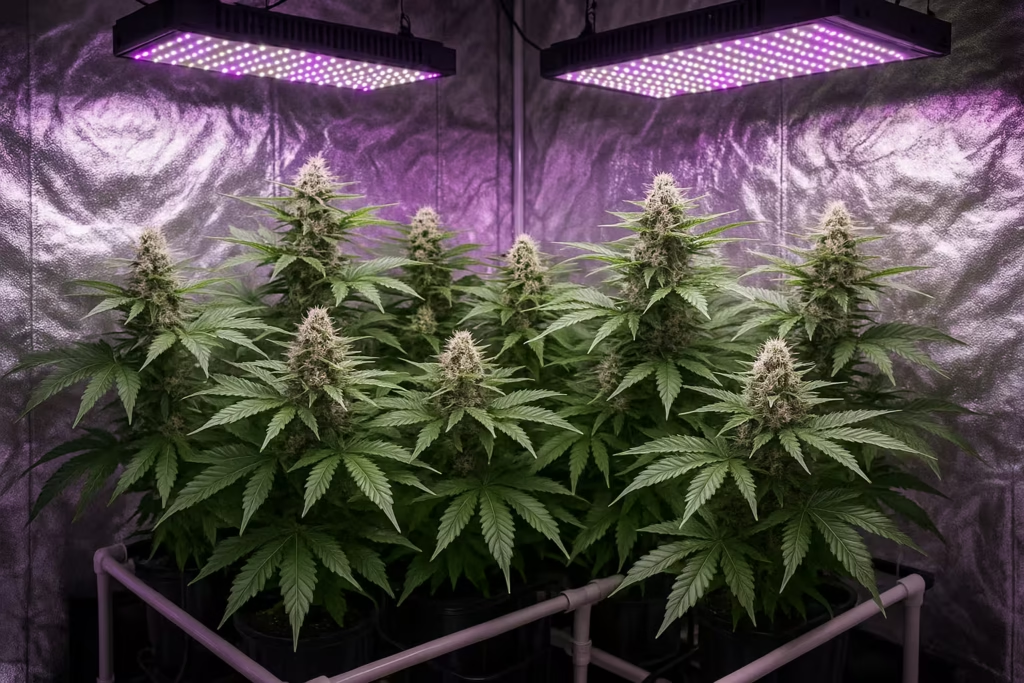
💡 1. Energy Efficiency and Cost Savings
LEDs run cooler and consume far less electricity than HPS or MH lights. That means lower energy bills and less strain on your ventilation setup. A quality 300W LED can outperform a 600W HID — and last up to 50,000 hours without losing intensity. More light for less power equals more profit per harvest.
🌿 2. Better Spectrum Control = Healthier Plants
Full-spectrum LED grow lights give your cannabis plants the exact wavelengths they need throughout their life cycle — blue light for strong veg growth, red for dense, sticky flowers, and sometimes UV + IR for extra resin and terpene boost. This balance helps prevent stretching, encourages tighter nodes, and enhances overall cannabinoid production.
🌡️ 3. Low Heat Output for Cooler Grow Rooms
If you’ve ever battled high temps in a grow tent, you’ll love LEDs. These lights emit minimal radiant heat, allowing you to place them closer to your canopy without burning the leaves. Cooler temps mean less stress on your plants, more stable humidity, and an easier time managing VPD (Vapor Pressure Deficit) — all key to maximizing yield and quality.
⚙️ 4. Longevity and Reliability
Forget bulb changes every grow cycle — LEDs are built to last. Most high-quality grow lights run for years without dimming, keeping your grow consistent and your setup hassle-free. The long lifespan also reduces waste, which makes LEDs a sustainable choice for eco-conscious growers.
🌸 5. Improved Yields and Resin Density
When dialed in right, LED-grown cannabis produces dense, frosty buds packed with flavor and potency. Because LEDs deliver more focused light across the canopy, even lower branches get proper coverage. That means bigger yields, stronger aromas, and better trichome development.
⚖️ LED vs HID vs CFL: Which Light Is Best for Cannabis?
Every grower has asked this question at some point: “Which lights should I use — LED, HID, or CFL?”
The truth is, each lighting type can grow weed — but the results, costs, and efficiency tell very different stories. Let’s break it down grower-to-grower, so you can pick what fits your space, budget, and goals.
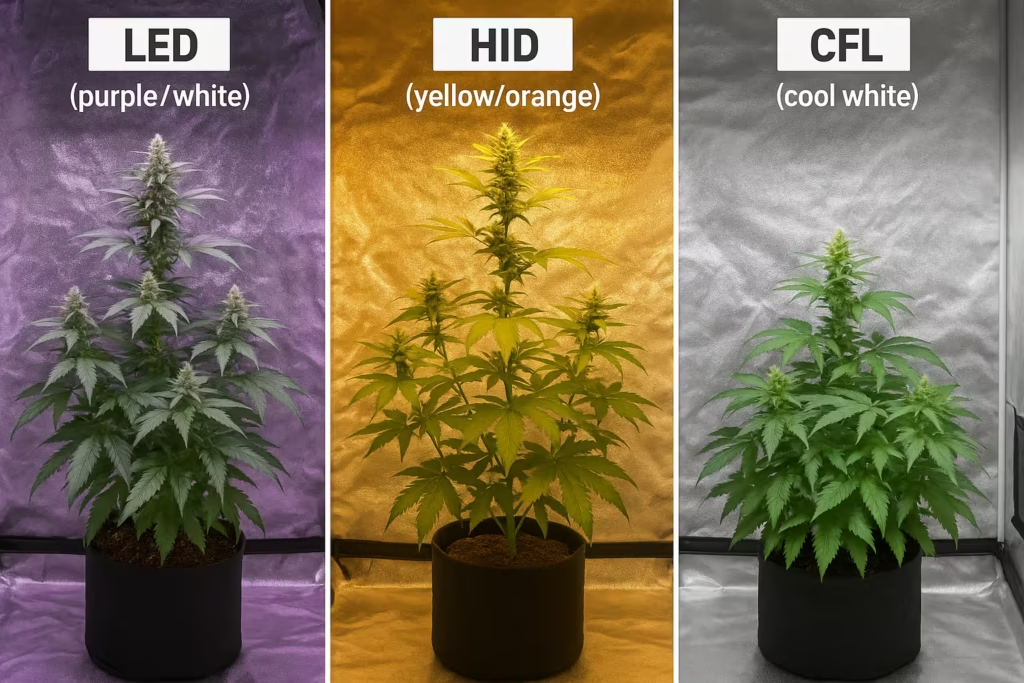
💡 LED (Light-Emitting Diodes) – The Future of Cannabis Growing
LEDs are the modern choice for indoor growers — they’re cooler, more efficient, and full-spectrum. Instead of wasting energy as heat, LEDs push almost every watt into usable PAR light, giving you dense buds and rich trichomes. Top-shelf LEDs like Spider Farmer, Mars Hydro, and ViparSpectra let you fine-tune PPFD levels and adjust light spectrums to match every growth phase — veg, flower, and even finishing. Sure, they cost more upfront, but they pay themselves off through energy savings, longer lifespan, and top-shelf harvests.
Best for: Growers who want high efficiency, cooler temps, and premium bud quality.
🔥 HID (High-Intensity Discharge) – The Old-School Powerhouse
HID lights — including HPS (High-Pressure Sodium) and MH (Metal Halide) — were once the gold standard for indoor weed. They deliver strong intensity and deep canopy penetration, especially during the flowering stage. But here’s the catch: they get hot — really hot. You’ll need extra fans, ducting, and sometimes even an AC just to keep your tent cool. They also consume more power, and bulbs need replacing every few grows. Still, for growers chasing huge yields and raw intensity, HID lights remain a classic choice.
Best for: Experienced growers who want big yields and don’t mind managing heat or power costs.
💡 CFL (Compact Fluorescent Lights) – The Beginner’s Option
CFLs are the small spiral bulbs you’ve probably seen at home — and yes, they can grow weed too. They’re cheap, easy to set up, and perfect for micro-grows or seedling stages. But when it comes to flowering and dense buds, they fall short. CFLs just don’t have the penetration or intensity needed for big harvests.
Best for: Beginners, small grows, or clones — not ideal for full cycles.
🌿 Comparison
| Feature | LED | HID (HPS/MH) | CFL |
|---|---|---|---|
| Efficiency | ⭐⭐⭐⭐ | ⭐⭐ | ⭐⭐⭐ |
| Heat Output | 🔥 Low | 🔥🔥🔥 High | 🔥 Low |
| Spectrum Control | Full-spectrum adjustable | Fixed | Limited |
| Setup Cost | Medium-High | Medium | Low |
| Yield Potential | High | Very High | Low |
| Best For | All stages (veg + flower) | Flowering power | Seedlings / small grows |
🌈 Best LED Spectrum for Each Cannabis Growth Stage
Every stage of your cannabis plant’s life has different light needs. That’s where full-spectrum LED grow lights really shine — literally. Unlike HPS or fluorescent setups that give you a single light temperature, modern LEDs can mimic the entire sunlight spectrum, giving your plants the exact wavelengths they need from seedling to harvest.
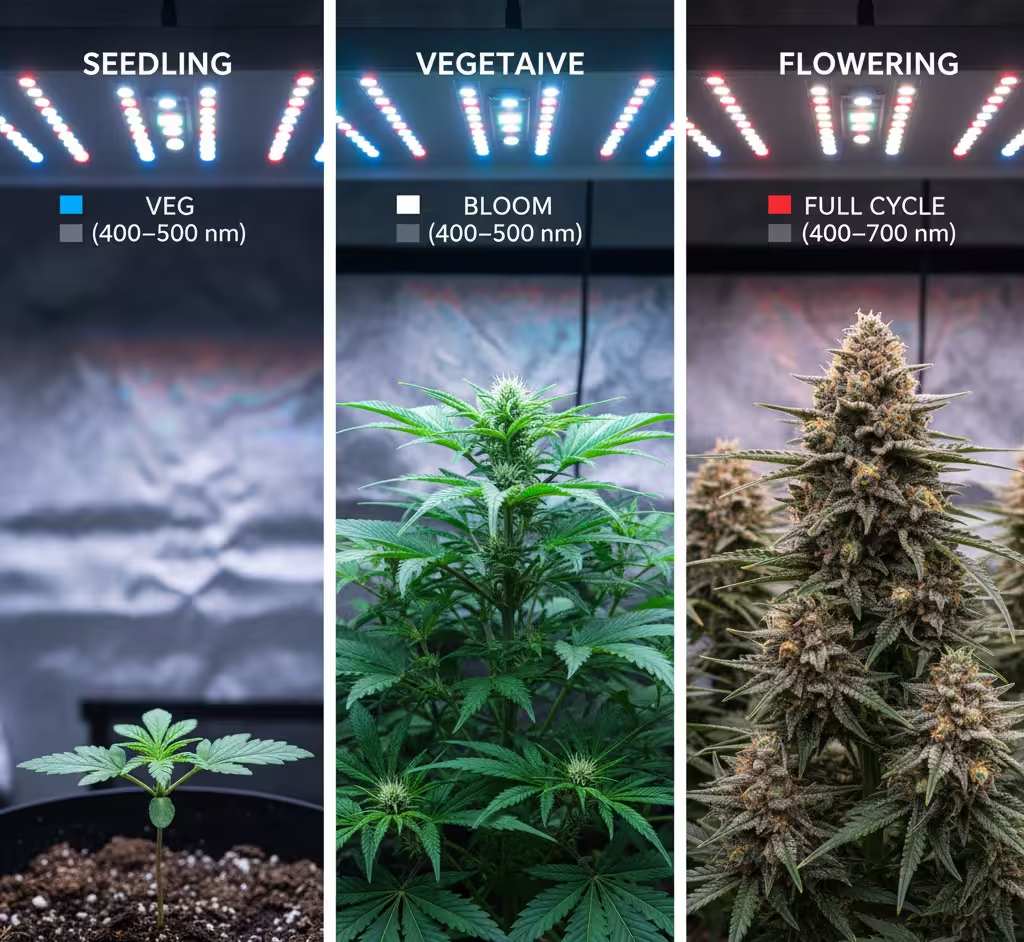
Let’s break it down stage by stage:
🌱 Seedling Stage — Cool Blue Light (400–500 nm)
Young cannabis seedlings are fragile and easily stressed, so they thrive under a soft blue light. Blue wavelengths promote strong root development and short, sturdy stems instead of lanky stretching.
At this stage, keep your LED dimmed and positioned higher (around 24–30 inches above the canopy). A light spectrum heavy in cool blues and whites encourages compact growth, preparing your plants for a healthy veg phase.
Tip: Maintain light intensity around 200–300 PPFD for seedlings — gentle light keeps them growing strong without stress.
🌿 Vegetative Stage — Balanced Blue & White Spectrum
Once your plants hit the veg stage, it’s all about leaf and branch growth. This is where balanced blue and white light (450–650 nm) works wonders. LEDs allow you to increase light intensity and reduce the gap to around 18–24 inches.
The blue light keeps plants short and bushy, while adding neutral white promotes rapid photosynthesis. This stage builds the foundation for bud sites, canopy density, and plant structure — setting you up for a heavy yield later.
Grower tip: Aim for 400–600 PPFD and maintain 18–20 hours of light daily for explosive veg growth.
🌸 Flowering Stage — Warm Red Light (620–700 nm)
This is where the magic happens — and red light takes center stage. Red wavelengths trigger your plants to shift into bloom mode, stimulating bud formation, resin production, and terpene development.
Most growers switch to a warmer full-spectrum light dominated by reds and far-reds during flowering. The best LED fixtures allow you to adjust the spectrum, so you can dial in more red for denser, stickier flowers.
Adding a touch of infrared (IR) boosts cell expansion, while ultraviolet (UV) exposure increases trichome density — the frostier, the better.
Grower tip: Increase PPFD to 700–1000 during late bloom. Just watch your distance — 12–18 inches from canopy is perfect to avoid bleaching.
🧪 Full-Spectrum LEDs — One Light for All Stages
Many growers today prefer full-spectrum LED grow lights that automatically balance blue, white, red, and infrared wavelengths across all stages. These lights simplify your setup — just adjust height and intensity, and your plants get a consistent light source from seed to harvest.
Full-spectrum LEDs mimic natural sunlight indoors, giving you healthier growth, consistent yields, and fewer equipment hassles.
⚙️ How to Set Up LED Grow Lights for Weed
Setting up your LED grow lights the right way can make the difference between fluffy, weak buds and dense, sticky colas dripping in trichomes. Even the best LEDs won’t perform if your placement, height, or light cycle is off — so let’s go step-by-step through the perfect cannabis lighting setup.
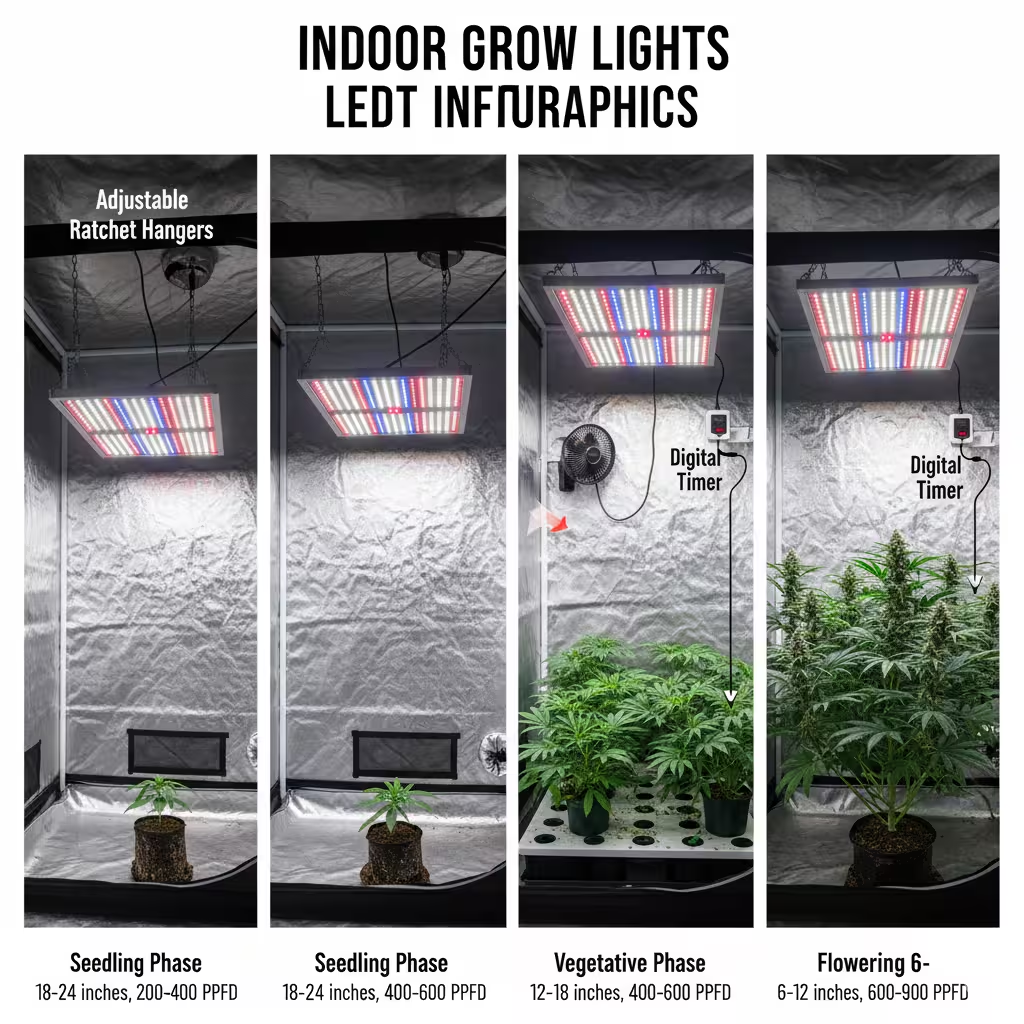
🔧 1. Choose the Right Grow Space
Before hanging your light, you need a controlled environment — like a grow tent or dedicated grow room. Reflective walls (Mylar or silver) help bounce light evenly across the canopy, preventing dark corners and wasted PAR.
If you’re using a tent, make sure the height clearance allows your LEDs to hang 12–30 inches above the canopy, depending on the growth stage.
Grower tip: Start with a 2×2 or 3×3 tent for small grows. It’s easier to manage airflow, temperature, and humidity.
💡 2. Mount LEDs at the Correct Height
LED height is everything. Hang your light too close, and you risk light burn; too far, and your plants will stretch weakly. The sweet spot changes as your plants grow:
- Seedling stage: 24–30 inches (low intensity)
- Vegetative stage: 18–24 inches
- Flowering stage: 12–18 inches
Use an adjustable ratchet hanger so you can easily tweak height as your canopy rises. If your LED has a dimmer, use it to dial in PPFD levels instead of constantly raising or lowering lights.
⏱️ 3. Set the Right Light Schedule
Cannabis responds strongly to its light/dark rhythm — known as the photoperiod.
- Vegetative stage: 18 hours on / 6 hours off
- Flowering stage: 12 hours on / 12 hours off
Using a digital timer ensures consistency, which prevents stress or hermaphroditic behavior. Keep your dark period uninterrupted — even brief light leaks can confuse your plants and reduce yield.
🌡️ 4. Maintain Airflow and Temperature
LEDs run cooler than HPS lights, but your grow still needs proper ventilation. Keep temps around 75–80°F (24–27°C) during lights-on and a bit cooler during lights-off. Use clip fans to move air between your lights and canopy — this strengthens stems and prevents hot spots.
Pro tip: Ideal humidity levels are 60% during veg and 45–50% during flower for maximum terpene and resin production.
🔌 5. Monitor Light Coverage and Power
Check your light’s PAR map to understand its coverage area. A single 300W LED might perfectly cover a 2×2 grow space, but for larger rooms, you’ll need multiple fixtures. Keep your lights evenly spaced to avoid shadows or overlapping intensity.
Use a lux meter or PAR meter to track performance — aim for around 400–600 PPFD in veg and 700–1000 PPFD in flower for optimal results.
🌿 6. Test and Adjust Throughout the Grow
Each strain reacts differently to light intensity. Check leaf color, growth speed, and bud development regularly. Pale tops or curled edges can indicate too much light, while stretched stems or weak leaves mean not enough. Fine-tuning your setup each week keeps your plants in the light “sweet spot.”
⚡ How Many Watts Per Plant? (Lighting Power Guide)

One of the most common questions new growers ask is:
“How many watts do I need for my cannabis plants?”
The truth is, it depends on your grow space, plant size, and LED efficiency. Unlike old-school HPS lights, which were judged purely by wattage, LEDs are about light output (PPFD and PAR) — but wattage still gives you a solid baseline for planning your setup.
Let’s break it down so you don’t waste energy or stunt your yield.
🌱 1. Understanding Wattage and Light Intensity
Think of wattage as your light’s horsepower — more watts mean more potential energy output, but not always more usable light. That’s why two 300W LEDs from different brands can perform very differently.
What really matters is PPF (Photosynthetic Photon Flux) and efficiency (µmol/J) — the amount of light your fixture delivers per watt. Modern full-spectrum LEDs can produce excellent results with fewer watts because they focus on the right wavelengths cannabis needs.
Grower tip: Always check your light’s true power draw, not just the “marketing wattage.” A 1000W-rated LED might only pull 400W from the wall.
🌿 2. General Wattage Guidelines for LED Grows
Here’s a solid baseline most indoor growers use to calculate LED wattage per plant or per square foot:
| Grow Area / Plant Count | Recommended True LED Wattage | PPFD Target | Growth Stage |
|---|---|---|---|
| 1 small plant (2×2 ft) | 150–300W | 400–600 µmol/m²/s | Veg & Early Flower |
| 2–4 plants (3×3 ft) | 300–450W | 600–900 µmol/m²/s | Veg & Flower |
| 4–6 plants (4×4 ft) | 450–600W | 700–1000 µmol/m²/s | Full Flowering |
| 8+ plants (5×5 ft or larger) | 650–1000W+ | 900–1200 µmol/m²/s | Commercial Bloom |
💡 Rule of Thumb:
You’ll need roughly 30–40 watts per square foot of canopy with efficient full-spectrum LEDs. This gives you strong light penetration without overheating your tent or overspending on power.
🔋 3. Matching LED Power to Strain Type
Not all strains demand the same intensity.
- Sativas (tall, light-loving plants): thrive under stronger lights — up to 1000 PPFD in bloom.
- Indicas (shorter, denser plants): prefer moderate light intensity — around 700–900 PPFD.
- Autoflowers: grow best with consistent 18/6 cycles and moderate intensity (600–800 PPFD).
Matching wattage to strain helps prevent light stress, keeps leaves lush, and ensures optimal bud density.
⚙️ 4. Avoid Overpowering Your Grow
More watts don’t always mean better buds. Too much light can cause bleaching, nutrient lockout, or foxtailing. Always start lower and increase intensity as your plants mature. Use dimmers if your fixture supports it, and keep a PAR meter handy to monitor canopy levels.
The goal isn’t to blast your plants with light — it’s to feed them the right amount for steady, healthy growth.
🧮 Quick LED Wattage Formula
To estimate how much LED power your grow needs:
Grow Area (sq ft) × 35 watts = Recommended LED wattage
Example: A 4×4 grow tent = 16 sq ft → 16 × 35 = 560 watts total power.
⚠️ Common Mistakes When Growing Weed with LEDs
LED grow lights are powerful tools — but even the best fixtures can fail you if they’re used wrong. Many new growers switch from HPS or CFL to LEDs expecting instant results, only to face light stress, slow growth, or fluffy buds. Don’t worry — most of these mistakes are easy to fix once you understand how LEDs behave.
Let’s go over the most common LED growing mistakes and how to avoid them.
🔥 1. Hanging the Light Too Close
One of the biggest rookie errors is placing LEDs too close to the canopy. Unlike HPS, LEDs have concentrated light intensity. If your fixture is 6 inches above the tops, you’ll likely see light burn, bleached buds, or taco-shaped leaves.
Grower fix: Always check your manufacturer’s recommended hanging height. In most cases:
- Veg: 18–24 inches
- Flower: 12–18 inches
Use a PAR or lux meter to measure PPFD — keep it around 400–600 µmol/m²/s in veg and 700–1000 in flower.
🌿 2. Using the Wrong Light Spectrum
Not all LEDs are created equal. Some cheap “blurple” lights only focus on blue and red diodes but lack full-spectrum balance — which means your plants miss out on essential white, UV, and infrared wavelengths. This leads to thin growth and weak trichome production.
Grower fix: Choose full-spectrum LED grow lights with balanced coverage from 400–700 nm, including UV-A and IR diodes for resin development.
💧 3. Overwatering Because of Lower Heat
LEDs run cooler than HPS lights, which changes your grow room’s evaporation rate. Many growers forget this and keep watering on the same schedule — leading to waterlogged roots, nutrient lockout, and slow growth.
Grower fix: With LEDs, your plants will drink slower. Always check soil moisture before watering. A simple soil probe or “lift test” works wonders.
🌡️ 4. Poor Temperature and Humidity Management
LEDs don’t heat your space much, which can drop your canopy temperature and VPD below ideal levels. Cold leaves absorb less light, reducing photosynthesis efficiency and yield.
Grower fix: Maintain temps around 77–82°F (25–28°C) during lights-on. Use a hygrometer to keep humidity between 60% (veg) and 45–50% (flower) for optimal VPD.
⚙️ 5. Not Adjusting Light Intensity During Growth
Your seedlings don’t need the same intensity as flowering plants. Many growers crank their LEDs at full power from day one — causing stunted growth or burned seedlings.
Grower fix: Start with 30–40% power for seedlings, increase gradually during veg, and reach 80–100% during bloom. If your LED has a dimmer, use it smartly.
🌸 6. Ignoring Light Spread and Shadow Zones
A single LED panel often fails to cover every inch of your canopy evenly. The corners and edges may get low PPFD, leading to uneven growth and smaller buds.
Grower fix: Use multiple smaller LEDs or adjust angles to create even light distribution. Rotate pots weekly to give all sides equal exposure.
🧠 7. Using Fake or Low-Quality LEDs
Cheap grow lights are everywhere, but many are overrated or poorly built. They promise “1000W output” but pull only 100W from the wall. These knockoffs often have poor diodes and bad heat sinks, leading to weak results or early burnout.
Grower fix: Always buy from trusted brands (Spider Farmer, Mars Hydro, ViparSpectra, AC Infinity). Check reviews, power draw specs, and warranty coverage before purchasing.
✅ Key Takeaway
LEDs aren’t plug-and-play — they’re precision tools. Once you master height, spectrum, and intensity, they deliver incredible results: tighter buds, stronger aroma, and higher potency with lower energy costs.
🛒 Top LED Grow Lights for Weed (2025 Buyer’s Guide)
When you’re serious about indoor cannabis cultivation, your light is one of the biggest investments and one of the most critical pieces of gear. Choosing the right full-spectrum LED grow light can make a massive difference in yield, bud quality, and energy cost. Here are the must-know factors before you buy — plus the top models that have earned serious grower respect in 2025.
✅ What to look for
- True power draw & efficiency (µmol/J): Don’t just trust the nominal “1000 W” label — check the actual draw from the wall and how much usable PAR (photo-synthetically active radiation) it delivers. MIGROLIGHT+1
- Spectrum & diodes: Great lights now use high-quality diodes (Samsung LM301B/H, Osram deep-red, etc) and cover the full spectrum from ~400–700 nm (including UV/IR when possible). mrgrowit.com+1
- Coverage area & canopy uniformity: The light must evenly cover your grow space (2×2, 3×3, 4×4, etc) without hot spots or large drop-offs. MIGROLIGHT+1
- Heat & cooling: LEDs run cooler than HPS, but you still need good heat-dissipation, passive cooling, or fans to maintain optimal canopy temps.
- Dimming, height adjustment & control: Being able to dial the light up/down or hang higher/lower gives you flexibility for veg vs flower.
- Warranty, build quality & reviews: Spend on a brand that stands behind its product — cheap “blurple” knock-offs may cost less upfront but will cost you in yield or trouble.
Here’s a quick summary of each:
- Mars Hydro TSL 2000: A strong all-rounder designed for a 2′×4′ footprint; draws around ~300 W and delivers good PPFD numbers. Great for tent growers who want an efficient full-spectrum setup.
- Spider Farmer SF2000: Similar footprint but trusted by many growers; includes Samsung diodes and good spectrum for veg+flower.
- AC Infinity IONBOARD S24: Smart diodes, good dispersion, and quality build. Ideal for growers who want control features and high uniformity.
- Spider Farmer SE4500: Higher output for serious growers in a compact footprint; strong choice if you’ve got more canopy to light.
- Mars Hydro FC4000 EVO: Premium build and very efficient; for growers who want higher yields and are willing to invest a bit more.
- Viparspectra KS5000: Good value for a 4′×4′ size; budget-friendly while still solid performance.
- MIGRO ARAY 500: Ultra value for smaller grow rooms; one of the best “bang for buck” lights in 2025.
- Horticulture Lighting Group HLG 350R: Known for commercial grade performance, high yield per watt, built for serious indoor cannabis cultivation.
Top LED Grow Lights for Weed (2025 Buyer’s Guide)
Choosing the right full-spectrum LED can dramatically boost yield, density, and terpene expression while lowering heat and power costs. Use the comparison chart below, then jump to the detailed picks.
| Model | Best Footprint | Approx. True Draw | Spectrum / Diodes | Why It Stands Out | Buy |
|---|---|---|---|---|---|
| Spider Farmer SF2000 | 2×4 ft (veg/flower) | ~200–250 W | Full-spectrum; Samsung-class white + deep red | Budget-friendly efficiency; dimmable driver | Check Price → |
| Mars Hydro TSL 2000 | 2×4 ft | ~300 W | Full-spectrum white with red boost | Strong canopy coverage; great for tents | See Deals → |
| AC Infinity IONBOARD S24 | 2×4 ft | ~200–240 W | Balanced full-spectrum; smart-control ready | Clean build, quiet, controllable dimming | View Offer → |
| ViparSpectra KS5000 | 4×4 ft | ~500 W | Full-spectrum bar-style array | Great uniformity across 4×4; solid value | Check Price → |
| Mars Hydro FC4000 EVO | 3×3–4×4 ft | ~300–400 W | Premium full-spectrum bar array | High efficiency; excellent heat management | See Deals → |
| MIGRO ARAY 500 | 4×4 ft | ~500 W | Sun-like spectrum; efficient bars | Top value pick; even spread | View Offer → |
| HLG 350R | 3×3–4×4 ft | ~330 W | High-efficiency white + deep red | Commercial-grade output and reliability | Check Price → |
Spider Farmer SF2000 (Best Budget 2×4)
A reliable, efficient full-spectrum panel for 2×4 tents. Dimmable, quiet, and beginner-friendly.
- Footprint: 2×4 ft (veg/flower)
- True draw: ~200–250 W
- Strengths: Efficiency, value, dimming
- Best for: New growers, low-heat tents
Mars Hydro TSL 2000 (Wide 2×4 Coverage)
Great edge-to-edge coverage for 2×4 tents with a proven full-spectrum recipe.
- Footprint: 2×4 ft
- True draw: ~300 W
- Strengths: Canopy spread, yield/price ratio
- Best for: Tent growers chasing uniformity
AC Infinity IONBOARD S24 (Smart Control)
Clean industrial build, smooth dimming, and compatibility with smart controllers.
- Footprint: 2×4 ft
- True draw: ~200–240 W
- Strengths: Smart features, quiet operation
- Best for: Precision growers, stealth setups
ViparSpectra KS5000 (Value 4×4 Uniformity)
Bar-style array for even PAR distribution across a full 4×4 flowering footprint.
- Footprint: 4×4 ft
- True draw: ~500 W
- Strengths: Great uniformity, easy hanging
- Best for: Mid-size rooms, multi-plant scrogs
Mars Hydro FC4000 EVO (Premium Efficiency)
High-efficiency bar array with excellent thermal design and flowering output.
- Footprint: 3×3–4×4 ft
- True draw: ~300–400 W
- Strengths: Efficiency, build quality
- Best for: Quality-focused home/commercial grows
MIGRO ARAY 500 (Top Value 4×4)
Excellent “bang for buck” with sun-like spectrum and even distribution.
- Footprint: 4×4 ft
- True draw: ~500 W
- Strengths: Value, uniform canopy penetration
- Best for: Yield-hungry growers on a budget
HLG 350R (Pro-Grade 3×3–4×4)
Commercial-grade performance and reliability with strong flowering intensity.
- Footprint: 3×3–4×4 ft
- True draw: ~330 W
- Strengths: Yield per watt, durability
- Best for: Prosumers & small commercial rooms
Affiliate Disclosure: We may earn a commission when you buy through our links—at no extra cost to you. This helps us test gear and publish unbiased grow guides.
💡 Which light is right for your grow?
- Budget conscious or first time: A value light like MIGRO ARAY 500 can get you in the game without destroying your budget — but check reviews, specs & build quality.
- Small hobby tent (2′×2′ or 2′×4′): Go with a mid-range light (300-350 W true draw) like the Mars Hydro TSL 2000 or Spider Farmer SF2000.
- Medium tent (3′×3′ to 4′×4′): Choose something with higher output and wider spread (e.g., Viparspectra KS5000) so you don’t lose yield due to light drop-off.
- Serious grow / multiple plants / commercial mindset: Invest in a high-efficiency premium light (Mars Hydro FC4000 EVO or HLG 350R) that gives you top yields, control, and long-term reliability.
🧰 Maintenance and Longevity of LED Grow Lights
One of the best things about running LED grow lights in your cannabis setup is how little maintenance they actually need — but that doesn’t mean you can just “set it and forget it.” If you want your LEDs to keep performing at peak efficiency harvest after harvest, a little care goes a long way. Clean lights mean better PAR output, longer diode life, and more consistent yields.
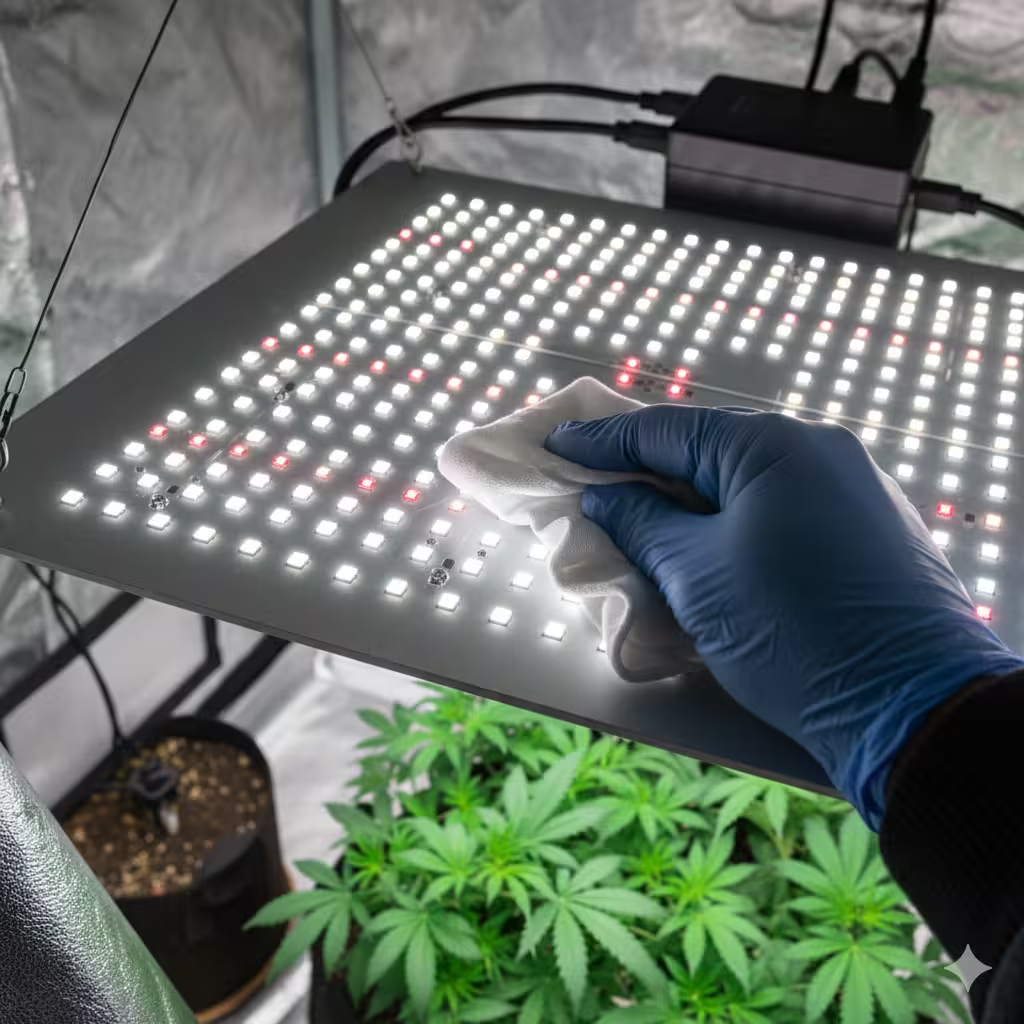
🧼 1. Keep Your Light Fixtures Clean
Dust, pollen, and sticky resin particles can build up on your LED lenses and lower light penetration by 10–20% over time. That’s lost yield potential. Use a soft microfiber cloth or compressed air to gently clean the lenses every couple of weeks — especially during flowering when resin and humidity are at their peak.
Pro Tip: Avoid alcohol or harsh cleaners — stick to distilled water or an LED-safe solution to keep diodes clear without damaging coatings.
⚙️ 2. Check Power Cables and Drivers
LEDs are built to last, but the drivers and cords take the most stress. Over time, loose connections or heat exposure can reduce performance or cause flickering.
Inspect your power cables, drivers, and dimmers between each grow cycle. Make sure fans (if your light has them) stay dust-free and running smoothly.
A well-maintained driver keeps your LED efficiency high — saving you both electricity and potential repair costs.
🌡️ 3. Manage Heat for Longevity
Even though LEDs run cooler than HPS, they still generate heat — especially high-power bar arrays. Consistent high temps can shorten diode life and reduce light intensity.
Keep good airflow around your LED unit, and don’t block the heat sink or vents. If you’re growing in a tight tent, a small clip fan or inline exhaust will keep your fixture healthy for years.
Optimal LED performance zone: Room temp 75–80°F (24–27°C) with steady airflow.
🕓 4. Track Hours and Performance Over Time
High-quality LEDs last 50,000+ hours — that’s several years of continuous grows. But after 3–4 years, you may notice a slow decline in brightness (known as lumen depreciation).
Track your light’s usage with a grow log or timer counter. If your buds start looking slightly lighter or yields drop even with identical feeding and care, it might be time for a replacement or diode upgrade.
♻️ 5. Store Lights Properly Between Grows
If you take breaks between grows, store your LED lights in a dry, dust-free area. Avoid damp basements or direct sunlight. Coil cables gently and cover lenses to prevent dust buildup. When you start a new cycle, test your lights for even illumination and dimmer response before hanging.
💡 Final Grower Insight
Treat your LEDs like your plants — give them care and consistency, and they’ll reward you with years of high-efficiency light and fat, sticky colas. Maintenance may be minimal, but its impact on performance and lifespan is massive.
FAQs
Yes — even the best LEDs can be too intense if they’re hung too close or run at full power too early. Too much light causes leaf bleaching, taco curling, and light stress that stunt your plants.
Grower fix: Keep your LEDs 18–24 inches above the canopy during veg and 12–18 inches during flower. If you notice pale tops or twisted leaves, raise or dim your lights immediately.
The sweet spot depends on light power (PPFD) and your plant’s growth stage:
Seedlings: 24–30 inches
Veg: 18–24 inches
Flower: 12–18 inches
Different brands vary, so always check your manufacturer’s chart or measure PPFD with a light meter for accurate results.
Red and deep-red light (620–700 nm) drives flowering by signaling your plant to produce buds. The best LED grow lights include full-spectrum white + red + infrared (IR), mimicking the natural sunlight that triggers bloom outdoors. A touch of UV-A can also increase trichome and terpene production.
Absolutely. Modern full-spectrum LEDs outperform HPS in efficiency, coverage, and bud quality — all while using 30–40% less electricity and producing less heat. They cost more upfront, but you’ll save money long-term through lower bills, fewer bulb replacements, and better yield per watt.
Quality LED fixtures last 50,000 to 60,000 hours — that’s 5–7 years of continuous growing. Lower-quality lights may dim after 2–3 years due to lumen depreciation. Keeping your lights clean, cool, and well-ventilated helps maintain brightness and extend their lifespan.
Yes — that’s the beauty of full-spectrum LEDs. These fixtures provide both blue light for strong vegetative growth and red light for heavy flowering. You just need to adjust light height or dimming as your plants develop.
When dialed in properly, LEDs can boost THC and terpene levels by promoting trichome density under controlled temperatures and light wavelengths. The balanced spectrum, cooler leaf surface, and better PAR efficiency all support higher resin production.
1–2 plants (2×2 space): 150–300 W
2–4 plants (3×3 or 4×4): 400–600 W
Use around 35 W per square foot for efficient full-spectrum LEDs.
Always match your LED wattage to your grow tent size, not just your plant count.
Conclusion
If you’re serious about growing top-shelf cannabis indoors, LED grow lights are absolutely worth it — no question. They’ve gone from being a new experiment to the gold standard of indoor cultivation. Today’s full-spectrum LEDs deliver the perfect balance of blue, red, and white wavelengths, pushing plants to their full genetic potential while keeping your grow room cool and energy-efficient.
Compared to traditional HPS and MH lights, LEDs run cooler, last longer, and produce more resin-drenched buds per watt. The even light spread reduces canopy hotspots, and the lower radiant heat means you can grow in smaller tents or confined spaces without cooking your plants.
And let’s talk about the results — denser buds, richer terpenes, brighter colors, and higher THC levels. Many experienced cultivators now swear by LEDs not only for their efficiency but for the quality of the flower they produce. When your trichomes sparkle and your aroma fills the room, you’ll know it was worth every watt.
Bottom line: LEDs save you money long-term, deliver better quality yields, and simplify the entire grow process. Once you dial in the right height, spectrum, and wattage, you’ll never go back to HID.
🌿 Next Steps for Growers
If you’re just getting started or upgrading your setup, check out our detailed guides:
- 👉 Indoor Cannabis Growing Guide — Learn about soil, nutrients, humidity, and airflow
- 💡 Best LED Grow Lights for Weed (2025 Buyer’s Guide) — Compare top-performing models for your tent size
- 🌱 How to Grow Weed Indoors for Beginners — Step-by-step walkthrough from seed to harvest
These guides will help you build a complete, efficient grow system that produces consistent, top-quality buds harvest after harvest.
References and Sources:
- Magagnini, G., Grassi, G., & Kotiranta, S. (2018). The Effect of Light Spectrum on the Morphology and Cannabinoid Content of Cannabis sativa L. Frontiers in Plant Science, 9, 1882. Retrieved from PMC.
- Ahsan, S. M., et al. (2024). Illuminating Cannabis sativa L.: The Power of Light in Growth, Development and Metabolism. Plants, 13(19), 2774 MDPI.
- Morello, V., et al. (2022). Light Quality Impacts Vertical Growth Rate, Phytochemical Content and Energy Use Efficiency of Cannabis sativa L. Plants, 11(21), 2982 MDPI.
- Conviron / Valoya. (2017). Considering LEDs for Cannabis? Technical white paper. Retrieved from Conviron.
- Valoya Oy. (2019). Cannabis Cultivation with LED – Solution Guide. Valoya. Retrieved from Valoya.
- Resource Innovation Institute. (2021). LED Lighting for Cannabis Cultivation: Best Practice Guide. Retrieved from Resource Innovation Institute.
- Apogee Instruments. (n.d.). Increasing Cannabis Economic Yield through Lighting. Retrieved from apogeeinstruments.com.
- SpecGrade LED. (2024). Guide to Selecting a Grow Light. Retrieved from specgradeled.com.
- The Pure Factory. (2024, June 27). How full-spectrum LED lights are revolutionizing cannabis cultivation. Retrieved from thepurefactory.com.
- CBC Grow Lights Blog. (n.d.). The Ideal LED Grow Light Spectrum for Plants. Retrieved from BIOS Grow Lights.
- Secret LED Blog. (n.d.). Can LEDs Outperform HPS in Crop Output? Retrieved from secretled.com.
- Bugbee, B., Gunkel, W., & Giese, C. (n.d.). Increasing Cannabis Economic Yield through Lighting. (Utah State University Plant Physiology Laboratory). Retrieved from apogeeinstruments.com.