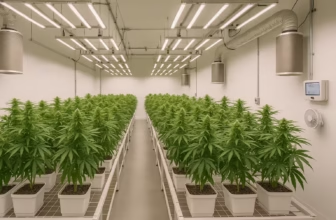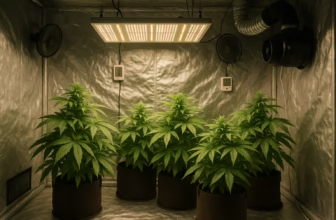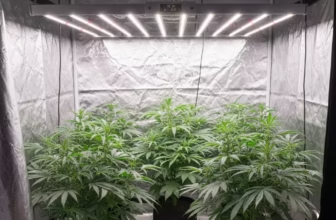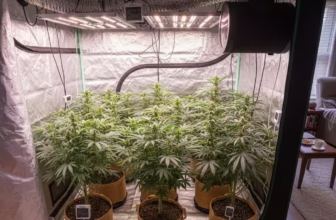
If you’re planning to grow cannabis indoors, one of the first questions you’ll have is: “How long does it take from seed to harvest?” The short answer is that growing weed indoors usually takes 3 to 5 months, depending on the strain, your growing setup, and how well you manage each growth stage. Autoflower strains can be ready in as little as 8–10 weeks, while traditional photoperiod plants often require 12–20 weeks before they’re ready to harvest.
Understanding the indoor cannabis growth timeline is crucial for setting realistic expectations and planning your grow. Each stage—from germination and seedlings to the vegetative and flowering phases—requires a different amount of time and care. Factors like strain type, grow medium (soil or hydroponics), lighting schedules, and climate control all play a big role in how quickly your plants will reach harvest.
“Growing weed indoors typically takes 3–5 months from seed to harvest, depending on strain type, setup, and growing method. Autoflower strains can be ready in as little as 8–10 weeks, while photoperiod strains usually need more time.”
In this guide, we’ll break down the average indoor grow time step by step, explain what influences it, and share tips to help you shorten the cycle without sacrificing quality. Whether you’re a beginner looking for the easiest path or an experienced grower aiming to maximize yield, you’ll learn exactly what to expect when growing weed indoors.
What Factors Affect Indoor Cannabis Grow Time?
The time it takes to grow weed indoors isn’t the same for everyone—it depends on several key factors. By understanding these variables, you can better estimate your harvest window and even speed up the process while maintaining quality buds.
1. Strain Type – Autoflower vs Photoperiod
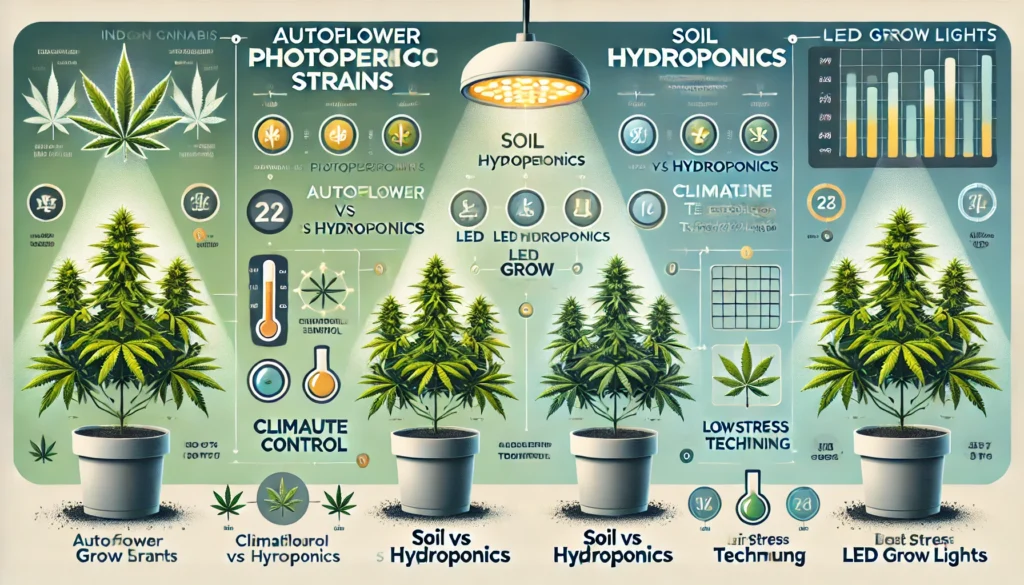
The biggest factor is the type of cannabis strain you grow. Autoflower strains are genetically designed to flower automatically and usually finish in 8–12 weeks, making them ideal for beginners or quick harvests. Photoperiod strains, on the other hand, rely on light cycles and generally take 12–20 weeks from seed to harvest, but they often produce larger yields.
2. Growing Medium – Soil vs Hydroponics
Your choice of growing medium also affects the timeline. Soil grows are beginner-friendly but often slower, as the plant takes more time to absorb nutrients. Hydroponic systems (water-based growing) accelerate growth, sometimes reducing the cycle by 10–20%, but they require more monitoring and precision.
3. Light Cycles and Intensity
Since you’re growing indoors, light is your sun. Stronger, high-quality LED grow lights or HPS setups allow plants to photosynthesize more efficiently, speeding up growth. Photoperiod strains need a vegetative light cycle (18/6) and a flowering cycle (12/12), which directly impacts how long the entire process will take.
4. Climate Control – Temperature & Humidity
Indoor cannabis thrives in a controlled environment. If temperature, humidity, and airflow are kept stable, plants grow faster and healthier. Inconsistent conditions can slow development, extend recovery time, and even cause hermaphroditism or nutrient lockout, delaying harvest.
5. Grower Skill & Training Techniques
Your own experience and techniques can shave weeks off the grow cycle. Methods like Low-Stress Training (LST), Screen of Green (SCROG), or topping can encourage plants to grow more efficiently. Mistakes, like overwatering or poor pruning, can slow everything down and stretch the timeline.
Indoor Cannabis Growth Stages (Seed to Harvest)
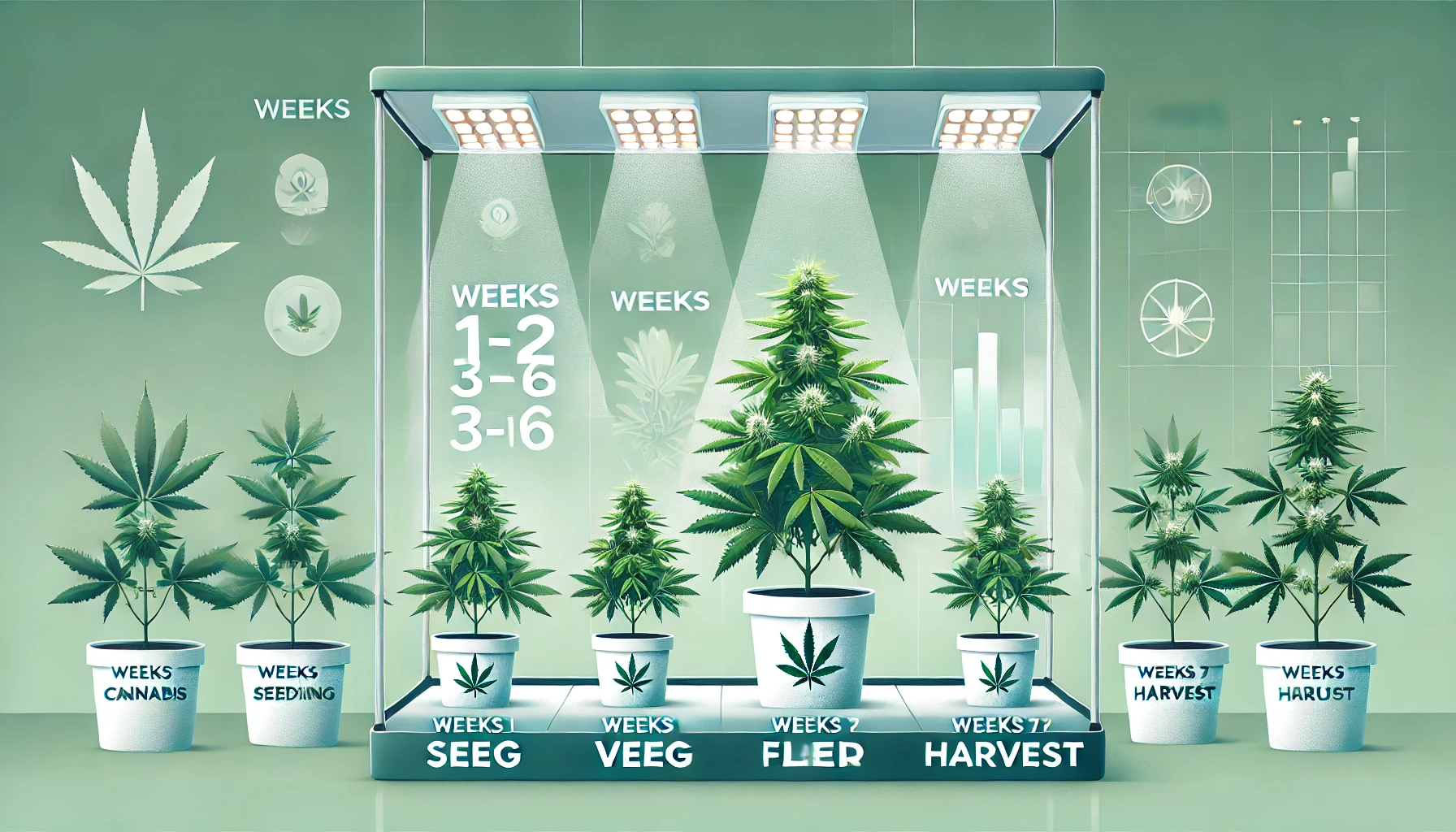
To understand how long it takes to grow weed indoors, you need to look at the plant’s life cycle stage by stage. Each phase of growth has a different duration, and small delays in one stage can affect the entire harvest timeline. Here’s the indoor cannabis grow timeline step by step:
Germination Stage (3–10 Days)
- Cannabis begins its life from seed or clone.
- Seeds crack open, and a small root (taproot) appears.
- A seedling sprouts once the seed is placed in soil, coco, or hydro setup.
- Warmth (70–80°F) and moisture are key to quick germination.
Seedling Stage (2–3 Weeks)
- Tiny leaves (cotyledons) emerge, followed by the first sets of true leaves.
- Plants are fragile at this point and need 18–24 hours of light daily.
- Humidity should be kept high (65–70%) to encourage root development.
- By the end of this stage, seedlings look like small but healthy cannabis plants.
Vegetative Stage (4–8 Weeks)
- Plants focus on building leaves, stems, and roots for strong growth.
- Indoor growers usually keep lights at 18/6 (18 hours light, 6 dark).
- Training techniques (LST, topping, SCROG) are often applied here.
- The longer you keep plants in veg, the larger they’ll grow and the more yield you’ll get.
Flowering Stage (6–10 Weeks)
- The most exciting stage where buds form and resin production begins.
- Photoperiod strains require a 12/12 light cycle to start flowering.
- Autoflowers bloom automatically regardless of light cycle.
- First 2 weeks: stretch phase (plants grow rapidly).
- Weeks 3–6: bud sites swell and trichomes appear.
- Weeks 7–10: buds mature, and pistils turn amber/white.
Harvest, Drying & Curing (2–4 Weeks)
- Once trichomes are milky/amber, it’s harvest time.
- Drying usually takes 7–14 days in a dark, ventilated room at ~60°F and 60% humidity.
- Curing in glass jars for another 2–4 weeks ensures smoother smoke and stronger flavor.
Total Indoor Grow Time
- Autoflower strains: 8–12 weeks seed to harvest
- Photoperiod strains: 12–20 weeks seed to harvest
- Average indoor grow: 3–5 months including curing
Average Indoor Grow Time by Strain Type
Not all cannabis strains grow at the same pace. The average indoor grow time depends heavily on whether you choose autoflower, photoperiod, or fast-flowering genetics. Knowing this helps you plan your harvest window more accurately.
Autoflowering Strains – 8 to 12 Weeks
Autoflowers are the fastest option for indoor growers. These strains automatically switch from the vegetative stage to flowering without needing a change in light cycle. On average, they go seed to harvest in just 8–12 weeks. While autoflowers often produce smaller yields than photoperiod plants, they are perfect for beginners or anyone looking for a quick turnaround grow indoors.
Photoperiod Strains – 12 to 20 Weeks
Photoperiod strains take longer because they require a change in light cycle (12/12) to trigger flowering. Indoor growers usually keep them in the vegetative stage for 4–8 weeks, then allow another 8–12 weeks for flowering. The total time averages 12–20 weeks depending on the strain and training methods. While slower, photoperiods often deliver larger yields, higher potency, and more control over the final plant size.
Fast-Flowering Strains – 9 to 14 Weeks
Some modern breeders have created fast-flowering hybrids that shorten the traditional photoperiod cycle. These strains often combine photoperiod genetics with autoflower traits, finishing indoors in 9–14 weeks. They are a great compromise for growers who want bigger yields than autoflowers but don’t want to wait as long as traditional photoperiods.
How to Speed Up Indoor Cannabis Growth
Many growers ask: “Can I make weed grow faster indoors?” The answer is yes—by optimizing your grow setup and making smart choices, you can cut down on time without sacrificing quality. Here are the most effective ways to speed up your indoor cannabis grow cycle:
Use Autoflower Strains
If speed is your main goal, choose autoflower cannabis seeds. These strains don’t rely on light cycle changes to flower and usually go seed to harvest in 8–12 weeks. They are ideal for beginners who want a quick, hassle-free grow.
Optimize Light Schedules
Indoor cannabis depends entirely on artificial lighting.
- During vegetative stage, keep lights on 18–24 hours daily to boost growth.
- Use high-quality LED grow lights that provide full spectrum coverage.
- For autoflowers, keeping lights at 20/4 or 18/6 throughout their cycle can speed growth and maximize yield.
Choose Hydroponics Over Soil
Growing in hydroponic systems can accelerate growth compared to soil. Since roots absorb nutrients directly from water, plants spend less energy searching for food. Hydro setups often shorten the grow cycle by 10–20% and produce larger yields in less time.
Proper Nutrient Management
Balanced nutrients and feeding schedules are critical for faster growth. Overfeeding causes nutrient burn, while underfeeding slows development. Using cannabis-specific fertilizers for each stage (veg and bloom) helps maximize plant efficiency and reduce wasted grow time.
Training Methods for Faster Growth
Techniques like Low-Stress Training (LST), topping, or Screen of Green (SCROG) help create an even canopy and improve light penetration. While they don’t technically change the biological growth speed, they allow plants to grow more efficiently, producing bigger yields in less time indoors.
Common Mistakes That Delay Indoor Harvest
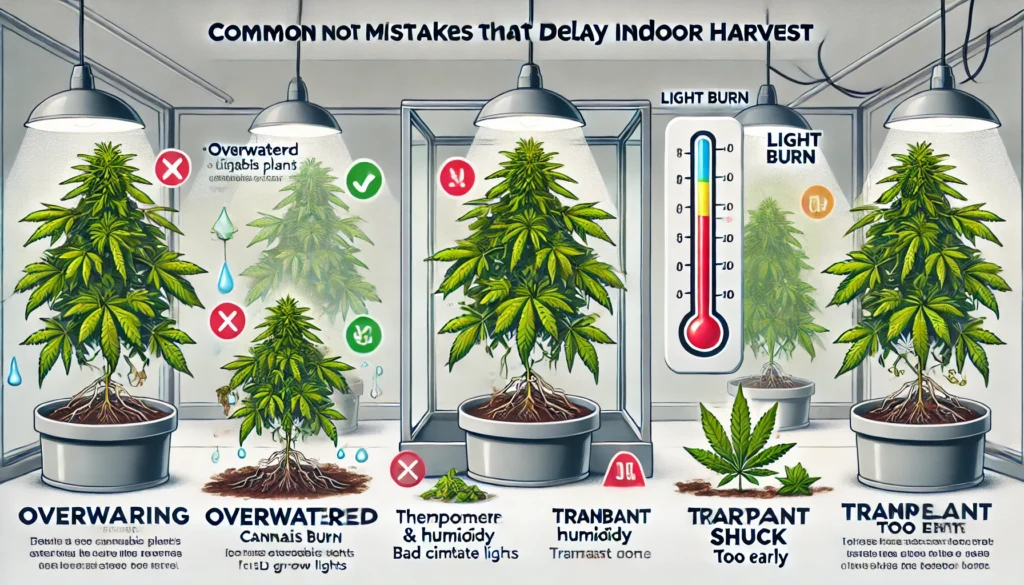
Even with the right setup, many growers face delays in their indoor cannabis grow cycle. Small mistakes can stretch the timeline by weeks and affect both yield and quality. Here are the most common errors that slow down an indoor harvest:
Overwatering & Poor Nutrient Balance
Too much water suffocates roots and slows growth. Pair that with nutrient imbalances—such as overfeeding nitrogen in the flowering stage—and your plants can stall for weeks. The key is to follow a balanced feeding schedule tailored to each stage of growth.
Light Stress (Too Weak or Too Strong)
Light is the engine of indoor cannabis growth. If your grow lights are too weak, plants stretch and take longer to flower. If they’re too strong, you risk light burn that halts bud development. Keeping the right light intensity and distance ensures plants stay on schedule.
Poor Temperature & Humidity Control
Cannabis thrives in a stable environment. Fluctuating temperatures or high humidity can lead to slow growth, mold, or pest problems, all of which extend the timeline. Keeping the grow room at 70–80°F with 40–60% humidity is ideal for faster growth and timely harvests.
Transplant Shock
Improperly moving seedlings or vegging plants into new containers can cause root shock, forcing the plant to spend energy on recovery instead of growth. Always transplant carefully and give plants time to adapt to their new environment.
Harvesting Too Early
Patience is key. Many new growers cut down plants too soon, worried about missing the “peak.” Harvesting early not only reduces yield but also wastes weeks of potential flowering time. Waiting until trichomes are milky/amber ensures maximum potency and avoids wasted effort.
Frequently Asked Questions
On average, growing weed indoors takes 3–5 months from seed to harvest. Autoflowers are faster, finishing in 8–12 weeks, while photoperiod strains usually need 12–20 weeks depending on how long they stay in the vegetative stage.
Yes, but only with fast autoflowering strains. Some autoflowers can finish in 8–9 weeks, though most need closer to 10–12 weeks. Photoperiod strains cannot be completed in 8 weeks indoors, as they require a longer vegetative and flowering cycle.
The fastest indoor strains are autoflowers like Northern Lights Auto, White Widow Auto, and Amnesia Haze Auto, which can be harvested in as little as 8–10 weeks. Breeders also offer fast-flowering hybrids that shorten photoperiod grow times.
Yes. Hydroponic systems often shorten the indoor grow cycle by 10–20% compared to soil. Since roots receive nutrients directly from water, plants grow faster and can enter flowering sooner. Soil grows are usually slower but more forgiving for beginners.
After harvest, drying usually takes 7–14 days, and curing in airtight jars adds another 2–4 weeks. While this extends the overall timeline, proper curing is essential for potency, smooth smoke, and better flavor. Skipping or rushing curing reduces quality.
Final Thoughts
Growing cannabis indoors takes patience, planning, and consistency. On average, expect 3–5 months from seed to harvest, with autoflowers finishing in as little as 8–12 weeks and photoperiod strains taking 12–20 weeks depending on your setup.
The exact time depends on strain type, growing medium, lighting, and your level of experience as a grower. By avoiding common mistakes, optimizing your environment, and following a clear indoor grow timeline, you can bring your plants to harvest on schedule while maximizing yield and potency.
For new growers, starting with autoflower strains is often the best way to learn quickly and enjoy a faster harvest. More advanced growers who want larger yields may choose photoperiod or fast-flowering strains for greater control.
If you’re ready to dive deeper into techniques, equipment, and best practices, check out our full guide on Indoor Grown Cannabis to master every aspect of the indoor growing process.