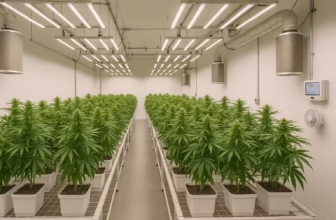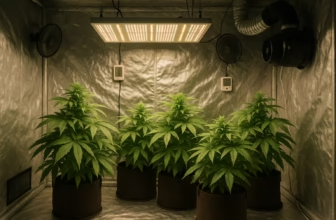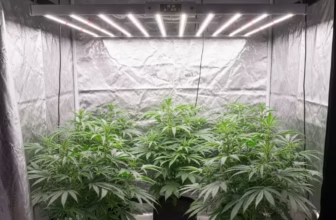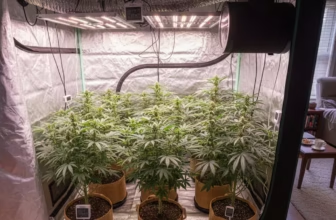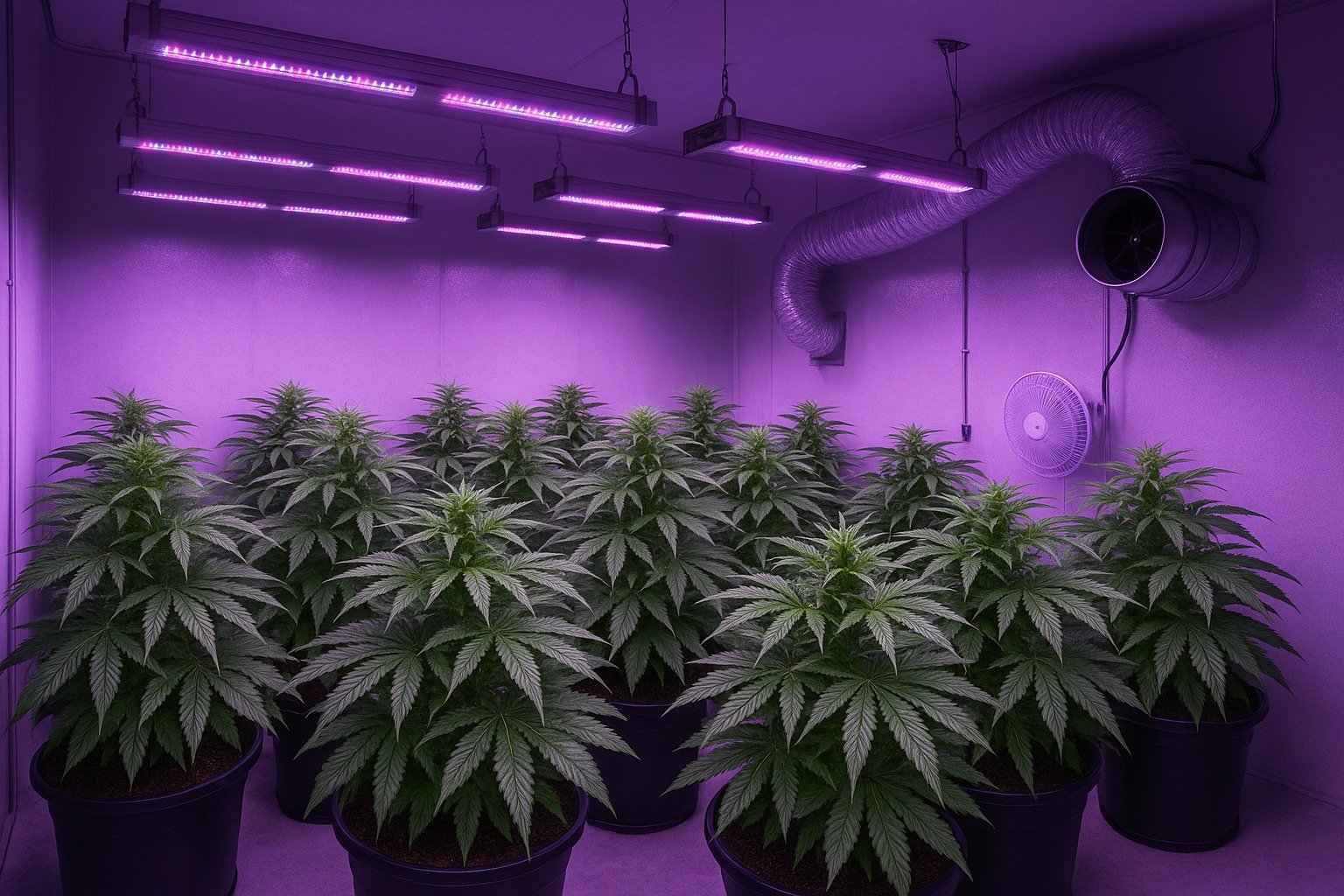
Indoor grown cannabis refers to marijuana cultivated in a controlled indoor environment using artificial lights, ventilation systems, and carefully managed nutrients. Unlike outdoor growing, where plants depend on sunlight and seasonal changes, indoor cannabis allows growers to maintain optimal conditions year-round. This means better control over temperature, humidity, and light cycles — leading to higher-quality buds, stronger potency, and more consistent harvests.
For new and experienced growers alike, indoor cultivation has become the preferred method because it offers discretion, predictability, and superior results compared to outdoor grows. In this guide, you’ll learn everything you need to know about indoor grown cannabis — from its advantages and challenges to the best strains, equipment, and growing techniques to maximize yield and quality.
Indoor grown cannabis is marijuana cultivated in a controlled indoor environment using artificial lights, ventilation, and nutrients. This method allows growers to regulate temperature and humidity, producing potent, high-quality buds year-round. Compared to outdoor cultivation, indoor cannabis offers greater consistency, discretion, and improved yields.
What Is Indoor Grown Cannabis?
Indoor grown cannabis refers to marijuana cultivated entirely inside a controlled environment, such as a grow room, basement, or grow tent. Unlike outdoor plants that rely on natural sunlight, rainfall, and seasonal weather, indoor cannabis is nurtured under artificial grow lights, regulated ventilation, and precise nutrient schedules.
This approach gives growers full control over every growth factor — from light cycles and humidity to temperature and CO₂ levels. By removing the unpredictability of outdoor weather, indoor grown cannabis typically produces denser buds, richer terpene profiles, and higher THC or CBD levels.
For many growers, especially in urban or restricted areas, indoor cultivation offers privacy and consistency. It allows cannabis to be grown year-round, regardless of climate or season, making it one of the most popular cultivation methods for both medical and recreational growers.
Advantages of Indoor Grown Cannabis
Growing cannabis indoors gives cultivators a unique set of benefits that outdoor or greenhouse growing cannot match. With the ability to control every aspect of the environment, indoor grown cannabis is often considered the standard for quality, potency, and consistency.
Consistent Growing Environment
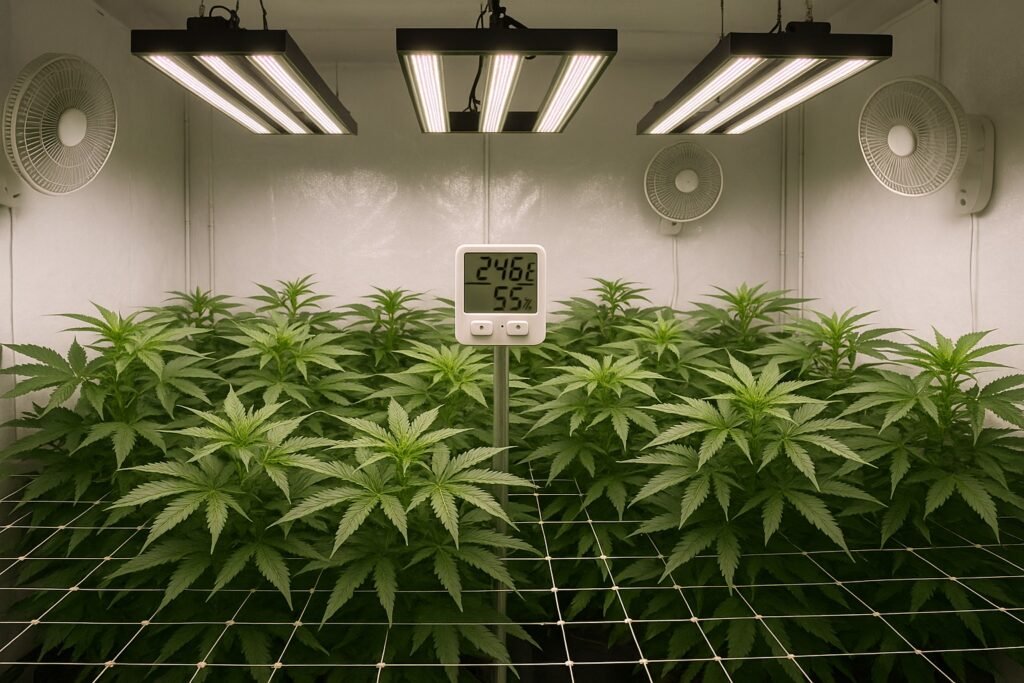
Indoor setups let you maintain stable temperature, humidity, and CO₂ levels throughout the entire growth cycle. This reduces risks from weather fluctuations, pests, or mold, ensuring a healthier crop and more predictable harvests.
Higher Potency & Quality
Because growers can fine-tune light intensity, nutrient schedules, and airflow, indoor cannabis plants often produce denser buds with stronger aromas and higher THC/CBD content. Many consumers prefer indoor-grown weed for its smooth smoke and premium-grade quality.
Year-Round Cultivation
Unlike outdoor cannabis, which depends on seasonal cycles, indoor growing enables continuous harvests. With proper planning, you can produce multiple crops per year, maximizing yield and profitability.
Discreet & Secure Growing
Indoor setups — whether in a grow tent, closet, or dedicated room — provide privacy and security. This is especially valuable for growers in urban areas or regions with strict growing regulations.
Disadvantages of Indoor Grown Cannabis
While indoor cannabis cultivation offers unmatched control and quality, it also comes with challenges and limitations that growers should consider before starting. Understanding these drawbacks helps you decide whether indoor growing is the right choice for your goals and budget.
Higher Setup & Energy Costs
Indoor growing requires specialized equipment such as grow lights, ventilation systems, and climate controls. These can be expensive to buy and run. Electricity bills for lighting and fans often make indoor cannabis one of the costliest cultivation methods.
Steeper Learning Curve
Unlike outdoor growing, where nature handles much of the process, indoor cultivation demands technical knowledge. Growers must monitor pH levels, nutrient schedules, light cycles, and airflow. Beginners may face challenges such as nutrient burn, mold, or stunted growth if they lack experience.
Limited Growing Space
Most indoor growers work within confined areas like grow tents, closets, or small rooms. While this allows discretion, it also means fewer plants and smaller overall yields compared to outdoor grows in open fields or greenhouses.
Indoor vs Outdoor Cannabis – Key Differences
When deciding between indoor grown cannabis and outdoor cannabis, the choice often comes down to cost, quality, environment, and growing goals. Each method has unique advantages, but they produce noticeably different results in terms of bud density, potency, and overall yield.
Environment & Control
- Indoor: Complete control over temperature, humidity, and light cycles. Plants grow in a stable, predictable environment.
- Outdoor: Relies on natural conditions like sunlight, rainfall, and seasonal changes, which can lead to inconsistent results.
Potency & Quality
- Indoor: Typically produces denser buds with higher THC/CBD levels and stronger terpene profiles due to optimized light and nutrient conditions.
- Outdoor: While still high-quality, outdoor cannabis may have looser bud structure and lower potency depending on climate and pests.
Yield & Scale
- Indoor: Yields are limited by space and setup size, but multiple harvests per year are possible.
- Outdoor: Can produce larger harvests per plant, especially in fertile soil and sunny climates, but only once or twice a year.
Cost of Cultivation
- Indoor: Requires significant investment in grow lights, ventilation, nutrients, and electricity.
- Outdoor: Much cheaper to set up, as plants rely mainly on natural resources.
Sustainability & Environmental Impact
- Indoor: High energy consumption and carbon footprint due to lighting and cooling systems.
- Outdoor: More eco-friendly but dependent on local weather and environmental risks.
Comparison Table: Indoor vs Outdoor Cannabis
| Factor | Indoor Grown Cannabis | Outdoor Cannabis |
|---|---|---|
| Environment Control | Full control (lights, humidity, temp) | Weather-dependent, less predictable |
| Potency & Quality | Higher THC, denser buds, richer flavor | Variable potency, less dense |
| Yield Potential | Limited by space but year-round harvests | Higher yields per plant but seasonal |
| Setup Cost | Expensive (equipment + electricity) | Low cost, relies on natural resources |
| Sustainability | High energy use, less eco-friendly | Eco-friendly, but weather risks |
| Discretion | Private, secure indoor setups | Exposed to outdoor visibility |
Essential Equipment for Growing Cannabis Indoors
To grow indoor cannabis successfully, you need the right equipment to create a controlled environment. Each tool plays a vital role in ensuring healthy plants, strong yields, and high-quality buds. Below are the must-have essentials for any indoor cannabis setup.
Grow Lights (LED vs HPS vs Fluorescent)
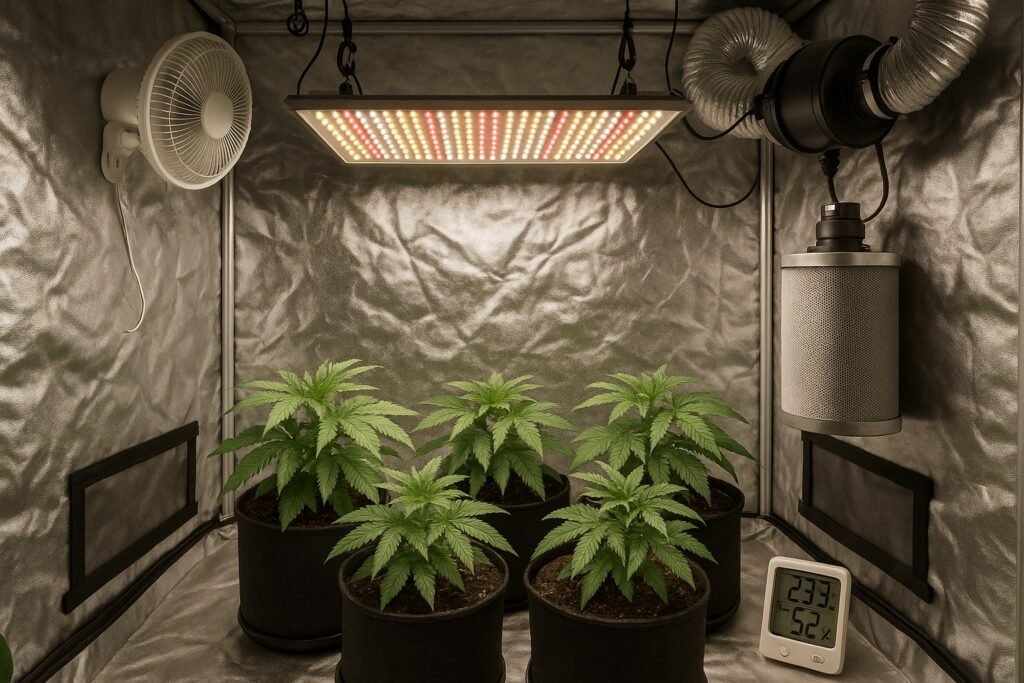
Light is the most critical factor for indoor growing. LED grow lights are energy-efficient and produce less heat, making them ideal for beginners. High-Pressure Sodium (HPS) lights are great for flowering due to their red spectrum, while fluorescent lights are useful for seedlings and clones.
Grow Tents & Ventilation
A grow tent provides a dedicated, enclosed space with reflective walls that maximize light efficiency. Ventilation systems — including inline fans, carbon filters, and exhaust ducts — maintain fresh airflow, remove excess heat, and eliminate strong cannabis odors.
Nutrients & Growing Mediums
Indoor plants thrive when fed with the correct nutrient blends of nitrogen, phosphorus, and potassium (NPK). Choosing between soil, coco coir, or hydroponic systems depends on your budget and growing style. Soil is forgiving for beginners, while hydroponics boosts faster growth.
Humidity & Temperature Control
Maintaining stable humidity and temperature is crucial. Tools like humidifiers, dehumidifiers, heaters, and air conditioners ensure your grow room stays within the optimal range. Cannabis prefers 65–80°F and 40–60% humidity depending on the growth stage.
Monitoring Tools & Timers
To avoid mistakes, growers rely on pH meters, hygrometers, thermometers, and digital timers. These devices help track the grow environment, automate light schedules, and prevent nutrient lockout or environmental stress.
Best Strains for Indoor Growing
Choosing the right cannabis strain is one of the most important steps for a successful indoor grow. Some strains are naturally compact, resilient, and adaptable to controlled environments, making them ideal for small spaces like grow tents or closets.
Autoflowering vs Photoperiod Strains
- Autoflowering Strains: These are perfect for beginners because they switch from the vegetative to flowering stage automatically, regardless of light schedule. They also grow faster, usually ready to harvest in 8–10 weeks.
- Photoperiod Strains: Require specific light cycles (18/6 for veg, 12/12 for flower) but often deliver higher yields and stronger potency. Ideal for growers who want more control.
Top Indoor-Friendly Cannabis Strains
Northern Lights
- Known as one of the easiest indoor strains.
- Compact size, low odor, and quick flowering time (~7–9 weeks).
- Produces dense, resinous buds with relaxing effects — perfect for beginners.
White Widow
- Popular worldwide for its balanced THC and CBD profile.
- Performs well in controlled indoor environments with moderate difficulty.
- Offers strong yields with crystal-coated buds and uplifting effects.
Gorilla Glue (GG4)
- A heavy-yielding hybrid with high THC content (up to 25%+).
- Best for intermediate growers due to its sticky buds and nutrient demands.
- Produces relaxing, euphoric effects.
Blue Dream
- A versatile hybrid that adapts well to indoor setups.
- Tall but manageable with training techniques (SCROG, LST).
- Produces large yields and delivers a balanced cerebral and body high.
Girl Scout Cookies (GSC)
- Compact, resilient strain ideal for limited indoor space.
- THC levels often exceed 20%, making it a potent favorite.
- Rich aroma and sweet flavor profile.
How to Choose the Right Strain for Indoors
- Desired Effects: Relaxing Indicas for nighttime use, uplifting Sativas for daytime, or hybrids for balance
- Space Available: Smaller strains like Northern Lights and GSC are perfect for tents.
- Experience Level: Beginners should start with autoflowers; advanced growers can handle photoperiod strains.
Step-by-Step Indoor Cannabis Growing Guide
Growing indoor cannabis successfully requires patience, consistency, and the right setup. By understanding each growth stage, you’ll be able to maximize yield, potency, and bud quality. Here’s a complete breakdown:
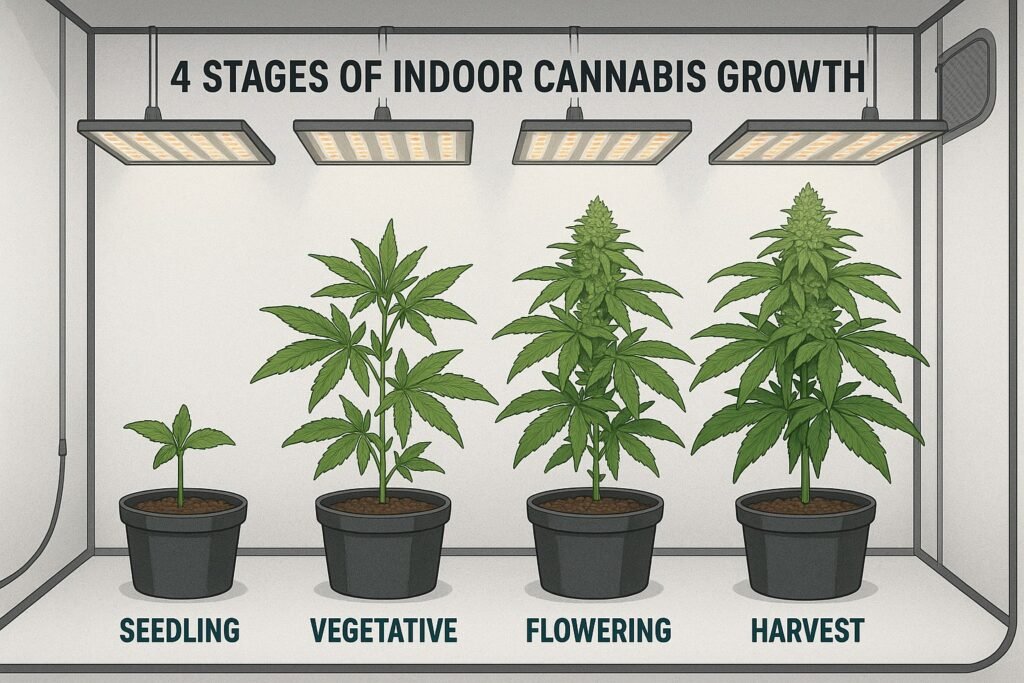
Germination & Seedling Stage (1–2 weeks)
- Start with quality cannabis seeds or clones.
- Germinate seeds using paper towel, starter plugs, or directly in soil.
- Keep seedlings under low-intensity light (fluorescent or LED) with 18–24 hours of light per day.
- Maintain humidity around 65–70% and temperature at 70–78°F (21–25°C).
Vegetative Stage (3–8 weeks)
- Switch to stronger LED or HPS lights with an 18/6 light schedule (18 hours light, 6 hours dark).
- Feed plants with nitrogen-rich nutrients to support leaf and stem growth.
- Use training techniques like LST (Low-Stress Training) or SCROG (Screen of Green) to control plant height in small grow spaces.
- Maintain humidity at 50–70% and temperatures between 70–85°F (21–29°C).
Flowering Stage (6–10 weeks)
- Change the light cycle to 12/12 (12 hours light, 12 hours dark).
- Provide phosphorus and potassium-rich nutrients to encourage dense bud development.
- Watch for pre-flowers to identify plant sex if growing from regular seeds.
- Lower humidity to 40–50% to prevent mold and bud rot.
Harvesting, Drying & Curing Indoor Cannabis
- Harvest when trichomes are milky white with some amber tips, signaling peak potency.
- Dry buds in a dark, ventilated room at 60–70°F (15–21°C) with 45–55% humidity for 7–10 days.
- Cure by placing dried buds in airtight glass jars, opening them daily for the first 1–2 weeks. Proper curing enhances flavor, smoothness, and potency.
Yield Expectations – How Much Can You Grow Indoors?
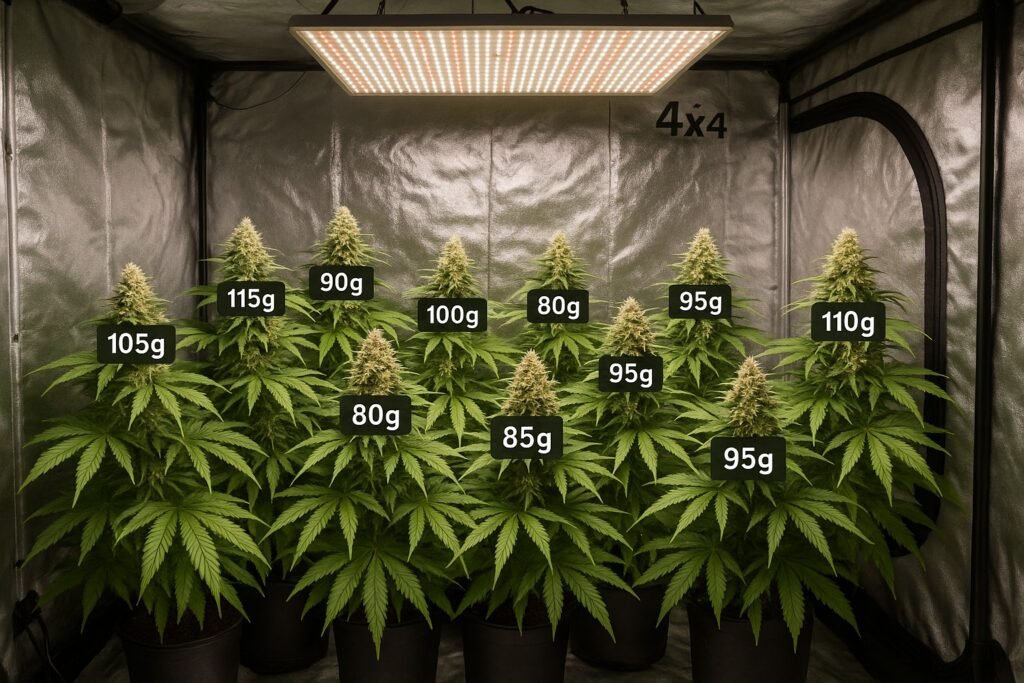
One of the most common questions new growers ask is: “How much cannabis can I harvest indoors?” The answer depends on several factors, including strain genetics, grow space, lighting, training techniques, and grower experience.
Yield by Grow Space
- Small setup (1–2 plants in a 2×2 grow tent): Expect 40–150 grams per plant depending on strain and lighting.
- Medium setup (3–6 plants in a 3×3 or 4×4 tent): Average 200–600 grams total harvest.
- Large grow room (6–10+ plants): Can yield 1–2+ kilograms with proper training and lighting.
Lighting & Yield Ratios
- Indoor growers often calculate yield by grams per watt (g/W).
- LED lights: Efficient, yielding around 1–1.5 g/W.
- HPS lights: Slightly lower efficiency, averaging 0.5–1 g/W.
- Example: A 300W LED grow light could yield 300–450 grams of dried cannabis.
Factors That Influence Indoor Yield
- Strain choice: High-yield strains like Big Bud or Critical Mass can produce more per square foot.
- Training techniques: Methods like SCROG, LST, or topping help maximize canopy space and bud sites.
- Nutrients & pH balance: Correct feeding schedules ensure plants grow strong and healthy.
- Grower experience: First-time growers may harvest less, but skills improve with each grow cycle.
Is Indoor Grown Cannabis Better?
The debate over indoor vs outdoor cannabis often comes down to quality, potency, and consistency. While both methods have advantages, many consumers and growers consider indoor grown cannabis superior in certain aspects.
Potency and Cannabinoid Profile
Indoor cannabis often contains higher THC and CBD levels because growers can fine-tune light intensity, nutrients, and environmental conditions. This results in denser buds with stronger effects, making it a preferred choice for medical patients and recreational users seeking potency.
Flavor and Terpene Richness
Controlled environments allow terpenes to develop without stress from harsh weather. Indoor-grown buds usually have a richer aroma, smoother taste, and stronger flavor profile, enhancing the smoking or vaping experience.
Market Value and Price
In dispensaries, indoor cannabis usually sells at a premium price due to its appearance, potency, and bag appeal. Dense, crystal-covered buds with vibrant colors are more attractive to buyers compared to the looser structure of some outdoor-grown cannabis.
Balanced Perspective
However, “better” depends on what you value. Indoor cannabis wins in quality and consistency, but outdoor cannabis often delivers larger yields and a more eco-friendly footprint. For commercial growers focused on premium buds, indoor cultivation is often the best choice.
Common Mistakes to Avoid in Indoor Cannabis Growing
Even with the best setup, many beginners make avoidable mistakes that reduce yield, potency, and overall plant health. By understanding these errors early, you can ensure your indoor cannabis grow delivers top-quality results.
Overwatering and Poor Drainage
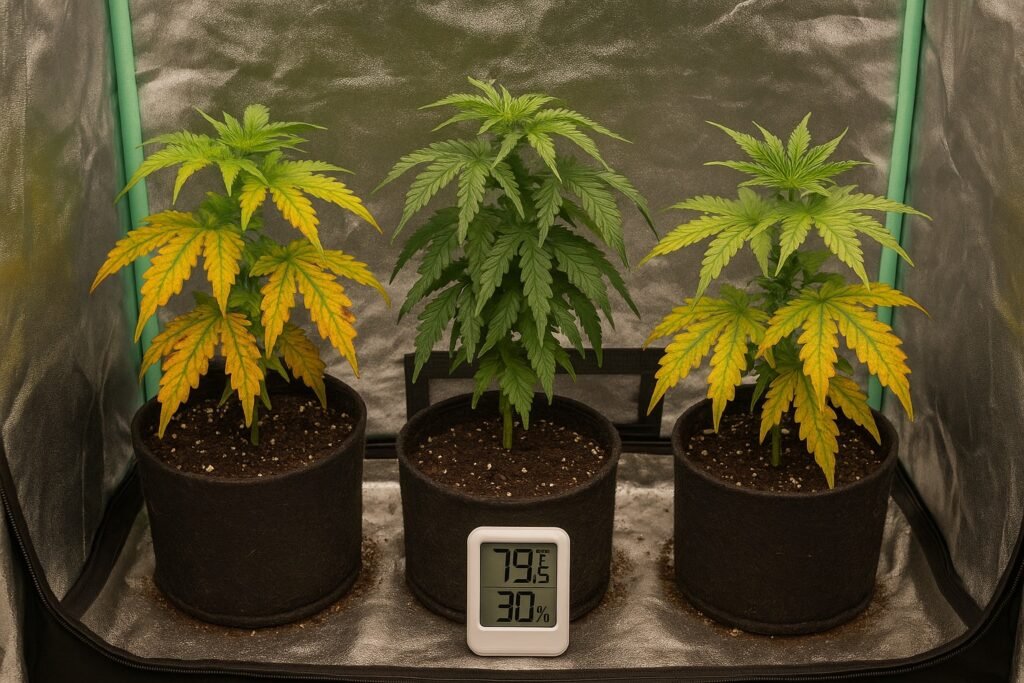
One of the most frequent mistakes is watering too often. Cannabis roots need oxygen, and excess water can cause root rot, nutrient lockout, and stunted growth. Always allow soil to dry slightly between waterings and ensure pots have good drainage.
Incorrect Light Cycles
Lighting directly influences yield and potency. Using the wrong light schedule — such as failing to switch from 18/6 (vegetative) to 12/12 (flowering) — can lead to delayed flowering or poor bud development. Position lights at the correct distance to avoid light burn or weak growth.
Poor Airflow and Ventilation
Stale air creates conditions for mold, mildew, and pests. Many beginners overlook the importance of oscillating fans, inline fans, and carbon filters to maintain proper airflow. Good ventilation strengthens stems and keeps the grow room fresh.
Overfeeding Nutrients
More nutrients don’t always mean bigger buds. Overfeeding leads to nutrient burn, visible as yellow or brown leaf tips. Following a nutrient schedule, monitoring pH levels (5.8–6.5 for soil/soilless), and adjusting gradually helps prevent this issue.
Ignoring Temperature & Humidity
High heat or low humidity can stress plants and reduce trichome production. Indoor cannabis thrives in 70–80°F (21–27°C) with 40–60% humidity depending on the growth stage. Ignoring climate control is one of the fastest ways to ruin a crop.
How Long Does It Take to Grow Weed Indoors? Complete Grow Timeline.
FAQs
Yes. Indoor cannabis is often stronger because growers control lighting, nutrients, and environmental factors. This results in higher THC/CBD levels, denser buds, and richer terpene profiles compared to many outdoor-grown plants.
The cost depends on setup size. A small grow tent with LED lights may cost $300–600 to set up, while larger grow rooms can exceed $2,000–5,000. Ongoing expenses include electricity, nutrients, and replacement parts.
From seed to harvest, indoor cannabis takes about 3–5 months. Autoflowering strains are faster, maturing in 8–10 weeks, while photoperiod strains take longer but often yield more.
LED grow lights are the most efficient and beginner-friendly option. They produce less heat, save electricity, and support all growth stages. Advanced growers sometimes use HPS lights for flowering to maximize bud density.
On average, one indoor plant yields 40–150 grams, depending on genetics, lighting, and grower skill. With training methods like SCROG or LST, yields can be significantly higher.
Conclusion
Indoor grown cannabis has become the preferred choice for growers and consumers who value consistency, potency, and control. By cultivating cannabis in a controlled environment, growers can produce dense, high-quality buds with strong THC/CBD levels and rich terpene profiles — something that outdoor growing cannot always guarantee.
While indoor cultivation requires higher startup costs, more energy, and technical knowledge, the rewards often outweigh the challenges. For those seeking year-round harvests, premium bud quality, and privacy, indoor cannabis growing stands out as the most reliable method.
Whether you’re a beginner starting with a small grow tent or an advanced grower managing a larger setup, understanding the advantages, challenges, and best practices of indoor cannabis ensures better yields and superior results.
👉 Ready to take the next step? Check out our detailed guides on:
- Best Grow Lights for Indoor Cannabis
- Indoor vs Outdoor Cannabis Growing
- Step-by-Step Cannabis Growing Calendar.