

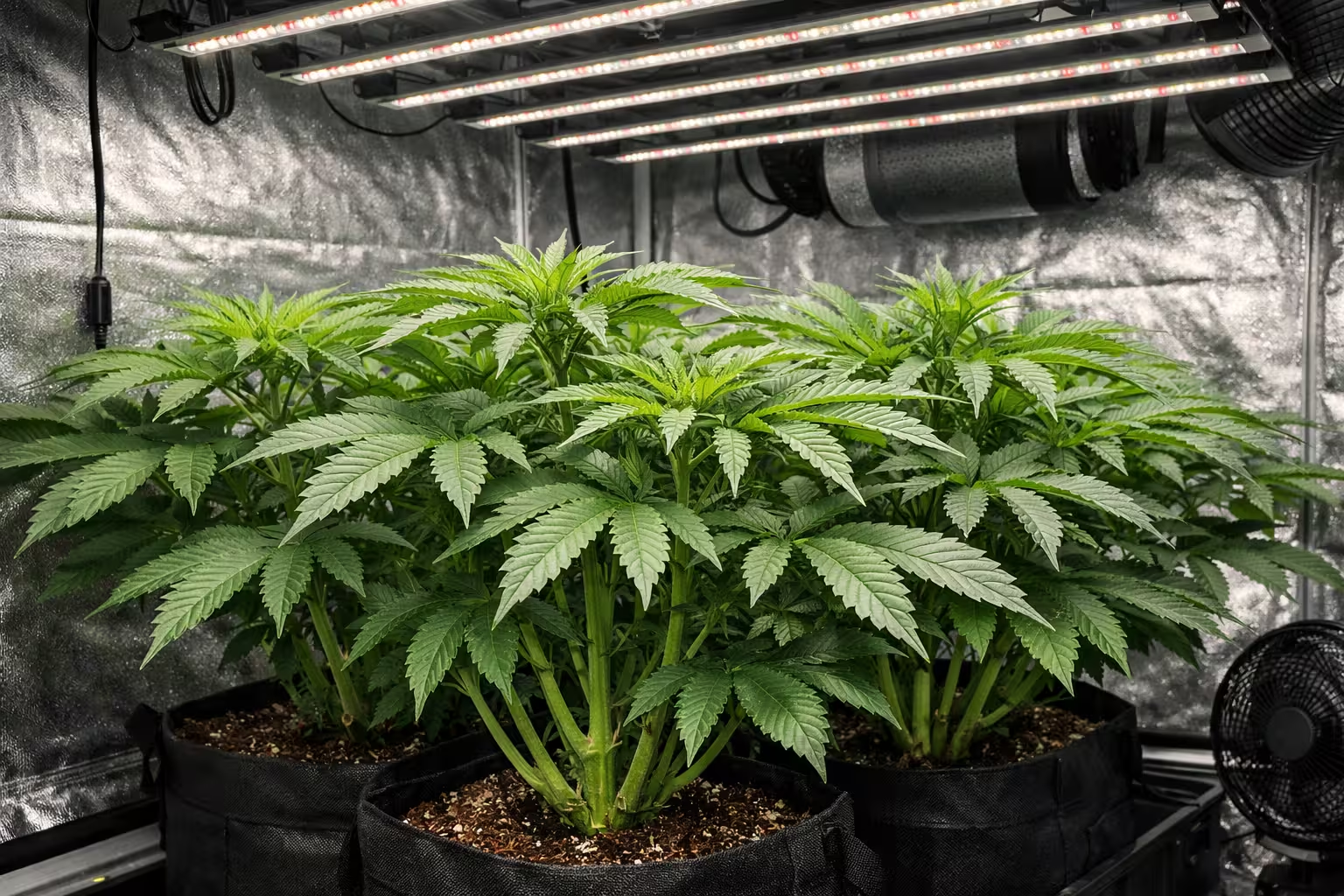
If you want weed to grow faster, the real secret is not pushing the plant harder—it is removing every condition that slows it down. Cannabis naturally grows fast when genetics, light intensity, root oxygen, temperature, humidity, and feeding all stay in balance. Most growers lose time because one small factor quietly stalls the plant for days without obvious warning.
The fastest way to grow weed is usually to choose fast-finishing genetics, especially autoflower cannabis, then give the plant uninterrupted strong light, warm root conditions, balanced nutrition, and zero unnecessary stress during early growth. A plant that grows smoothly from seedling to flowering often finishes far earlier than a genetically identical plant that suffers minor setbacks.
Many beginners think more nutrients automatically mean faster growth, but cannabis speed actually depends more on photosynthesis efficiency, root-zone oxygen, and stable transpiration than on aggressive feeding. A weak root system, low light, poor airflow, or incorrect watering can slow cannabis much more than people realize.
When all growth systems work together, cannabis develops thicker stems, broader leaves, tighter internodes, and enters flowering with more momentum.
What Is the Fastest Way to Grow Weed?
Fast cannabis growth begins with understanding what controls biological speed inside the plant. Cannabis converts light into energy through photosynthesis, but how quickly that energy turns into new stems, leaves, and roots depends on genetics first, then environment second.
A fast-growing plant is not simply taller—it is actively building tissue every day without interruption.
Genetics Always Control Growth Speed First
The first and strongest factor in cannabis speed is genetics. Some cultivars are naturally programmed to finish quickly, while others are designed for long flowering periods.
This is why two plants under identical light can still mature at very different speeds.
Autoflower genetics usually finish fastest because flowering starts automatically based on plant age rather than waiting for a light-cycle trigger. Most autoflowers begin flowering around week three or four, regardless of light schedule.
Fast genetics usually show:
- quick taproot emergence
- rapid cotyledon expansion
- strong early leaf production
- short internodal distance
- fast pistil formation
A plant bred for long flowering cannot fully become a short-cycle plant, even under perfect conditions.
That is why growers focused on speed almost always begin with cultivar selection before adjusting nutrients or equipment.
Why Environment Can Accelerate or Slow Growth
Even excellent genetics lose speed immediately when environmental conditions drift outside ideal range.
Cannabis grows fastest when all growth systems remain stable:
- leaf temperature stays consistent
- roots remain warm and oxygenated
- humidity matches stage requirements
- fresh air constantly replaces stale air
When these conditions break, growth slows before obvious visual symptoms appear.
For example, a root zone that stays too cold reduces nutrient absorption even when fertilizer is perfect. Likewise, weak airflow reduces transpiration, which slows mineral transport through the plant.
The plant may still look alive, but growth momentum weakens.
Fast Growth vs Healthy Growth
Fast growth must still remain healthy growth.
A plant forced too aggressively often develops:
- weak stems
- nutrient imbalance
- thin leaf structure
- stress-related slowdown later
The goal is not explosive unstable growth. The goal is steady uninterrupted expansion.
Healthy fast cannabis usually shows:
- dark but not overly dark green leaves
- upright posture
- thick stem diameter
- active new growth daily
When these signs stay consistent, the plant is moving efficiently.
Choose Fast-Growing Cannabis Genetics
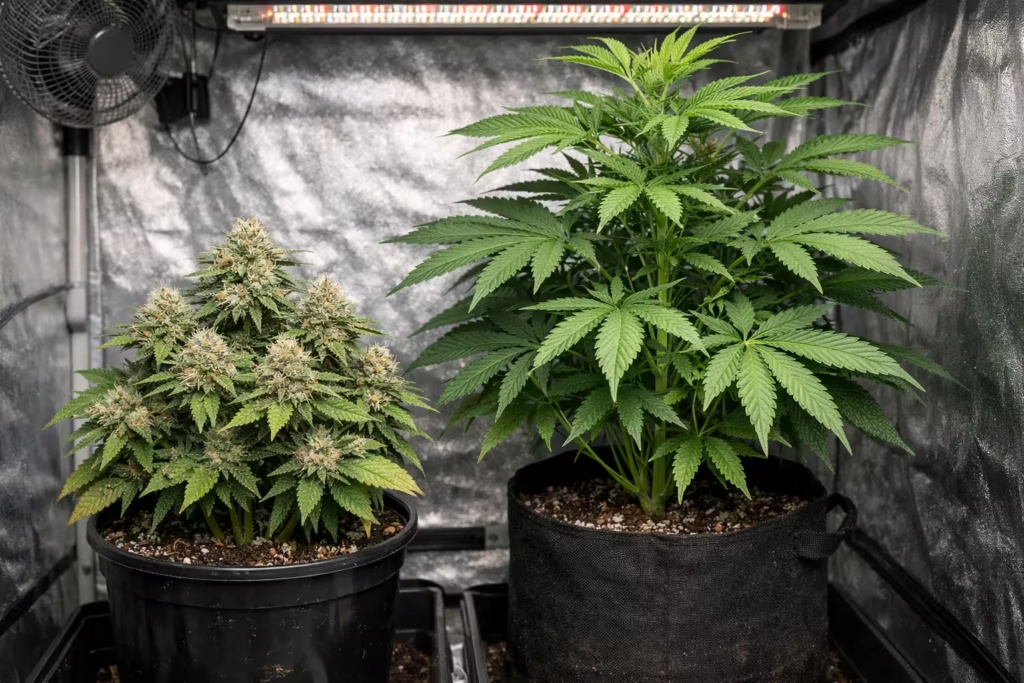
Fast harvest begins before germination.
The seed itself often determines whether your crop finishes in 9 weeks or 15 weeks.
Autoflower vs Photoperiod for Speed
If speed is the main goal, autoflowers usually win.
Autoflower cannabis does not wait for a 12/12 light cycle. It begins flowering automatically after early vegetative development.
Typical autoflower timeline:
- germination: 2–5 days
- seedling stage: 10–14 days
- vegetative expansion: 2–3 weeks
- flowering: 5–7 weeks
This means many autoflowers finish in 8 to 11 weeks total.
Photoperiod plants require manual flowering trigger and often longer vegetative control.
That adds extra weeks.
Autoflowers work best when growers avoid heavy stress because recovery time is limited.
Fast-Flowering Photoperiod Strains
Some photoperiod cultivars also grow quickly.
Fast-flowering photoperiod hybrids often finish in:
- 7 weeks flowering
- 8 weeks flowering
- 9 weeks flowering
These are useful when growers want larger final yield than most autoflowers while still keeping total crop time shorter.
Fast photoperiod hybrids often combine indica traits with strong vigor.
Seed Quality and Germination Speed
Weak seed quality delays everything.
Healthy cannabis seeds usually have:
- firm shell
- darker coloration
- mature seed coat
Fresh seeds usually produce faster taproot development and stronger early metabolism.
Weak germination often creates seedlings that need extra recovery time before true vegetative growth begins.
Use the Best Light Strategy for Rapid Cannabis Growth
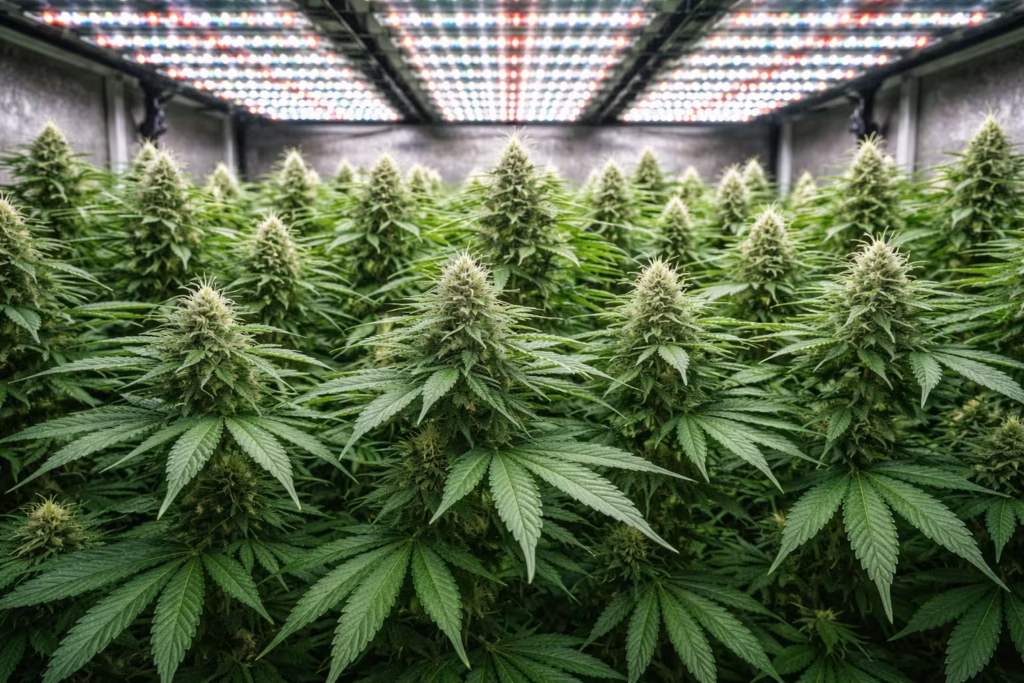
Light is the strongest external growth engine.
Without enough usable light energy, nutrients cannot fully convert into plant tissue.
Ideal Light Schedule for Fast Vegetative Growth
For fastest vegetative growth:
Photoperiod plants perform best under:
- 18 hours light
- 6 hours darkness
Autoflowers often perform very well under:
- 20 hours light
- 4 hours darkness
This gives enough daily photosynthesis while preserving plant metabolic balance.
More light hours do not always outperform better light intensity.
PPFD Levels for Faster Growth
PPFD controls how much usable light reaches leaves.
Ideal ranges:
- seedlings: 200–300 PPFD
- vegetative stage: 400–600 PPFD
- flowering stage: 700–900 PPFD
Low PPFD causes stretching and slow tissue production.
High PPFD without balance can stress leaves.
Proper intensity speeds:
- chlorophyll activity
- node formation
- leaf expansion
Why LED Intensity Matters More Than Hours Alone
Modern full-spectrum LED grow lights create stronger growth because intensity remains consistent.
A weak lamp running longer often performs worse than strong proper LED intensity.
Strong LED coverage improves:
- canopy penetration
- lower leaf productivity
- tighter internodal spacing
That directly shortens vegetative inefficiency.
Root Development Is the Real Growth Engine
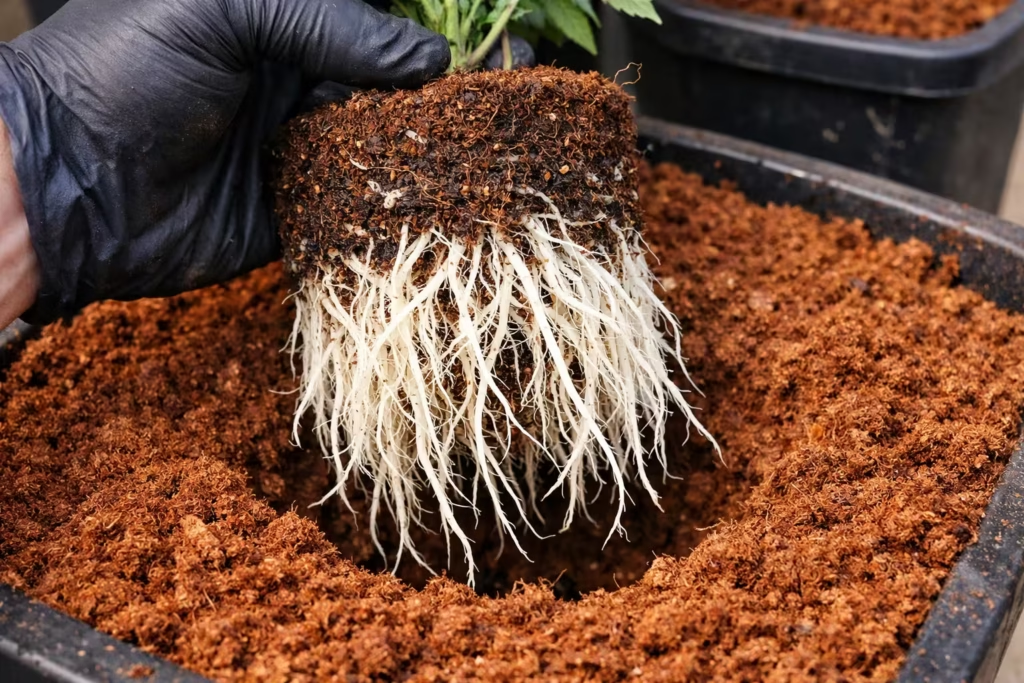
Fast leaves above ground always reflect active roots below ground.
Roots determine nutrient speed, oxygen availability, and water efficiency.
Why Root Oxygen Speeds Growth
Roots require oxygen constantly.
Without oxygen:
- nutrient uptake slows
- root respiration weakens
- leaf growth stalls
Best aeration comes from:
- perlite
- coco coir
- loose soil structure
Healthy white roots almost always indicate active fast growth.
Best Pot Size for Faster Development
Very large containers too early often slow seedlings because wet media remains cold longer.
Better progression:
- small starter pot
- transplant after root fill
This encourages strong root colonization before expansion.
Soil vs Coco vs Hydroponics for Speed
Hydroponics usually grows fastest because roots access nutrients directly.
Speed ranking usually:
- hydroponics
- coco coir
- living soil
Hydro creates fastest vegetative expansion when oxygen and EC remain stable.
Coco offers excellent speed with easier control.
Temperature and Humidity That Make Weed Grow Faster
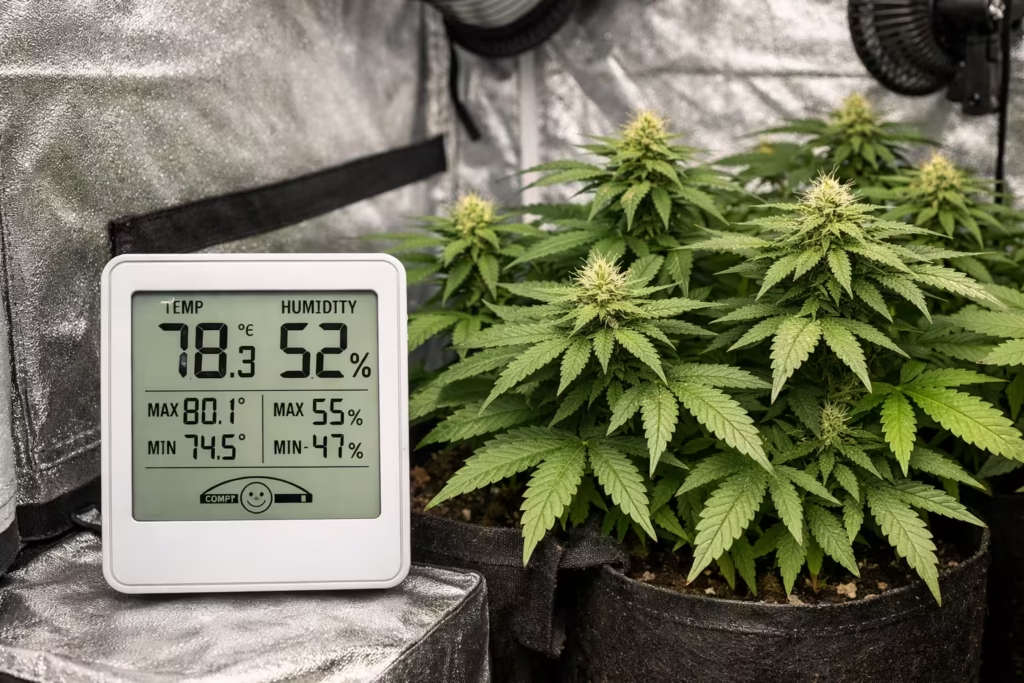
Climate directly controls metabolism.
Best Temperature Range for Fast Growth
Ideal cannabis growth range:
- daytime: 24°C–28°C
- night: 20°C–23°C
Cold slows enzyme activity immediately.
Warm roots always support faster metabolism.
Humidity by Growth Stage
Correct humidity prevents unnecessary stress.
Best ranges:
- seedlings: 65–70%
- vegetative stage: 55–65%
- flowering stage: 40–50%
VPD and Faster Transpiration
VPD controls how efficiently moisture moves through leaves.
Balanced VPD improves:
- transpiration
- mineral transport
- cooling efficiency
Stable VPD creates visible daily growth consistency.
Nutrients That Accelerate Cannabis Growth Safely
Nutrients help speed only when balanced.
Nitrogen During Vegetative Growth
Nitrogen powers:
- chlorophyll formation
- leaf tissue expansion
- vegetative speed
Low nitrogen quickly reduces vigor.
Calcium and Magnesium for Cell Expansion
Calcium strengthens new tissue.
Magnesium powers chlorophyll.
Hidden shortages often slow plants before visible symptoms appear.
Avoid Overfeeding
High EC slows roots.
Too much feeding causes:
- burn
- lockout
- slower recovery
Balanced feeding always wins over aggressive feeding.
Fastest Watering Method for Healthy Speed
Watering controls oxygen more than many growers realize.
Wet-Dry Cycle Importance
Roots grow faster when they search slightly between irrigations.
This improves root density.
Why Overwatering Slows Cannabis
Constant saturation removes oxygen.
That causes slow pale growth.
Water Temperature Matters
Ideal irrigation water:
20°C–22°C
Cold water slows root activity.
Training Methods That Speed Up Final Yield
Training affects light capture.
Low Stress Training for Faster Light Capture
LST opens canopy quickly.
This increases productive leaf area.
Why Topping Can Delay Growth
Topping pauses growth during recovery.
Speed-focused growers often limit topping.
When Not to Train Autoflowers
Autoflowers recover slowly under time pressure.
Minimal stress works best.
Fastest Indoor Method vs Fastest Outdoor Method
Indoor growing usually wins for harvest speed because growers remove environmental delays.
Why Indoor Cannabis Usually Grows Faster
Indoor gives full control:
- light
- root warmth
- humidity
- airflow
This removes daily slowdown.
Why Outdoor Growth Can Be Slower
Outdoor plants face:
- cloud shifts
- cold nights
- seasonal light changes
These delays accumulate.
Why Greenhouse Growing Often Combines Both Advantages
Greenhouses combine sunlight with protection.
That often creates excellent speed balance.
Which Method Is Actually Fastest for Harvest Speed
Indoor autoflower usually wins.
Fast indoor autoflower can finish in:
8–10 weeks.
Common Mistakes That Slow Weed Growth
Small mistakes create invisible delays.
Weak Light
Weak light slows photosynthesis first.
Poor Airflow
Leaves need gas exchange constantly.
Root Stress
Compacted roots slow everything.
Wrong pH
Ideal pH:
- soil: 6.0–6.5
- coco/hydro: 5.8–6.2
Transplant Shock
Poor transplanting pauses growth several days.
How Long Does Fast Cannabis Growth Actually Take?
Autoflower Timeline
8–11 weeks total.
Fast Photoperiod Timeline
12–15 weeks total.
Harvest Expectations by Method
Hydro slightly shortens veg time.
Best Practical Formula for Fastest Weed Growth
The fastest reliable formula remains:
fast genetics + strong LED + oxygenated roots + stable VPD + balanced nutrition + zero stress
That consistently outperforms shortcuts.
