

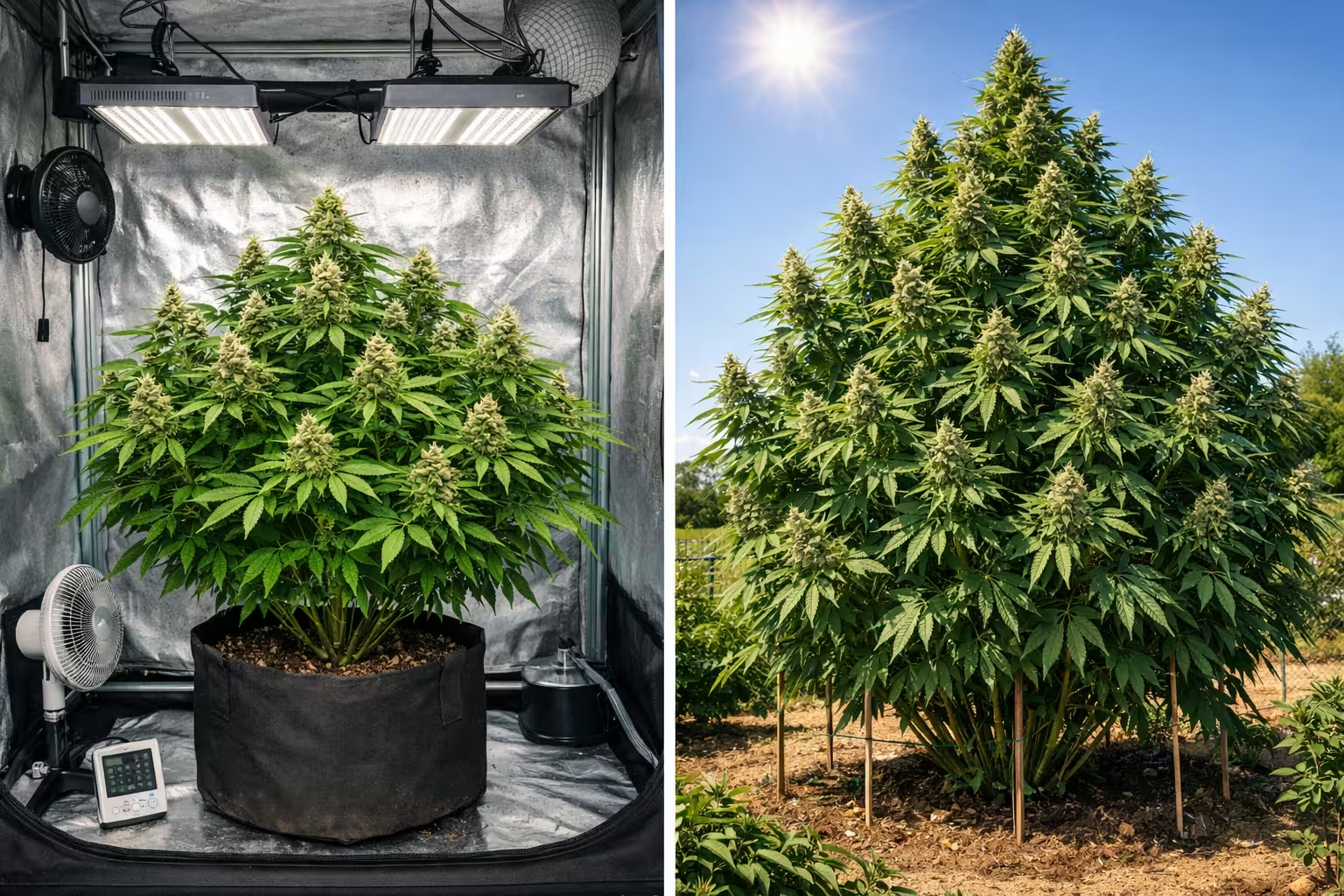
Marijuana plants can stay small enough to fit inside a compact grow tent or become massive outdoor trees taller than a person, depending on genetics, root space, light exposure, and how long they stay in vegetative growth. A small indoor autoflower may finish at only 1 to 3 feet tall, while a full-season outdoor photoperiod plant can easily reach 8 to 12 feet under strong sun and unrestricted roots.
The biggest mistake beginners make is assuming all cannabis plants grow to the same size. In reality, final plant height changes dramatically depending on whether you grow indoors or outdoors, whether the cultivar is indica or sativa dominant, how large the container is, and whether you train the canopy early.
If you are planning your grow space, understanding final cannabis plant size matters because height affects light distance, airflow, humidity control, branch support, and ultimately yield. A plant that stretches unexpectedly during flowering can quickly overcrowd a tent, while an outdoor plant that gets too large may create privacy problems or become harder to manage during late bloom.
This guide explains realistic marijuana plant size expectations across different grow styles, why some plants stay compact while others explode upward, and how growers control height without reducing production.
How Big Do Marijuana Plants Usually Get?
The simplest answer is that most marijuana plants fall somewhere between 2 and 12 feet tall depending on environment and genetics, but this range only makes sense when broken into specific growing situations.
Average indoor marijuana plant height
Indoor marijuana plants usually finish between 2 and 5 feet tall because growers intentionally control height. Indoor environments have limited vertical space, especially inside grow tents where lights, filters, and hanging equipment reduce usable height.
A plant grown in a 3-gallon pot under controlled LED lighting often stays manageable because root volume limits overall biomass. If vegetative growth is short, the plant remains compact and develops a dense canopy rather than a tall vertical structure.
Indoor height also depends heavily on when flowering begins. A plant switched to 12/12 early may finish under 3 feet, while a long vegetative cycle can create a much taller plant before flowering stretch even starts.
Detailed points:
- Tent height often limits final plant size before genetics do
- LED distance forces growers to control upper canopy
- Indoor plants usually develop wider canopies when trained properly
Average outdoor marijuana plant height
Outdoor marijuana plants often grow far larger because roots are unrestricted and sunlight intensity drives continuous biomass production. In open soil, a photoperiod plant can easily reach 6 to 12 feet if planted early in season.
A healthy outdoor cannabis plant in fertile soil behaves differently than an indoor plant because roots continue expanding deep and wide. Strong sun exposure increases internodal growth, branch strength, and canopy width.
Some full-season outdoor plants become extremely large when started early in spring and allowed to vegetate for months before flowering naturally begins.
Detailed points:
- Outdoor roots can expand several times larger than container-grown plants
- Long vegetative seasons create giant plants
- Large outdoor canopies often require staking or trellis support
Average autoflower marijuana plant height
Autoflowers stay much smaller because their life cycle is genetically limited. Most autoflower plants finish between 1 and 4 feet tall.
They begin flowering based on age rather than light schedule, which means they have less time to build large stems and root mass before entering reproductive growth.
Compact size is one reason many beginners prefer autoflowers indoors, especially when vertical space is limited.
Detailed points:
- Short vegetative period limits overall size
- Root stress affects autos more quickly
- Small size does not always mean poor yield if canopy is healthy
Marijuana Plant Size by Cannabis Type
Plant morphology changes dramatically depending on genetic background.
How big indica plants get
Indica-dominant plants usually stay shorter and bushier. Their internodal spacing remains tight, which creates dense side branching and thicker canopy development.
This compact structure makes indica genetics easier to manage indoors because vertical growth stays moderate even during flowering stretch.
Many indica plants finish between 2 and 4 feet indoors.
Detailed points:
- Shorter branch spacing creates dense canopy
- Easier to manage in tents
- Often stronger lateral growth than vertical growth
How big sativa plants get
Sativa plants are naturally taller because they evolved in regions where vertical competition for sunlight favored upward growth.
A sativa can double or even triple in height during early flowering. Indoors this often surprises growers who underestimate stretch.
Outdoor sativas frequently exceed 10 feet under strong sunlight.
Detailed points:
- Long internodes create taller plant profile
- Flowering stretch can be aggressive
- Requires training indoors to control height
How big hybrid plants get
Hybrids vary depending on dominant traits inherited from parent lines. Many modern hybrids are bred specifically for manageable indoor size while maintaining strong yield.
A balanced hybrid usually finishes between 3 and 6 feet depending on vegetative duration.
Detailed points:
- Many commercial hybrids are optimized for controlled canopy size
- Hybrid height depends on breeder selection
How Big Marijuana Plants Get Indoors
Indoor size depends less on pure genetics and more on grower decisions.
Size in small grow tents
A 2×2 or 3×3 tent naturally limits plant height because lights require safe canopy distance. Even if genetics want to stretch, growers usually intervene early.
A plant left untrained in a small tent often creates light burn near the top while lower branches remain underdeveloped.
Detailed points:
- Tent ceiling reduces usable height
- Carbon filters consume upper space
- Early topping prevents vertical dominance
Size under LED grow lights
Modern LEDs strongly affect internodal spacing. High-intensity full-spectrum lighting usually creates tighter node stacking compared to weak lighting.
Weak light often causes elongated stems because plants stretch toward available photons.
Detailed points:
- Strong PPFD encourages compact growth
- Weak light causes taller spacing between nodes
Pot size effect indoors
Container size directly controls root mass, which controls plant size.
A 3-gallon pot usually produces smaller plants than a 7-gallon container because root restriction reduces overall vegetative potential.
Detailed points:
- Root-bound plants stop aggressive upward growth
- Small pots naturally limit final biomass
How Big Marijuana Plants Get Outdoors
Outdoor cannabis expresses its full size potential.
Full-season outdoor photoperiod size
A plant started early outdoors and transplanted into open ground can become extremely large before flowering begins.
The long vegetative season allows trunk thickening, branch multiplication, and canopy spread beyond what indoor growers typically experience.
Climate effect on final height
Warm climates with long summers allow continued vegetative expansion.
Cool short-season climates reduce final size because flowering starts before major biomass develops.
Raised beds vs containers outdoors
Raised beds usually outperform containers because root systems can expand farther and maintain stable moisture.
What Determines Final Marijuana Plant Size?
Several biological and environmental variables control final size.
Genetics and cultivar selection
Some cultivars are genetically compact. Others naturally stretch.
Breeders often publish expected plant height because genetic behavior remains one of the strongest predictors.
Vegetative growth duration
The longer a plant remains in vegetative growth, the larger it becomes.
Each extra week of vegetative growth compounds canopy size significantly.
Root zone and container restriction
Healthy root expansion directly supports canopy growth.
Large root zones increase nutrient uptake and stem thickness.
Light exposure and photoperiod
More light hours during vegetative stage produce larger plants.
Nutrient availability
Nitrogen supports vegetative expansion, but excess feeding can also cause weak overstretching if light is insufficient.
Why Marijuana Plants Stretch So Much During Flowering
Flowering stretch is one of the most important phases affecting final height.
Early flowering stretch explained
During the first 2–3 weeks after flowering begins, plants redirect growth hormones upward rapidly.
Which strains stretch the most
Sativa-dominant cultivars often stretch hardest.
How much height increase to expect
Many plants gain 50% to 200% extra height after flowering starts.
How to Keep Marijuana Plants Small Indoors
Growers actively control plant size to maximize canopy efficiency.
Topping
Removing the main tip breaks apical dominance and encourages side growth.
Low stress training (LST)
Branches are bent horizontally to create even canopy spread.
SCROG method
A screen forces branches sideways, increasing productive canopy without height problems.
Early flowering flip
Switching to flower earlier prevents overgrowth.
Can Marijuana Plants Grow Too Big?
Yes — oversized plants often create management problems.
Indoor ceiling problems
Tall plants quickly reach unsafe light distance.
Light burn risks
Upper colas bleach under excessive intensity.
Airflow problems in oversized plants
Dense oversized canopies trap humidity and increase mold risk.
Does Bigger Marijuana Plant Mean Bigger Yield?
Not always.
A well-trained medium plant often outperforms a tall unmanaged plant because light penetration improves bud development.
Bigger roots usually help
Root mass supports nutrient delivery.
Canopy efficiency matters more
Flat even canopies outperform uneven vertical growth.
Small trained plants can outperform tall plants
Many commercial indoor growers intentionally keep plants short for this reason.
How Big Marijuana Roots Get Underground
Roots often expand wider than growers expect.
Root spread in containers
Roots circle container walls and fill available media quickly.
Root spread in outdoor soil
Outdoor roots may spread several feet laterally when soil structure is healthy.
FAQs
Yes, outdoor photoperiod plants commonly exceed 10 feet under full-season conditions.
Most indoor growers flip between 12 and 24 inches depending on stretch expectations.
Yes, most remain compact due to short lifecycle.
Most plants in 5-gallon pots finish medium-sized, often 3 to 5 feet depending on veg time.
