

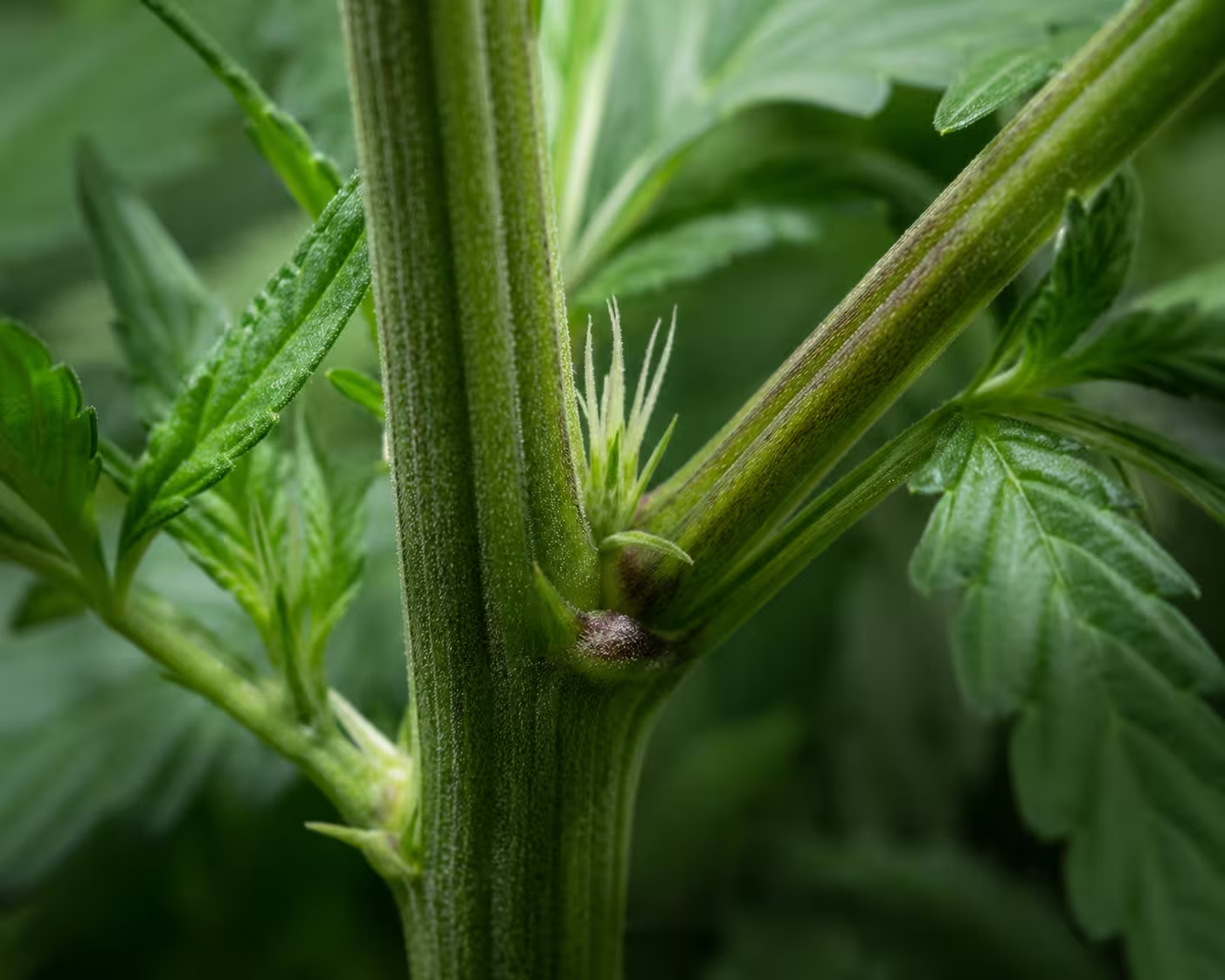
If you’ve been growing cannabis long enough, you already know the vegetative stage is about a lot more than just stacking internodes and building root mass. Hidden inside those leaf axils, weeks before you ever flip the lights, your plants are quietly telling you something critical — their sex, their maturity, and in many ways, their potential. That’s the world of pre-flowering in veg, and most growers, even experienced ones, either miss it or misread it.
This guide cuts deep. We’re talking about the biology behind pre-flower development, how to read those early indicators with accuracy, why photoperiod plants and autoflowers behave differently, and the high-stakes grow-room decisions this information should be driving. If you’re still waiting until week two of flower to confirm sex, you’re leaving yield, space, and time on the table.
What Pre-Flowering Actually Is — The Biology Behind the Signal
Pre-flowers are not just a visual curiosity. They are the plant’s first committed expression of reproductive development, triggered by a complex hormonal shift occurring well within the vegetative phase.
The Role of Florigen and Gibberellins in Pre-Flower Development
Cannabis pre-flower emergence is regulated by a balance between florigenic signals and gibberellin activity. As a cannabis plant matures past its juvenile phase — typically around the fourth to sixth week of vegetative growth — its meristematic tissue at the nodes becomes sensitive to internal cues rather than just photoperiodic light changes.
Florigen (identified as the FT protein complex in most angiosperms) begins to accumulate even under long-day conditions, and gibberellin hormones play a key role in male pre-flower elongation versus the calyx development seen in females. This is why a healthy plant under 18/6 lighting will still throw pre-flowers — it’s not a response to reduced light, it’s a response to physiological age.
Understanding this distinction matters because it shifts how you think about pre-flowers. They’re not an early flower. They’re a maturity checkpoint — the plant declaring it has moved out of its juvenile phase and is reproductively capable.
The Difference Between Pre-Flowers and Actual Flowers
This is where a lot of growers get sloppy with terminology, and in a practical grow setting, the distinction is important. A pre-flower is a single, undeveloped reproductive structure — a solitary pistillate calyx in females, or a single pollen sac primordium in males — appearing at the nodes with no cluster, no bract swelling, and no visible trichome development.
An actual flower (or more accurately, a floral cluster) only begins forming after the light cycle shift triggers photoperiodic flowering. Pre-flowers are standalone, often microscopic, and appear one at a time at individual nodes. True flowers emerge in dense groupings, with calyx stacking, pistil proliferation, and rapid trichome synthesis beginning.
The practical takeaway: you can sex a plant from a pre-flower. You cannot harvest resin from one.
When Pre-Flowers Appear — Timing by Stage, Strain, and Genetics
Pre-flower timing is not fixed. It varies significantly across photoperiod strains, autoflowers, and even individual phenotypes within the same genetic line.
Photoperiod Plants: Node Count vs. Chronological Age
For photoperiod cannabis, pre-flower emergence is better predicted by node count than by calendar time. Most photoperiod cultivars begin showing pre-flowers between nodes 4 and 6 on the main stem, though this can push out to node 8 or 9 in slow-maturing sativa-dominant genetics.
This is why experienced growers don’t just count days in veg — they count nodes and watch internodal development. A plant that’s been trained aggressively under high DLI and optimal VPD conditions may hit the pre-flower node threshold faster than a plant in suboptimal conditions, even if both are the same age.
Sativa-leaning genetics — particularly Southeast Asian landraces and equatorial haze varieties — tend to be late to show pre-flowers, sometimes not appearing clearly until node 10 or later. Indica-dominant cultivars and most modern fast-flowering hybrids generally throw pre-flowers earlier and more visibly.
Autoflowering Cannabis: Ruderalis Genetics and Autonomous Flowering
Autoflowering strains carry Ruderalis genetics that make their transition to reproductive development time-dependent rather than photoperiod-dependent. Pre-flowers in autos typically appear between weeks 3 and 4 from seed, regardless of light schedule.
In practical terms, this means the pre-flower window is both earlier and shorter in autos. By the time you’d normally be starting to look for pre-flowers in a photoperiod plant, an auto may already be two weeks into active flowering. The pre-flower stage in autos is often compressed, which is why early sexing is less of a concern — and why topping or heavy training past week 3 is a risk in auto genetics.
Environmental Factors That Affect Pre-Flower Timing
Several environmental variables can accelerate or delay pre-flower emergence in photoperiod plants:
Light stress and light leaks — Even minor light interruptions during the dark cycle can delay pre-flower development or cause aberrant reproductive expression. If you’re running 18/6 and getting inconsistent pre-flower timing across plants in the same space, audit your light seal first.
Temperature and VPD — Plants running at suboptimal VPD or in high heat (canopy temps above 30°C consistently) often show delayed or ambiguous pre-flower development. Cell metabolism in the meristematic tissue is affected, slowing the hormonal cascade that triggers pre-flower initiation.
Nutrient regime and nitrogen levels — High-nitrogen vegetative feeds push lateral growth and suppress early reproductive expression. Plants in heavy vegetative nutrition programs may show pre-flowers later than plants being transitioned to a lower-nitrogen pre-flower feed.
How to Identify Pre-Flowers — Reading the Node with Precision
Accurate pre-flower identification is a skill. It requires the right tools, the right timing, and an eye trained to distinguish pre-flower structures from leaf stipules, petioles, and other vegetative tissue.
The Female Pre-Flower: What You’re Looking For
A female cannabis pre-flower is a single pistillate calyx — a teardrop-shaped structure, typically 1–3mm in size — that emerges at the node between the stipule (the small leaf-like projection at the base of each branch site) and the main stem.
The defining feature is the pistil: a single, hair-like white or cream-colored filament emerging from the tip of the calyx. This is the stigma — the pollen-receiving surface of the female reproductive structure. Under a jeweler’s loupe or a digital microscope at 40–60x magnification, it’s unmistakable.
Key identifiers of female pre-flowers:
- Single calyx with one or two emerging pistils (white hairs)
- Enclosed, teardrop shape — no stalked or pendant structure
- Nestled tight against the stem at the node
- Often surrounded by or partially obscured by stipules early on
The Male Pre-Flower: Catching It Before It Becomes a Problem
Male pre-flowers emerge at the same nodal locations as females but present as a small, rounded, stalked structure — the beginning of a pollen sac. Unlike female pre-flowers, which sit flush against the stem, male pre-flowers often show a short stalk (peduncle) elevating the structure slightly.
Under magnification, the immature pollen sac looks like a tiny green grape or rounded bud, sometimes with a slight seam visible along the outer surface. There are no pistils, no hairs, and no enclosed calyx in the female sense.
The earlier you catch this, the better. An undetected male in a flowering tent is a seed run, not a harvest.
Tools for Accurate Pre-Flower Identification
At the vegetative node level, naked-eye identification is difficult and error-prone. These are the tools serious growers rely on:
- 60–100x jeweler’s loupe — Affordable, portable, and effective. Learn to hold it steady against your knuckle while the other hand moves the branch.
- USB digital microscope (40–200x) — More accurate, lets you photograph and compare over time. Useful for documentation and for training an eye to the structures.
- Smartphone macro lens attachment — A budget-friendly option for getting into the 10–30x range without much practice.
Consistency matters as much as magnification. Check the same node locations — upper thirds of the plant, most recently matured internodes — at the same time of day (same light cycle phase), and document what you see rather than going by memory.
Why Pre-Flowering in Veg Matters for Your Grow Decisions
Identifying pre-flowers accurately during the vegetative stage isn’t just an interesting data point. It drives practical decisions that affect your yield, your space efficiency, and your timeline.
Early Sexing: Culling Males Before They Cost You Space
The most obvious application of pre-flower identification is early sexing. Every day a male plant occupies your vegetative space is a day you’re spending nutrients, electricity, water, and training time on a plant you’re going to remove.
In a multi-plant veg setup — especially a perpetual harvest system — this matters enormously. Getting a confirmed sex identification at week 5 of veg rather than week 2 of flower can mean the difference between having a replacement clone ready or leaving a gap in your flowering tent.
For photoperiod growers running mother/clone operations, reliable pre-flower sexing in veg is also how you verify the sex of a mother before she becomes the source for your next ten clones.
Reading Maturity for Flip Timing
Beyond sex determination, pre-flower presence is one of the most reliable indicators that a plant is physiologically ready to be flipped to flower. A plant showing healthy pre-flowers at the upper nodes has exited its juvenile phase and will respond strongly to the photoperiod shift.
Flipping a plant before pre-flower development is visible — regardless of how big or vigorous it looks — often results in a prolonged stretch, uneven canopy development, and reduced early flower site density. The plant isn’t ready to commit to reproduction yet, and it shows.
Space Planning and Canopy Management
When you can accurately sex plants in veg and identify which ones are closest to flip-ready maturity, canopy management becomes proactive rather than reactive. You can:
- Remove males before they take up trained canopy space
- Stagger flips more precisely in perpetual systems
- Redistribute lights or adjust spacing based on confirmed plant count
- Make decisions about topping, LST, or defoliation with a more accurate picture of the plant’s developmental stage
Common Mistakes Even Advanced Growers Make With Pre-Flowers
Years of grows don’t automatically mean clean pre-flower reads. These are the errors that persist even among experienced cultivators.
Confusing Stipules for Pre-Flowers
Stipules are the paired, pointed projections that appear at every node — they’re vegetative structures, not reproductive ones. Early in veg, before true pre-flowers emerge, stipules can be mistaken for the beginnings of a pistillate calyx, especially under low magnification.
The tell: stipules are paired and symmetrical. Pre-flowers are singular and asymmetrically positioned, emerging from within or beside the stipule pair rather than as part of it.
Misidentifying Hermaphrodite Tissue
A plant showing both pistillate and staminate pre-flower structures is a hermaphrodite — and this needs to be caught early, not rationalized away. Growers who are invested in a particular phenotype sometimes explain away early pollen sac development as “stress nanners” or attribute ambiguous tissue to training stress.
True hermaphroditism at the pre-flower stage is genetic in most cases. A plant showing staminate pre-flowers alongside pistillate ones — before any environmental stress has been introduced — is not a keeper, regardless of how good the rest of the plant looks.
Skipping Pre-Flower Checks in Clones
Clones are sexually mature from day one, being cuttings from adult plants. This means clones can show pre-flowers very quickly in veg — sometimes within the first two weeks of being rooted and established. Growers who don’t check clones for pre-flowers early can miss male expression in rooted cuts before they’ve had a chance to assess the plant.
Always check clones for pre-flower development within the first 10–14 days after transplant or once the first new nodes have formed.
Pre-Flowering and the Transition to Bloom: What Comes Next
Once you’ve confirmed pre-flower development across your canopy and made your sexing and timing decisions, the period between final pre-flower confirmation and the light flip is a critical transition window.
Adjusting Nutrition Before the Flip
The appearance of pre-flowers is a signal to begin transitioning your nutrient profile away from high-nitrogen vegetative feeds and toward a pre-flower or early bloom formula. Elevated nitrogen during this transition period suppresses early floral site development and can delay canopy transition after the flip.
Begin tapering nitrogen and introducing phosphorus and potassium 5–7 days before the planned flip. Many experienced growers also introduce a light bloom booster at this point — not to trigger flowering, but to prime the plant’s enzyme systems for the reproductive phase.
Final Training Decisions
Any high-stress training — topping, fimming, supercropping — should be completed before pre-flowers are clearly visible at the upper nodes. At this point, the plant’s energy is beginning to shift toward reproductive development, and recovery time from aggressive training eats into the efficiency of your flip transition.
Low-stress training — tucking, tying, defoliation of lower shade leaves — can continue through this window and into the first week of flower without significant impact.
Documentation and Phenotype Selection
For breeders and pheno hunters, the pre-flower stage is a documentation moment. Record which plants showed pre-flowers earliest, at which node, and with what level of clarity. Early, clean pre-flower expression in veg is associated with strong reproductive vigor and often (though not always) correlates with better flowering performance and resin development.
Build this into your grow log. Over multiple runs with the same genetics, pre-flower timing data becomes a reliable selection tool.
Final Thoughts
Pre-flowering in veg isn’t a beginner concept — it’s an advanced grower’s early warning system. The ability to accurately read those first pistils or pollen sac primordia at the node, understand what’s driving their appearance, and use that information to make better grow decisions is what separates growers who react to their plants from growers who stay three steps ahead of them.
Invest in a decent loupe, learn the structures, and start treating pre-flower identification as a standard checkpoint in your vegetative protocol. It costs you nothing and pays out in cleaner grows, better timing, and fewer surprises after the flip.
