

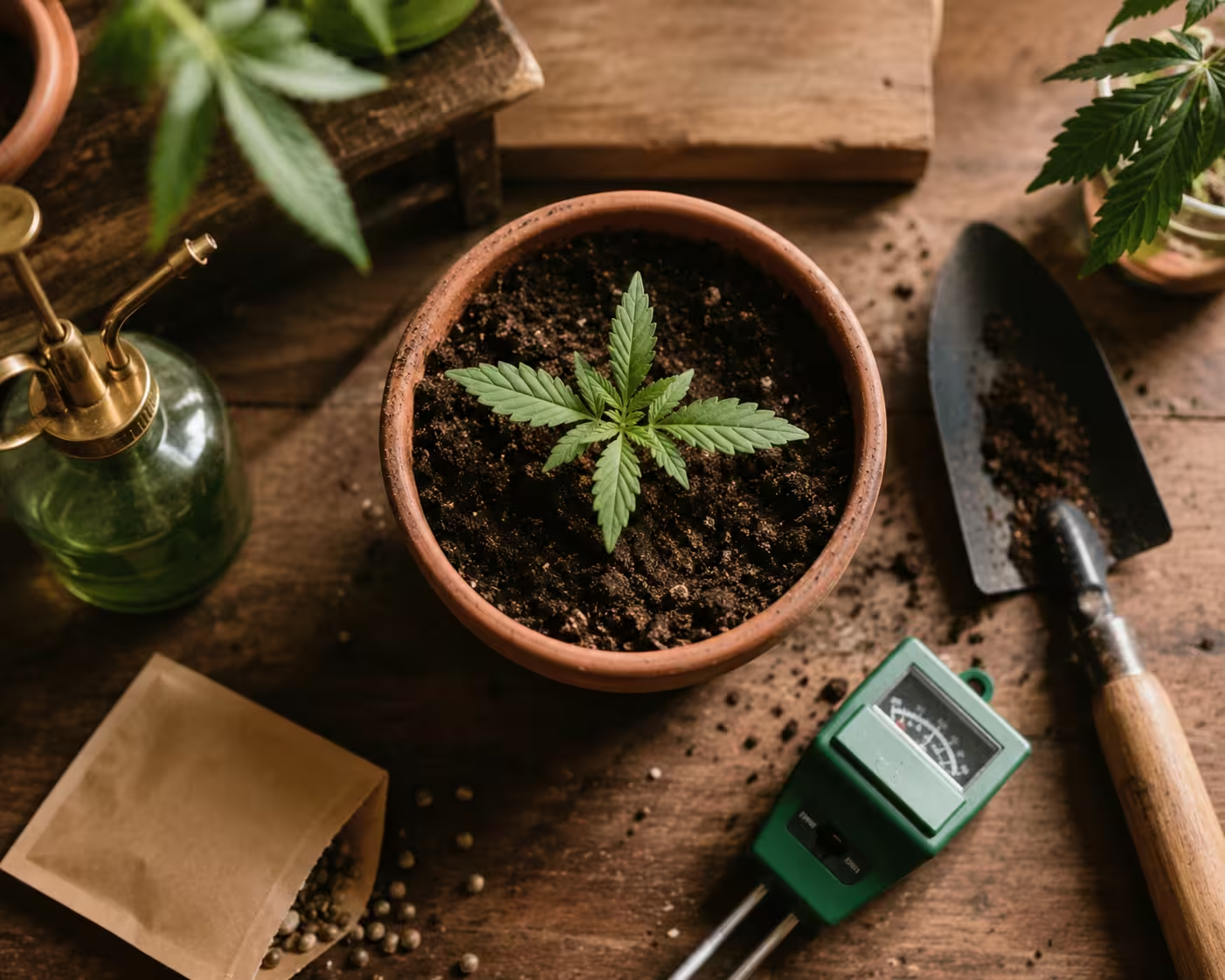
So you’ve decided to grow your own pot. Welcome to one of the most rewarding — and occasionally humbling — hobbies a plant lover can pick up. Whether you’re drawn to it for the self-sufficiency, the savings, or just the pure satisfaction of nurturing something from seed to harvest, this guide has everything you need to get started on the right foot.
We’re keeping it real here: no fluff, no gatekeeping. Just practical, grower-tested knowledge laid out for someone who’s never grown cannabis before.
What You Need to Know Before You Grow Anything
Before you crack a single seed or order a bag of soil, there are a few foundational things every beginner needs to understand. Skipping this section is how people end up with a plant that looks like a sad houseplant instead of a thriving cannabis garden.
Understanding the Cannabis Plant Life Cycle
Cannabis is an annual plant, meaning it completes its entire life cycle — from seed to harvest — within a single growing season. That cycle has four main stages: germination, seedling, vegetative growth, and flowering. Each stage has its own light, water, and nutrient requirements, and knowing where your plant is in its cycle is the single most important thing you can do as a grower.
The total time from seed to harvest typically ranges from 8 to 20 weeks, depending on the strain, growing environment, and whether you’re growing photoperiod or autoflowering plants (more on that below). Getting familiar with the life cycle now means you’ll never be caught off guard when your plant suddenly stops growing upward and starts putting out white pistils.
Photoperiod vs. Autoflowering Strains: Which Is Right for Beginners?
This is the first real decision you’ll make as a grower, and it matters more than most beginners realize.
Photoperiod strains require a change in light schedule to trigger flowering — typically a shift from 18 hours of light to 12 hours of light per day. These plants give you more control over when they flower, tend to produce larger yields, and are more forgiving if you make training or topping mistakes (since you can extend the veg period to let them recover). The downside: they need a separate lighting schedule and more attention to light management.
Autoflowering strains flower automatically based on age rather than light cycle, usually within 7–10 weeks from seed. They’re compact, fast, and well-suited for small spaces or beginner setups where light control is difficult. The trade-off is smaller yields and less flexibility — once they start flowering, the clock is running.
For most first-time growers, autoflowering strains are the easier starting point. They’re forgiving, fast, and you don’t need to fuss with blackout curtains or separate grow rooms.
Indoor vs. Outdoor Growing: Pros, Cons, and What to Expect
Both environments can produce excellent cannabis. The right choice depends entirely on your space, climate, and how much control you want.
Indoor growing gives you complete control over temperature, humidity, light, and airflow. You can grow year-round regardless of your climate. The downside is cost — you’ll need grow lights, fans, and a properly ventilated space — and energy bills can add up.
Outdoor growing is cheaper and more natural. Sunlight is the most powerful grow light on the planet, and outdoor-grown cannabis often develops complex terpene profiles you can’t fully replicate indoors. The challenge is weather dependency, pest exposure, and the need to time your grow with the seasons.
For this guide, we’ll primarily focus on indoor growing in a tent setup, since it’s the most practical and controlled option for most beginners.
Setting Up Your First Grow Space
Your grow space is your plant’s entire world. Get this right, and every other part of growing becomes dramatically easier.
Choosing the Right Grow Tent Size
A grow tent is essentially a light-proof, reflective enclosure that houses your plants, lights, and ventilation equipment. For a beginner, this is the cleanest and most efficient way to set up an indoor garden.
The most popular starter size is a 2×4 foot tent (roughly 60×120 cm), which comfortably fits 2–4 autoflowering plants or 1–2 photoperiod plants in a Screen of Green (ScrOG) setup. If you’re working with a single plant on a true first grow, a 2×2 tent is plenty and keeps costs down.
When choosing a tent, look for:
- Thick canvas (at least 600D) for light-proofing
- Sturdy poles that can hold the weight of lights and fans
- Multiple ports for ducting, power cables, and ventilation
- A reflective mylar interior (most tents come with this built in) to maximize light efficiency
Don’t go too big on your first run. A smaller space is easier to maintain stable temperature and humidity, and it’s cheaper to equip properly.
Grow Lights: What Actually Works for Beginners
Lighting is the single biggest factor in your harvest size and quality. Cannabis is a high-light plant, and giving it inadequate lighting is the fastest way to grow airy, underdeveloped buds.
HID lights (HPS and MH): High-Intensity Discharge lights — specifically High-Pressure Sodium (HPS) for flowering and Metal Halide (MH) for veg — have been the gold standard in cannabis cultivation for decades. They produce excellent yields and great bud density, but they run hot and consume a lot of electricity. Not ideal for beginners in small spaces without good cooling.
LED grow lights: Modern quantum board LEDs have become the go-to option for beginners and pros alike. They run cooler, consume less power, and a quality full-spectrum LED can match or outperform HPS in yield and quality. Look for lights from reputable brands with proven PPFD (photosynthetic photon flux density) ratings. For a 2×4 tent, you want a light pulling around 200–300 watts from the wall.
CFL and T5 fluorescents: Fine for seedlings and clones, but not powerful enough to carry a plant through a full flowering cycle. Don’t try to flower under CFL unless you’re growing a single micro-plant.
For most beginners, a quality LED quantum board in the 200–300 watt range is the practical recommendation. Something like a Mars Hydro TS 1000 or Spider Farmer SF-2000 will serve a beginner well in a 2×4 space.
Ventilation, Airflow, and Humidity Control
Cannabis plants need fresh air. CO₂ is a critical input for photosynthesis, and without adequate airflow your tent will develop hot spots, stale air pockets, and — worst of all — mold conditions.
The basic ventilation setup:
- An inline fan and carbon filter combo to exhaust stale air and control odor. For a 2×4 tent, a 4-inch inline fan is typically sufficient.
- A small oscillating clip fan inside the tent to keep air moving around the canopy and strengthen stems.
- Fresh air passively drawn in through bottom intake ports.
For humidity, you’re aiming for:
- Seedling stage: 65–75% relative humidity (RH)
- Vegetative stage: 50–70% RH
- Flowering stage: 40–50% RH, dropping to 35–45% in late flower to prevent bud rot
- Temperature: 70–85°F (21–30°C) during lights-on, no more than 10°F drop during lights-off
A basic digital hygrometer/thermometer (under $15) will monitor both. If you’re in a humid climate, a small dehumidifier may be necessary during flowering. In dry climates, a humidifier or humidity dome during seedling stage helps young plants establish.
Choosing Your Growing Medium and Nutrients
What you grow your cannabis in has a huge impact on how the plant feeds, how much control you have, and how forgiving your setup is when you make mistakes.
Soil vs. Coco Coir vs. Hydroponics
Soil is the most beginner-friendly medium by a wide margin. A quality cannabis-specific potting mix like Fox Farm Ocean Forest or Roots Organics already contains a full spectrum of macro and micronutrients that will feed your plant through most of the vegetative stage without any additional feeding. Soil also has a natural buffer against pH swings and overfeeding — helpful when you’re still learning. The trade-off: slower growth compared to soilless or hydro setups.
Coco coir is a soilless medium made from coconut husks. It’s inert (no nutrients), drains well, and allows for excellent root oxygenation — which means faster growth than soil. But because it contains no nutrients of its own, you’re responsible for every feed from day one. Coco requires more attention and a solid understanding of feeding schedules. Great for intermediate growers, more demanding for complete beginners.
Hydroponics (growing roots in nutrient solution) produces the fastest growth and largest yields possible, but it’s the most technical and unforgiving setup. Any pump failure or pH drift can wipe out a plant in hours. Not recommended for a first grow.
Our recommendation for beginners: quality amended soil. It gives you a buffer while you’re learning and still produces excellent results.
Understanding Cannabis Nutrients: NPK and Beyond
Cannabis plants need three primary macronutrients — Nitrogen (N), Phosphorus (P), and Potassium (K) — plus a range of secondary and micronutrients including calcium, magnesium, iron, and zinc.
The ratio of N-P-K your plant needs changes through its life cycle:
- Vegetative stage: High nitrogen, moderate phosphorus and potassium. Nitrogen drives leafy, structural growth.
- Early flowering: Reduce nitrogen, increase phosphorus and potassium to support bud development.
- Late flowering: Low nitrogen, high P and K. Many growers do a final flush with plain pH-balanced water in the last 1–2 weeks before harvest to clear residual nutrients from the root zone and improve the taste of cured flower.
If you’re growing in amended soil, you may not need to feed at all for the first 3–5 weeks. Watch the plant — healthy leaves are a deep, even green. Yellowing lower leaves in late flower is normal (the plant is cannibalizing nitrogen); yellowing during veg usually signals a deficiency.
Common beginner brands include Fox Farm Trio (Grow Big, Tiger Bloom, Big Bloom), General Hydroponics Flora Series, and Canna Coco nutrients for coco grows.
pH: The Invisible Factor That Breaks Most First Grows
Here’s the one thing beginners consistently overlook and then wonder why their plant looks sick even though they “did everything right”: pH.
Cannabis can only absorb nutrients within a specific pH range. In soil, that sweet spot is 6.0–7.0 pH (ideally 6.2–6.8). In coco or hydro, it’s tighter: 5.5–6.5 pH.
If your water or nutrient solution is outside this range — even by half a point — your plant will lock out certain nutrients and show deficiency symptoms, even if those nutrients are present in the root zone. This is called a nutrient lockout, and it’s the most common cause of sick-looking plants in first grows.
What you need:
- A digital pH pen (essential — pH drops are not accurate enough for consistent grows)
- pH Up and pH Down solutions to adjust your water
Test your water before every watering. Most tap water sits around 7.0–7.5 pH, which is slightly too high for cannabis in soil. A few drops of pH Down will bring it right into range.
Germinating Seeds and the Seedling Stage
You’ve got your space set up, your medium ready, and your seeds in hand. Time to bring your plants to life.
How to Germinate Cannabis Seeds Successfully
There are several germination methods, but the two most reliable for beginners are the paper towel method and direct soil germination.
Paper towel method:
- Moisten two sheets of paper towel (damp, not soaking wet).
- Place your seeds between the sheets and fold flat.
- Slip the paper towel inside a zip-lock bag or between two plates to retain moisture.
- Store in a warm, dark place — the top of a cable box or a kitchen cupboard works well (ideally 70–80°F / 21–27°C).
- Check after 24–48 hours. Most seeds will show a white taproot (radicle) within 1–3 days.
- Once the taproot is 0.5–1 cm long, gently transfer to your growing medium, taproot down, about 1 cm below the surface.
Direct soil germination: Simply poke a 1 cm hole in pre-moistened soil, drop the seed in, cover lightly, and wait. This method handles the seed less, reducing the risk of damaging the delicate taproot. Takes slightly longer but works well with quality seeds.
Whichever method you use: don’t overwater, keep it warm, and be patient. Healthy seeds from reputable breeders typically have germination rates above 90%.
Caring for Seedlings: The First 2 Weeks
Once your seedling has broken soil and its first rounded leaves — called cotyledons — have opened, the plant is officially in the seedling stage. This is one of the most vulnerable periods in the plant’s life, so a light touch is key.
During the seedling stage:
- Water sparingly. The seedling’s root system is tiny. Overwatering is the number one seedling killer. Water in a small circle around the base of the stem, not across the whole medium. Wait until the top inch of soil feels dry before watering again.
- Keep humidity high (65–75% RH) to support development through leaf tissue while roots establish.
- Light intensity low. If using an LED, keep it at around 30–40% power or raise it high above the canopy (24–30 inches) for the first week.
- Temperature stable around 72–78°F (22–26°C).
Within 1–2 weeks, your seedling will develop its first set of true leaves with the characteristic serrated cannabis leaf shape, and transition into the vegetative stage.
The Vegetative Stage: Building Your Plant’s Foundation
The veg stage is when your plant builds all the structure that will eventually support its buds. Think of it like building a frame before you hang the drywall.
Light Schedules and Veg Growth Rates
For photoperiod plants, veg runs on an 18 hours on / 6 hours off light schedule (18/6). Some growers run 20/4 or even 24/0, though the extra electricity cost yields diminishing returns and 18/6 allows the plant a proper rest cycle.
For autoflowering plants, most growers run 18/6 from seed to harvest, since autos don’t need a light change to flower.
During veg, a healthy cannabis plant in good conditions can gain 1–2 inches of height per day. Most beginners are amazed by how fast their plant grows once it’s established. Keep a consistent light schedule — even a few hours of interrupted darkness during the photoperiod sensitive window can confuse a photoperiod plant and cause hermaphroditism.
Training Techniques for Beginners: LST and Topping
Training your cannabis plant during veg is one of the highest-leverage things you can do to improve your yield. Cannabis grows apically dominant by default — the main central cola (top bud site) gets most of the plant’s energy, while lower branches are shaded out and underdeveloped.
Training techniques break this dominance and encourage the plant to develop multiple even canopy sites, all receiving equal light.
Low Stress Training (LST): The most beginner-friendly technique. You gently bend and tie down main branches using soft plant ties or pipe cleaners to create a flat, even canopy. No cutting involved, minimal stress on the plant. Start early in veg when stems are still flexible. LST can double or triple your yield compared to an untrained plant under the same light.
Topping: Cutting off the very tip (apical meristem) of the main stem to create two main colas instead of one. This stresses the plant briefly but leads to a bushier, more productive plant. Don’t top autoflowers — they don’t have enough veg time to recover. Topping is best done in mid-veg on photoperiod plants when the plant has at least 5–6 nodes.
FIMming (F*ck I Missed): A variation of topping where you pinch or cut about 75% of the new growth tip rather than removing it entirely. Creates 3–4 new tops instead of 2. More unpredictable than topping but can be very effective.
The Flowering Stage: Where the Magic Happens
This is what you’ve been working toward. The flowering stage is when your cannabis plant stops focusing on structure and starts producing the resin-coated buds you’re growing for.
Triggering Flowering and the First Signs of Buds
For photoperiod plants, you trigger flowering by switching your light schedule from 18/6 to 12/12 (12 hours on, 12 hours off). The plant interprets this as the approach of autumn and begins reproductive growth. Do this switch when your plant has reached roughly half its desired final height — cannabis typically doubles in height during flowering (known as the “flowering stretch”).
Within 1–2 weeks of switching to 12/12, you’ll see the first pre-flowers appear at the nodes — small white pistils (hairs) at female plants, or tiny pollen sacs at males. If you’re growing feminized seeds (as most beginners should), all your plants will be female. With regular seeds, cull any male plants immediately to prevent pollination.
For autoflowers, the plant will begin flowering on its own schedule, typically 3–5 weeks from germination.
Feeding During Flower: Bloom Nutrients and Supplements
Flowering cannabis has different nutritional needs than a plant in veg. The shift is away from nitrogen and toward phosphorus and potassium, which drive bud development, density, and terpene production.
At the flip to flower, start transitioning your nutrients:
- Reduce nitrogen-heavy grow formulas
- Increase bloom-specific nutrients (high P, high K)
- Add a cal-mag supplement if you’re using RO water or notice interveinal chlorosis
- Consider a carbohydrate/sugar supplement in mid-flower to feed beneficial microbes and support bud density (Bud Candy, Molasses, etc.)
- Consider a PK booster like PK 13/14 during peak bud development (weeks 4–6 of flower)
Don’t overfeed. Tip burn, claw leaves, and nutrient burn (brown leaf tips) are almost always from too much — not too little. Start at half the recommended dose on any new nutrient line and work up based on plant response.
Reading Trichomes: How to Know When to Harvest
This is the question every grower eventually asks: when do I chop? Harvest timing is one of the biggest variables in the potency, effect, and taste of your final product.
The answer lies in the trichomes — the tiny, crystal-like resin glands that coat the buds and sugar leaves. You’ll need a 60–100x jeweler’s loupe or a digital microscope to see them properly.
Trichome colors tell you everything:
- Clear trichomes: Plant is not ready. Harvesting now produces weak, heady, anxious effects.
- Cloudy/milky white trichomes: THC is at peak potency. Harvest now for a more cerebral, energetic effect.
- Amber trichomes: THC is beginning to degrade into CBN (cannabinol). Harvest now for a heavier, more sedative, body-dominant effect.
Most growers aim for a 70% cloudy / 30% amber ratio for a balanced effect. Focus on the trichomes on the buds themselves — not the sugar leaves, which mature faster and give a misleading reading.
Alongside trichomes, other harvest readiness indicators include: most white pistils having turned orange/red (70–90%), fan leaves beginning to yellow and drop naturally, and swollen, dense calyxes.
Drying and Curing: Don’t Rush the Finish Line
You’ve done the hard work. Don’t blow it here. Drying and curing are where amateur grows get separated from quality ones.
How to Dry Cannabis the Right Way
After harvest, hang your trimmed branches (or whole plants if you wet trim later) upside down in a cool, dark, well-ventilated space. Ideal drying conditions:
- Temperature: 60–70°F (15–21°C)
- Humidity: 45–55% RH
- Airflow: Gentle — a fan blowing across the room, not directly on buds
- Darkness: Light degrades THC and terpenes during drying
The drying process typically takes 7–14 days. The most common mistake is drying too fast — cranking up heat or using dehumidifiers to rush the process. Fast drying destroys terpenes and produces harsh, grassy-tasting flower. Slow, cool drying gives chlorophyll time to break down and produces much smoother, more aromatic buds.
Your buds are ready to move to curing jars when small stems snap rather than bend, and the outer surface of the buds feels dry but isn’t crunchy.
Curing in Jars: Why It Transforms Your Final Product
Curing is the process of slowly drawing remaining moisture out of the interior of your buds in a controlled environment. It’s what separates properly finished cannabis from harsh, hastily dried flower.
The process:
- Place dried buds loosely in glass mason jars, filling to about 75% capacity. Don’t pack them tight.
- Seal the jars and store in a cool, dark place.
- For the first week, “burp” the jars (open them for 5–15 minutes) twice daily to release built-up moisture and replenish oxygen.
- After the first week, burp once daily for the second week.
- After two weeks, burp every few days.
A minimum cure of 2–4 weeks will noticeably improve smoothness, aroma, and effect compared to uncured flower. A 4–8 week cure is where cannabis truly shines — the terpene profile deepens, harshness drops away, and the flavor becomes complex and distinct.
Keep a Boveda 62% humidity pack in each jar to maintain optimal RH during curing. If your buds feel too wet when you first jar them (over 65% RH), leave the lid off for a few hours before sealing.
Common Beginner Mistakes (And How to Avoid Them)
Every grower makes these mistakes. The goal is to make them once, not twice.
Overwatering Is the #1 Plant Killer
More cannabis plants die from too much water than from too little. The symptoms — drooping, yellowing, and slow growth — look almost identical to underwatering, which leads beginners to water even more and compound the problem.
The test: lift your pot. Learn how heavy it feels when dry versus just after watering. Water only when the pot feels noticeably lighter and the top 1–2 inches of soil are dry. Cannabis roots need oxygen as much as water, and waterlogged soil suffocates them.
Chasing Problems Before Identifying Them
When something looks wrong with your plant, the knee-jerk reaction is to start adding nutrients or adjusting everything at once. Resist this. Changing multiple variables simultaneously makes it impossible to identify what fixed the problem — or what made it worse.
Before changing anything: check your pH. A huge percentage of “deficiency” symptoms in cannabis are actually pH-related lockout, not actual nutrient deficiency. Fix your pH first, wait 3–4 days, and reassess before adding anything.
Harvesting Too Early
This one is emotional. After weeks of work, the plant is covered in shiny trichomes and the buds look beautiful. It’s tempting to chop early. Don’t. Most strains need every day of their scheduled flowering time to fully develop. Harvesting even a week early can significantly reduce both yield and potency. Use the trichome inspection method — not the calendar — as your final arbiter.
Final Thoughts: Your First Grow Will Teach You More Than This Article Can
No guide — including this one — fully substitutes for the experience of actually growing a plant. Your first grow will have surprises. A leaf will yellow that “shouldn’t,” a plant will grow faster than expected, something will go slightly sideways. That’s normal. That’s growing.
What separates growers who improve quickly from those who stay stuck is observation and patience. Spend time with your plants every day. Learn to read what they’re telling you through their leaves, their color, their structure. Keep a grow journal — even just a few notes and photos each week — so you can trace back exactly what you did and when.
The cannabis plant is remarkably resilient. Give it the right environment, adequate light, proper water and pH, and even a first-time grower can harvest something genuinely excellent.
Start simple. Dial in one grow. Then get more adventurous on the next one.
Have questions or want to share how your first grow is going? Drop a comment below — the growing community is one of the most generous and helpful in the gardening world.
