

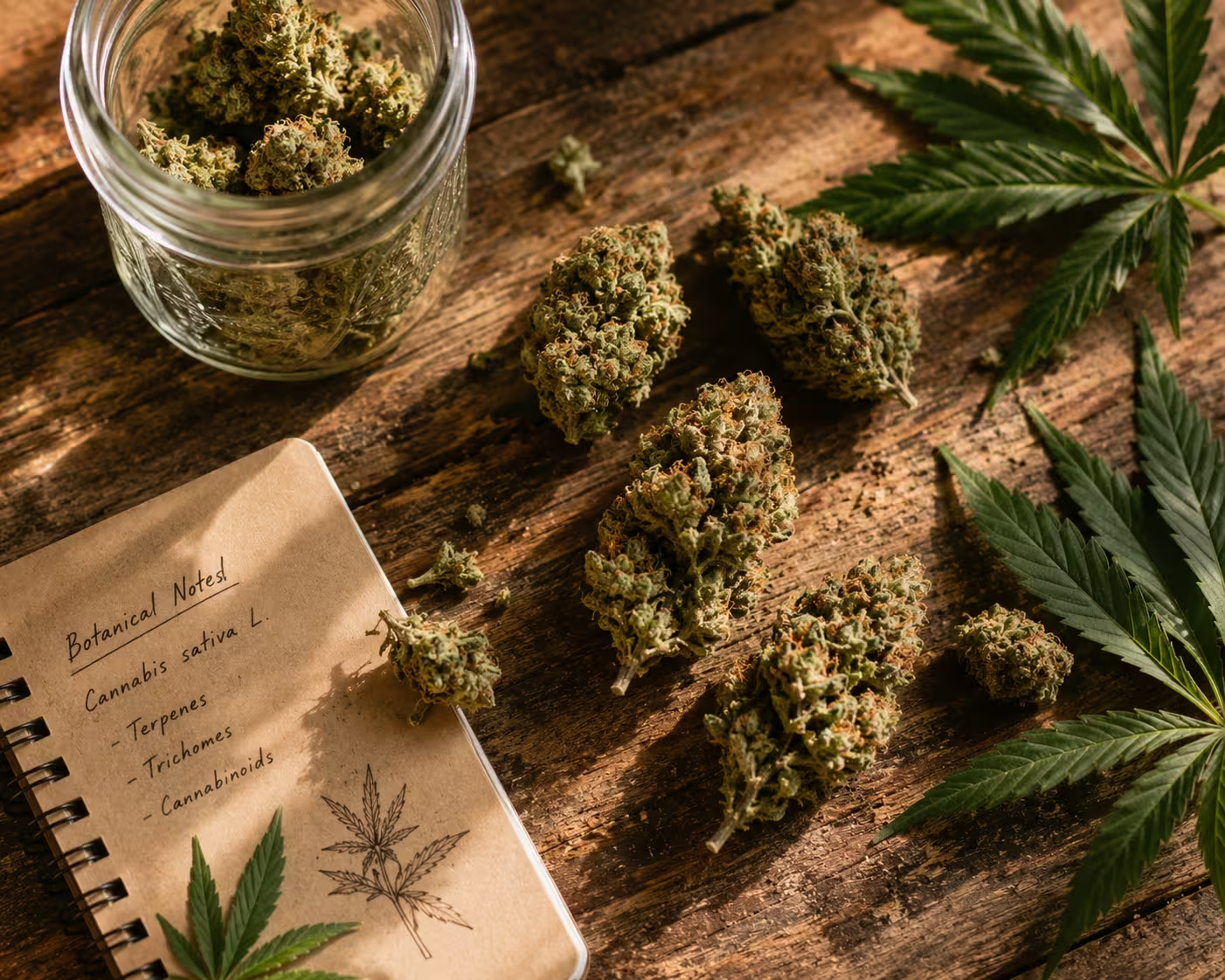
So you’ve finally decided to learn what all the fuss is about. Maybe a friend offered you something at a gathering, maybe your doctor mentioned it, or maybe you’re just tired of nodding along when people talk about “indica versus sativa” like it’s common knowledge. Either way — you’re in the right place.
This guide is written the way any experienced grower or longtime cannabis educator would explain it: no corporate fluff, no scare tactics, and no assumptions that you already know anything. Let’s start from the actual beginning.
What Is Cannabis, Really? (And Why It’s Not What You Think)
This section establishes the foundational knowledge every beginner needs. It dismantles common misconceptions by explaining the plant’s true botanical identity, its long history of human use, and why modern cannabis is a much broader subject than the simple “drug” framing most people grew up with. Semantic entities introduced here: Cannabis sativa, Cannabis indica, Cannabis ruderalis, hemp plant, psychoactive plant, botanical species.
Cannabis is a flowering plant — a weed in the truest horticultural sense — that humans have cultivated for thousands of years. Long before it became a political talking point, farmers grew it for fiber, healers used it as medicine, and cultures across Asia, Africa, and the Americas incorporated it into ceremony and daily life.
The plant belongs to the Cannabaceae family and exists in three recognized subspecies: Cannabis sativa, Cannabis indica, and Cannabis ruderalis. Each developed in different climates, which is why they look and behave differently in the garden. Sativa strains tend to be tall and airy, adapted to equatorial regions with long growing seasons. Indica plants are shorter, bushier, and were originally found in the Hindu Kush mountain range. Ruderalis is a small, hardy plant from Central Asia that doesn’t get much attention on its own but plays a major role in modern autoflowering cannabis genetics.
What makes cannabis unique isn’t any single compound — it’s the entire chemistry of the plant. When you hold a fresh bud, that sticky coating you see is called trichomes: tiny resin glands where most of the plant’s therapeutic and psychoactive compounds are produced. Understanding the plant starts right there, at the trichome level.
The Difference Between Hemp and Marijuana
This sub-section addresses one of the most common points of confusion for beginners: the legal and chemical distinction between hemp and marijuana. It explains that these are the same botanical plant, differentiated only by THC concentration, and clarifies how this distinction shapes laws worldwide. Semantic entities: hemp fiber, CBD oil, THC threshold, industrial hemp, psychoactive effects.
Here’s something most people get wrong right away: hemp and marijuana are not different plants. They’re the same species — Cannabis sativa — separated legally by one number: 0.3% THC.
Hemp is defined as cannabis containing 0.3% or less delta-9 THC (tetrahydrocannabinol) by dry weight. It’s legal across most of the world, used for everything from textile fiber to CBD oil to hempcrete in construction. It won’t get you high.
“Marijuana” — a term many in the cannabis community have moved away from due to its racially charged history — refers to cannabis plants with higher THC concentrations. It’s this THC threshold, not the plant’s genetics or appearance, that separates a legal hemp crop from a controlled substance in most legal frameworks.
This distinction matters as a beginner because it affects what you can legally buy, what effects you’ll experience, and what your country’s laws say about possession and use.
A Brief History of Human Cannabis Use
This sub-section gives historical grounding that legitimizes cannabis as more than a modern recreational trend. It traces use from ancient civilizations through prohibition and back into mainstream medicine and culture. Semantic entities: ancient China, cannabis history, medical cannabis, cannabis prohibition, War on Drugs, cannabis legalization movement.
Cannabis use dates back at least 5,000 years. Ancient Chinese texts reference it as medicine. Scythian nomads burned it in ritual ceremonies. The plant spread along trade routes through the Middle East, Africa, and eventually into Europe and the Americas.
Modern prohibition arrived in the 20th century, largely driven by political and racial motivations rather than scientific evidence. The United States criminalized cannabis in 1937 under the Marihuana Tax Act, and the War on Drugs of the 1970s deepened restrictions globally.
What we’re living through right now is a reversal of that trajectory. Countries like Canada, Uruguay, Germany, and many US states have moved toward cannabis legalization, and the research community is finally catching up to what traditional medicine practitioners knew centuries ago.
How Cannabis Works in Your Body
This section explains the science of cannabis in genuinely accessible language. Rather than listing compounds in abstract terms, it walks the reader through what actually happens physiologically when cannabis enters the body. This is essential for beginners to understand why people feel different things, and why dosage and strain matter. Semantic entities: endocannabinoid system, CB1 receptors, CB2 receptors, THC, CBD, terpenes, entourage effect, cannabinoids.
If you’ve ever wondered why some people giggle uncontrollably and others fall asleep, the answer lives in your biology — specifically in a system most people have never heard of.
The Endocannabinoid System: Your Body Already Has the Locks
This H3 explains the endocannabinoid system (ECS) — one of the most under-taught topics in human biology — in plain terms. It establishes why the body responds to cannabis at all, which demystifies the experience for anxious first-timers. Semantic entities: endocannabinoid system, endocannabinoids, anandamide, 2-AG, homeostasis, neurotransmitters, CB1 receptors, CB2 receptors.
Your body produces its own cannabis-like compounds. They’re called endocannabinoids — “endo” meaning internal — and the best-known ones are anandamide (sometimes called the “bliss molecule”) and 2-arachidonoylglycerol (2-AG). These molecules bind to receptors throughout your body called CB1 and CB2 receptors, which together make up the endocannabinoid system (ECS).
The ECS plays a role in regulating sleep, appetite, mood, immune response, pain perception, and memory. It’s essentially one of your body’s main homeostasis systems — it tries to keep everything balanced.
When you consume cannabis, the plant’s compounds — primarily THC and CBD — enter your bloodstream and interact with these same receptors. THC binds strongly to CB1 receptors, which are concentrated in the brain, and that’s what produces the psychoactive effect. CBD doesn’t bind to receptors the same way; it works more indirectly, which is part of why it doesn’t produce a “high.”
CB2 receptors are found mostly in the immune system and peripheral tissues, which is why cannabis research keeps showing up in conversations about inflammation, autoimmune conditions, and pain management.
THC vs CBD: The Two You Actually Need to Understand
This H3 breaks down the two most discussed cannabinoids in practical, experience-based terms. It avoids jargon in favor of clear, grower-voice explanations of what each compound does, how they interact, and why most products contain both. Semantic entities: delta-9 THC, cannabidiol, psychoactive compound, non-intoxicating cannabinoid, anxiety, therapeutic effects, full-spectrum cannabis.
Everyone has heard of THC and CBD. Very few people can actually explain what they do differently in the body — and that gap in knowledge causes a lot of first-timer anxiety.
THC (delta-9-tetrahydrocannabinol) is the primary psychoactive compound in cannabis. It’s the reason people feel euphoric, hungry, giggly, or sometimes anxious after consuming cannabis. THC mimics anandamide, your brain’s natural bliss molecule, but it binds much more strongly to CB1 receptors — and it stays bound longer. At low doses, this produces relaxation and sensory enhancement. At higher doses, especially in inexperienced users, it can trigger racing thoughts, paranoia, or disorientation.
CBD (cannabidiol) is non-intoxicating. It doesn’t make you feel high. It’s been studied for its potential effects on anxiety, epilepsy, inflammation, and sleep, and it appears to modulate some of THC’s more overwhelming effects when the two are present together.
That last point is important. Cannabis plants contain dozens of cannabinoids, and they don’t operate in isolation. The interaction between THC, CBD, terpenes, and other minor cannabinoids is sometimes called the entourage effect — the idea that the whole plant works better than any isolated compound. This is why many experienced users and growers prefer full-spectrum cannabis products over pure THC isolates.
What Are Terpenes and Why Growers Obsess Over Them
This H3 introduces terpenes — the aromatic compounds that give cannabis its distinctive smells and flavors — and explains their role beyond aesthetics. It connects terpene profiles to effects, making the “smell the weed before you buy it” advice that experienced users often give actually understandable. Semantic entities: terpenes, myrcene, limonene, linalool, pinene, caryophyllene, aromatic compounds, cannabis flavor profile, strain effects.
If you’ve ever smelled a cannabis strain and immediately thought of pine trees, fresh citrus, or lavender, you’ve experienced terpenes at work.
Terpenes are aromatic compounds produced in the same trichomes that make cannabinoids. They’re found in virtually every plant — the limonene in a lemon peel, the linalool in lavender, the pinene in pine resin. Cannabis just happens to produce an unusually wide variety of them.
Here’s what matters practically: terpenes don’t just create flavor. They interact with cannabinoids and may influence the overall effect of a given strain:
Myrcene — earthy, musky, found in hops and mango. Associated with relaxing, sedating effects. Very common in indica-leaning strains.
Limonene — bright citrus aroma. Often associated with mood elevation and stress relief.
Linalool — floral, lavender-like. Associated with calm and anxiety reduction.
Caryophyllene — spicy, peppery. Interestingly, it also binds to CB2 receptors, making it the only terpene known to act directly on the endocannabinoid system.
Pinene — sharp, piney. May support alertness and counter some of THC’s short-term memory effects.
This is why experienced growers and dispensary staff often say: smell your cannabis before you decide. The terpene profile tells you a lot more than a strain name ever will.
Cannabis Strains Explained: Indica, Sativa, and Everything In Between
This section is one of the most-searched topics in cannabis education. It honestly addresses the limits of the indica/sativa framework, explains why the real conversation is about genetics and cannabinoid/terpene profiles, and gives beginners a practical approach for choosing a product that fits what they’re looking for. Semantic entities: cannabis strains, indica strains, sativa strains, hybrid strains, landrace strains, autoflowering strains, cannabis genetics, phenotype.
Walk into any dispensary and you’ll see shelves labeled “Indica,” “Sativa,” and “Hybrid.” Ask most budtenders what that means and you’ll get a rehearsed answer: indica is relaxing, sativa is energizing, hybrid is somewhere in between.
The truth is more complicated — and more interesting.
Why the Indica/Sativa Labels Are Only Half the Story
This H3 explains the genetic and botanical reality behind cannabis categorization, why the simple indica/sativa split is an oversimplification, and what information actually predicts how a strain will make you feel. It respects the reader’s intelligence while giving them something genuinely useful. Semantic entities: cannabis genotype, phenotype, cannabinoid profile, terpene profile, selective breeding, cannabis hybridization, landrace genetics.
Almost every cannabis strain sold today is a hybrid — decades of selective breeding have blurred the genetic lines between indica and sativa almost beyond recognition. When a modern strain is labeled “indica,” it usually means it grows in a compact, bushy pattern and has a shorter flowering cycle. It doesn’t reliably predict your experience.
What actually predicts effect is the cannabinoid and terpene profile of that specific plant, from that specific batch, in your specific body. Two people can smoke the same strain and have genuinely different experiences because of differences in their own endocannabinoid system, tolerance, mental state, and setting.
That said, the indica/sativa framework isn’t entirely useless — it’s just a starting point, not a destination. Use it to get oriented, then pay more attention to THC percentage, CBD content, and the terpene profile to make a more informed choice.
Popular Strain Types and What to Expect
This H3 gives beginners a practical orientation to strain categories with honest, experience-based descriptions — not marketing language. It covers high-THC strains, high-CBD strains, balanced strains, and introduces autoflowering varieties for context. Semantic entities: high-THC strains, CBD-dominant strains, balanced THC:CBD ratio, OG Kush, Blue Dream, ACDC, autoflowering cannabis, photoperiod strains.
Rather than listing hundreds of strain names, here’s what to look for by category:
High-THC strains (20%+ THC, low CBD): These are what most recreational dispensaries showcase. They produce the strongest psychoactive effects and are best left to users with some experience. Not recommended as a starting point.
Balanced strains (roughly 1:1 THC:CBD): The presence of CBD softens the intensity of the THC experience, making these genuinely good starting options. You feel something real without the edge that pure high-THC strains can create.
High-CBD, low-THC strains (under 5% THC): Often called “CBD strains” or hemp cultivars in legal markets. Little to no psychoactive effect. These are commonly used by people seeking the therapeutic benefits of cannabis without impairment. A good entry point if you’re curious but cautious.
Autoflowering strains: These are primarily relevant if you’re growing, but worth knowing about. Autoflowers switch from vegetative growth to flowering based on age rather than light cycle changes, making them easier for beginner growers and faster to harvest.
How People Actually Consume Cannabis: A Practical Overview
This section covers the main consumption methods without romanticizing or oversimplifying any of them. It explains onset time, duration, and intensity differences across methods — critical information for first-timers who need to make informed choices. Semantic entities: smoking cannabis, vaporizing cannabis, cannabis edibles, tinctures, topicals, sublingual absorption, combustion, decarboxylation.
The way cannabis enters your body matters enormously — both for the experience and for harm reduction. The same amount of THC produces very different effects depending on whether you smoke it, eat it, or apply it to your skin.
Smoking and Vaporizing: The Fast Track
This H3 covers inhalation methods with grower-honest pros and cons. It explains the pharmacokinetics of inhaled cannabis — fast onset, shorter duration — and gives a practical comparison between combustion (smoking) and vaporizing. Semantic entities: cannabis smoking, dry herb vaporizer, combustion byproducts, onset time, lung health, bioavailability, rolling papers, glass pipe.
When you inhale cannabis — whether by smoking a joint, using a pipe, or vaporizing dried flower — the compounds enter your lungs and cross directly into your bloodstream. Onset happens within minutes. Effects typically peak within 30 minutes and last two to three hours.
This fast feedback loop is actually useful for beginners: you can take one or two inhalations, wait 10–15 minutes to assess how you feel, and decide whether to continue. That titration control is something edibles can’t offer in the same way.
Smoking involves combustion, which produces some of the same byproducts as burning any organic material. If respiratory health is a concern, this is worth considering.
Vaporizing (or “vaping”) heats cannabis to a temperature that releases cannabinoids and terpenes without full combustion. Most research suggests this is a less harsh delivery method, though the long-term data on vaping hardware is still developing. Always use quality, regulated devices — the lung injuries associated with vaping in news coverage were largely linked to black-market cartridges with vitamin E acetate, not regulated dry-herb or oil products.
Edibles: The Method That Catches Most Beginners Off Guard
This H3 is arguably the most important for first-timer safety. It explains the entire edibles experience — why it takes so long to kick in, why it can be so much stronger than expected, and the cardinal rule of “start low, go slow.” Semantic entities: cannabis edibles, onset time, liver metabolism, 11-hydroxy-THC, dosing, milligrams THC, first-time edible experience, decarboxylation.
Cannabis edibles are responsible for a disproportionate number of uncomfortable first experiences — and it’s entirely preventable with the right knowledge.
When you eat cannabis, the THC takes a detour through your digestive system and liver before reaching your brain. The liver converts delta-9 THC into 11-hydroxy-THC, a compound that crosses the blood-brain barrier more efficiently and produces a more intense, longer-lasting effect than inhaled THC.
Onset time: 30 minutes to 2 hours. Full effects: sometimes 3–4 hours. Duration: can last 6–8 hours.
The classic mistake is eating a dose, feeling nothing after an hour, eating more, and then being overwhelmed when both doses hit simultaneously. Don’t do that.
For first-timers: start with 2.5 to 5 milligrams of THC. Wait a full two hours before considering more. This is not a lot, and it may feel like nothing — that’s the point. You’re learning how your body responds, not trying to have a peak experience on your first attempt.
Tinctures, Topicals, and Other Methods
This H3 covers the growing range of cannabis delivery formats beyond smoking and edibles — particularly relevant for medical users or people who are curious but hesitant about inhalation. It gives honest guidance on when each format makes sense. Semantic entities: cannabis tincture, sublingual absorption, cannabis topicals, transdermal patch, CBD topical, localized pain relief, medical cannabis delivery.
Tinctures are liquid cannabis extracts — typically oil or alcohol-based — taken by dropping them under the tongue (sublingually). Sublingual absorption bypasses the digestive system and enters the bloodstream directly through the mucous membranes, giving an onset time of 15–45 minutes. Effects are more predictable than edibles and easier to dose.
Topicals are cannabis-infused creams, balms, and lotions applied directly to the skin. Standard topicals don’t produce psychoactive effects because the cannabinoids don’t reach systemic circulation — they work locally on skin and muscle tissue. Used primarily for localized pain relief, inflammation, and certain skin conditions. If you want therapeutic benefit without any mental alteration, a CBD topical is a sensible starting point.
Transdermal patches are different from topicals — they are designed to deliver cannabinoids into the bloodstream through the skin. These do produce systemic effects and are used in some medical cannabis programs.
Cannabis and the Law: What You Need to Know Regardless of Where You Live
This section gives a clear-eyed overview of the global legal landscape without being preachy or alarmist. It explains the variation in legal status, the practical implications for consumers, and what “legal” and “decriminalized” actually mean in practice. Semantic entities: cannabis legalization, medical cannabis program, cannabis decriminalization, Schedule I substance, possession limits, recreational cannabis laws, cannabis regulations.
One of the most confusing things about cannabis in 2024 is that it’s simultaneously legal, illegal, and everything in between — depending on where you are standing.
In countries like Canada, recreational cannabis is fully legal and regulated federally. In much of Europe, it occupies a middle ground: Germany legalized adult personal use in 2024, Portugal decriminalized personal possession decades ago, and the Netherlands operates its famous tolerance policy. In the United States, it’s legal recreationally in over 20 states but remains a Schedule I substance federally — creating a patchwork that confuses even lawyers.
Legalization means the substance is regulated and taxed, similar to alcohol. You can buy it from licensed retailers, possess it up to certain limits, and use it in permitted spaces.
Decriminalization is different: it doesn’t make cannabis legal, but it removes criminal penalties (jail time, criminal record) for possession of small personal amounts. You might still receive a civil fine.
Before you use, buy, or grow cannabis, look up the specific laws in your jurisdiction — not just your country, but your region or state. Possession limits, public use rules, home cultivation rights, and medical versus recreational distinctions all vary significantly.
Staying Safe: What Every First-Timer Should Know
This section takes a harm-reduction approach — one that respects the reader’s autonomy while giving them the practical information that makes the difference between a good first experience and a bad one. It covers mindset, setting, dosing, drug interactions, and vulnerable populations. Semantic entities: cannabis harm reduction, set and setting, cannabis drug interactions, first-time cannabis use, cannabis anxiety, contraindications, cannabis and mental health, responsible use.
Cannabis is genuinely one of the lower-risk substances humans use recreationally. That doesn’t mean it’s risk-free, and it doesn’t mean anything goes. Good experiences, especially early ones, depend mostly on preparation.
Start Low and Go Slow — And Actually Mean It
This H3 is the most practical safety guidance in the article. It reinforces the dosing principle across all consumption methods and explains the physiology behind why individual responses vary so dramatically. It’s written as grower-to-newbie advice, not a warning label. Semantic entities: THC tolerance, cannabis dosing, first-time cannabis dose, body weight and cannabis, cannabis metabolism, set and setting.
“Start low and go slow” is the mantra of every experienced cannabis educator — and it’s repeated because it’s broken all the time.
Your sensitivity to THC depends on factors including your body’s endocannabinoid system baseline, any previous cannabis exposure, body composition, metabolism, stress levels, and what you’ve eaten. There is no universal dose. Someone who weighs twice what you do might have a fraction of your tolerance.
For inhalation: one or two slow inhalations. Wait 15 minutes. For edibles: 2.5–5mg THC. Wait two full hours. For tinctures: start with 2.5mg. Wait 45 minutes.
If nothing happens, that’s fine. You’ve learned your lower threshold and can adjust next time. If too much happens, know that no one has ever died from cannabis overconsumption alone — you are not in medical danger, even if it feels uncomfortable. Lie down somewhere safe, hydrate, and let it pass.
Cannabis and Mental Health: An Honest Conversation
This H3 addresses the relationship between cannabis and mental health without minimizing real risks or exaggerating them. It covers the research on cannabis and anxiety, psychosis risk factors, and populations for whom cannabis carries greater risk. Semantic entities: cannabis and anxiety, cannabis-induced psychosis, THC sensitivity, mental health contraindications, vulnerable populations, cannabis and schizophrenia, adolescent cannabis use.
Cannabis can reduce anxiety in some people and increase it in others — sometimes in the same person on different days. High-THC strains, large doses, uncomfortable settings, and prior anxiety disorders all raise the likelihood of a negative psychological response.
The research on cannabis and psychosis is real and worth understanding: individuals with a personal or family history of psychotic disorders, schizophrenia, or bipolar disorder face elevated risk from high-THC cannabis use. This doesn’t mean cannabis is categorically dangerous for mental health — it means it’s contraindicated for some people and should be approached with particular caution by others.
Adolescent brain development is another documented concern. The endocannabinoid system plays a key role in brain development that continues into the mid-twenties. Regular cannabis use during adolescence is associated with measurable effects on memory and cognitive development in some studies. This is why every serious cannabis legalization framework sets a minimum age.
Drug Interactions and Medical Considerations
This H3 gives clear, practical guidance on cannabis drug interactions — especially with blood thinners, sedatives, and psychiatric medications — and encourages anyone using prescription medications to have a frank conversation with their physician. Semantic entities: cannabis drug interactions, warfarin, blood thinners, CYP450 enzyme system, cannabis and alcohol, prescription medication interactions, medical cannabis consultation.
Cannabis interacts with the CYP450 enzyme system in the liver — the same system that metabolizes many prescription medications. This means cannabis can either speed up or slow down how your body processes certain drugs.
Known interactions worth flagging:
Blood thinners (e.g., warfarin): CBD can increase blood-thinning effects, raising bleeding risk. Medical supervision is essential.
Sedatives and anti-anxiety medications: Combining cannabis with benzodiazepines or other CNS depressants increases sedation.
Alcohol: Combining cannabis and alcohol — especially for inexperienced users — significantly increases the intensity of impairment and raises the risk of disorientation or nausea.
If you take any prescription medication, speak with your doctor before adding cannabis. This isn’t about judgment — it’s about pharmacology.
Frequently Asked Questions
Can you become addicted to cannabis? Cannabis use disorder is real, affecting an estimated 9% of people who use cannabis and rising to about 17% among those who start in adolescence. It’s characterized by difficulty controlling use despite negative consequences. It’s not the same as physical addiction with dangerous withdrawal (like alcohol or opioids), but the psychological dependence is genuine for some people.
Will cannabis show up on a drug test? Yes. THC metabolites can remain detectable in urine for days (occasional users) to several weeks (heavy daily users). Blood and saliva tests detect more recent use. CBD products derived from hemp can sometimes trigger false positives, though this is rare with properly tested products.
Is it safe to drive after using cannabis? No. Cannabis impairs reaction time, depth perception, and divided attention — all essential for driving. Impairment can persist for hours after the subjective effects wear off. Do not drive after using cannabis.
What’s the best strain for a first-timer? A balanced CBD:THC product, or a high-CBD, low-THC product, with a pleasant terpene profile. Ask your dispensary specifically for something beginner-friendly and be honest about your experience level. Good budtenders will respect that.
Can you use cannabis if you’re pregnant or breastfeeding? No. This is one of the clear contraindications across all major medical organizations. Cannabinoids cross the placenta and are present in breast milk. The developing fetal brain is particularly sensitive to endocannabinoid system disruption.
Final Word from Someone Who’s Spent Time in the Garden
Cannabis is a remarkable plant with a long history, a complex chemistry, and a genuinely useful role for a lot of people — medicinally, therapeutically, and recreationally. It also has real risks, particularly at high doses, for certain populations, and in certain situations.
The best thing you can do as a beginner is learn before you consume. You’ve just done that.
Whatever your reason for exploring cannabis — curiosity, pain relief, sleep, or just wanting to understand what everyone keeps talking about — approach it with patience, start small, and pay attention to how your own body responds. The plant will teach you, if you let it.
