

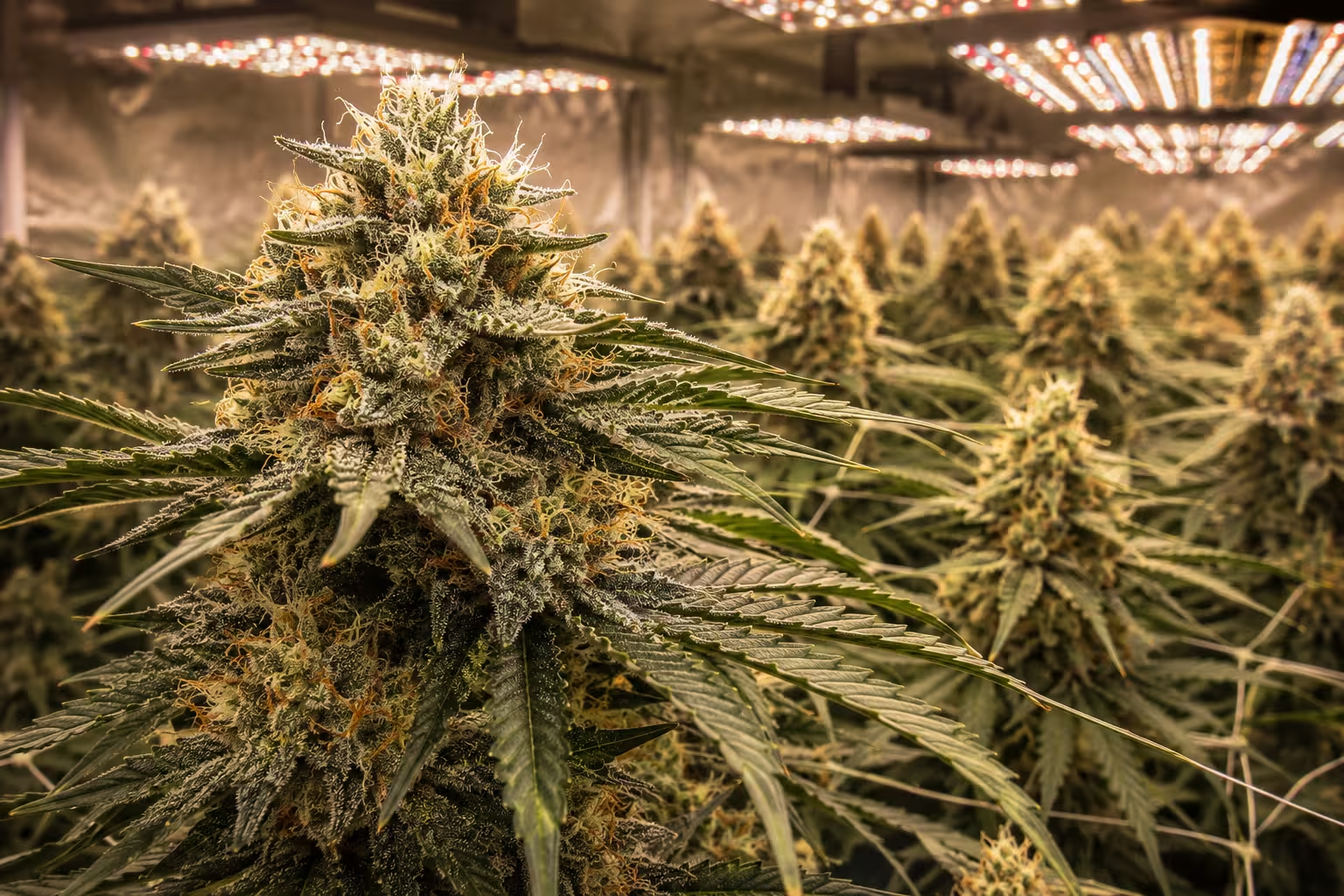
If you’ve ever rolled a joint, packed a bowl, or hit a vape and thought, “how exactly did this plant get from a tiny seed to what’s in my hand right now?” — you’re already thinking like a grower.
Marijuana doesn’t just happen. Behind every well-grown bud is a carefully managed biological process, a grower who understood their cultivar, dialed in their environment, and respected each phase of the plant’s life cycle. Whether you’re brand new to cannabis cultivation or you’re building out your first serious grow operation, understanding how marijuana is made from start to finish is the foundation everything else rests on.
This isn’t a surface-level overview. We’re going deep — through genetics, vegetative growth, the flowering stage, cannabinoid biosynthesis, harvest timing, drying, and curing — because that’s what separates mediocre cannabis from something truly worth growing.
What Does “Making” Marijuana Actually Mean?
Before we get into the weeds (pun intended), let’s be clear about what we mean when we say marijuana is “made.”
Cannabis is a flowering plant — Cannabis sativa L. — that produces psychoactive and medicinal compounds naturally as part of its reproductive biology. The plant isn’t manufactured in a lab. It’s cultivated. That means a grower’s job is to create the ideal conditions for the plant to express its full genetic potential.
The “making” of marijuana spans the entire cultivation lifecycle: selecting the right genetics, germinating seeds, nurturing vegetative growth, triggering and managing the flowering stage, and then — critically — harvesting, drying, and curing the final product. Each of these phases directly impacts potency, terpene profile, yield, and overall quality.
Growers who understand the biology behind each stage make smarter decisions. That’s what this guide is about.
Starting From Genetics — Seeds, Clones, and Strain Selection
This section establishes the foundation: before a single bud exists, the grower must make a genetic decision that determines everything downstream. We cover the difference between starting from seed vs. clone, feminized vs. autoflowering genetics, and how strain selection affects the entire production process.
Seeds vs. Clones — Which Starting Point Makes Sense?
The marijuana production process begins long before anything goes into soil. Your first major decision is whether you’re starting from seed or from a clone (a cutting taken from a mother plant).
Seeds offer genetic diversity and are often the only option for home growers without access to established clones. When you crack open a feminized seed from a reputable breeder, you’re working with genetics that have been selectively stabilized over multiple generations. The seedling stage — that first week or two after germination — is where the plant establishes its root system and prepares for rapid vegetative growth. During this phase, the cannabis plant is sensitive to overwatering, heat stress, and light intensity.
Clones, on the other hand, are genetically identical cuttings taken from a known mother plant. For commercial cannabis producers and experienced home growers, working with proven clone genetics eliminates the phenotype variability that comes with seeds. You know exactly what you’re getting: the same growth structure, cannabinoid profile, and flowering time every single run.
Neither approach is universally superior. Seeds give you flexibility and access to new genetics. Clones give you consistency and a head start, since a rooted clone is already weeks ahead of a seedling in terms of maturity.
Feminized, Autoflowering, and Regular Seeds — What Changes in Production?
Not all cannabis seeds behave the same way, and the type of seed you choose has a direct impact on how marijuana is produced in your space.
Feminized seeds are photoperiod plants — they require a change in the light cycle (typically from 18 hours to 12 hours of light per day) to trigger the flowering stage. This gives growers full control over when the plant begins producing buds. Most serious cultivators working indoors rely on feminized photoperiod genetics because they can spend as much time in the vegetative stage as needed before flipping to flower.
Autoflowering seeds contain Cannabis ruderalis genetics that allow them to flower automatically based on age rather than light cycle. This makes them appealing for beginners, outdoor growers, and anyone running multiple harvests per year. The trade-off is that autos have a compressed life cycle and typically produce smaller yields than photoperiod plants — though modern autoflower genetics have improved dramatically.
Regular seeds produce both male and female plants, requiring growers to identify and remove males before pollen sacs open. While most producers avoid regular seeds for commercial grows, breeders rely on them heavily for creating new cultivars and maintaining genetic diversity in the cannabis gene pool.
The Vegetative Stage — Building the Plant That Builds the Buds
This section covers what happens during the vegetative phase: how the cannabis plant develops its structure, root system, and canopy. We get into light requirements, nutrient needs during veg, and training techniques that directly influence final yield. The connection between a well-developed vegetative plant and exceptional bud production is made explicit.
What’s Happening Inside the Plant During Vegetative Growth?
During the vegetative stage, the cannabis plant is doing one thing with laser focus: building biomass. Every leaf, every internode, every lateral branch that develops right now is a future site for bud production. The plant is essentially constructing the scaffolding it’ll use to hang its flowers from.
At the cellular level, the plant is ramping up photosynthesis — converting light energy, carbon dioxide, and water into glucose that fuels cell division and growth. Chlorophyll production is in full swing, which is why healthy vegetative cannabis plants are a deep, vibrant green. Root development is equally critical during this phase; a robust rhizosphere means better nutrient uptake, better water retention, and a plant that can handle the heavier demands of the flowering stage.
From a nutrient standpoint, vegetative cannabis is hungry for nitrogen. Nitrogen is the primary building block for amino acids, proteins, and chlorophyll — everything the plant needs to grow fast and strong. A solid vegetative feeding program with a higher N ratio (something like a 3-1-2 NPK) keeps growth vigorous without burning roots or causing toxicity.
Training Techniques That Maximize What the Plant Produces
Here’s where cultivation stops being passive and becomes an active craft. How you train your cannabis plants during the vegetative stage has a direct, measurable impact on how much marijuana you ultimately harvest.
Low-Stress Training (LST) involves gently bending and tying branches to create a flat, even canopy. By spreading the plant horizontally rather than letting it grow vertically like a Christmas tree, you expose more bud sites to direct light. More light on more bud sites means more flower development. It’s that simple, and it costs nothing but time.
Screen of Green (ScrOG) takes LST further by weaving branches through a horizontal screen. As the canopy fills in, the grower tucks new growth under the screen to maintain an even plane. When the plant is flipped to flower, every point on that screen becomes a potential cola. ScrOG is one of the most efficient training methods for maximizing yield per square foot of canopy.
Topping and FIMing are high-stress training (HST) techniques that involve cutting the apical meristem — the main growing tip — to force the plant to redirect energy into multiple colas rather than one dominant central stem. Topping creates two main colas from one. FIMing (which stands for “F**k, I Missed” because it involves a partial cut) can generate four or more new growth tips from a single cut. Done early enough in the vegetative stage, these techniques dramatically increase bud site count without significantly extending the overall grow timeline.
Defoliation — strategically removing fan leaves to improve light penetration and airflow — is another vegetative technique advanced growers use to set up a cleaner, more productive canopy going into flower. It’s a nuanced practice; remove too many leaves too early and you rob the plant of its photosynthetic capacity. Done correctly, targeted defoliation during late veg can reduce the risk of mold during flowering and direct the plant’s energy more efficiently.
Triggering Flower — The Science Behind Bud Formation
This is the heart of the post. This section explains how the flowering stage is triggered in cannabis, what’s happening biologically when buds begin to form, and how the interplay of light, hormones, and plant maturity drives the production of cannabinoids and terpenes. This is where readers understand the real science of how marijuana is made.
How Light Cycles Trigger the Flowering Response
Cannabis is a short-day plant. In nature, the shortening of daylight hours as summer transitions to fall signals to the plant that winter is approaching — and that it’s time to reproduce. For a female cannabis plant, reproduction means producing flowers loaded with resin-rich trichomes designed to trap pollen. For growers, it means buds.
Indoors, this biological signal is replicated by switching the light cycle from 18 hours of light / 6 hours of dark (vegetative) to 12 hours of light / 12 hours of dark (flower). This is called “flipping” the plant. Within days of the flip, most cultivars begin showing the first signs of flowering: pre-flowers appear at the nodes, and the apical growth slows as the plant shifts its energy from leaf production to bud development.
The critical factor here isn’t actually the length of the light period — it’s the length of the uninterrupted dark period. Phytochrome Pfr, a light-sensitive pigment in the plant, is the biological switch that controls this response. During the dark cycle, Pfr slowly converts to its inactive form (Pr), and if the dark period is long enough — typically 12 hours or more — the plant gets the signal to flower. Even a brief light interruption during this dark period can reset the clock and delay or disrupt flowering. This is why light leaks in grow rooms are such a serious problem for photoperiod growers.
Cannabinoid and Terpene Biosynthesis — How the Plant Makes THC, CBD, and More
Here’s the chemistry that makes cannabis what it is. Understanding how the plant synthesizes cannabinoids doesn’t just satisfy curiosity — it directly informs how growers can influence the final chemical profile of their harvest.
Cannabinoids are produced in the trichomes — the glandular hair-like structures that coat the buds and surrounding leaves of a mature cannabis plant. Under magnification, they look like tiny mushrooms: a stalk topped by a bulbous gland head. That gland head is a cannabinoid factory.
The biosynthetic pathway starts with geranyl pyrophosphate (GPP) and olivetolic acid combining to form CBGA — cannabigerolic acid. CBGA is the “mother cannabinoid,” the precursor from which all other major cannabinoids are derived. Specific enzymes in the plant then convert CBGA into:
- THCA (tetrahydrocannabinolic acid) — the acidic precursor to THC
- CBDA (cannabidiolic acid) — the precursor to CBD
- CBCA (cannabichromenic acid) — the precursor to CBC
None of these acidic forms are psychoactive in their raw state. They become the cannabinoids we know — THC, CBD, CBC — through decarboxylation, a process that removes the carboxyl group from the molecule. Decarboxylation happens naturally through heat (smoking, vaping) or through deliberate heating (making edibles). This is why raw cannabis doesn’t get you high.
Terpenes — the aromatic compounds responsible for the smell and taste of different cultivars — are also synthesized in the trichomes, produced via the methylerythritol phosphate (MEP) pathway and the mevalonate pathway. These aren’t just flavor molecules; research increasingly suggests that terpenes modulate the effects of cannabinoids through what’s commonly called the entourage effect — the synergistic interaction between cannabinoids and terpenes that produces the nuanced, cultivar-specific experiences cannabis is known for.
Environmental Factors That Drive Trichome Production
If you want to understand how to make better marijuana, you need to understand what triggers the plant to produce more trichomes. Trichome density and cannabinoid concentration aren’t fixed genetic traits — they’re the plant’s response to environmental stress.
In nature, trichomes evolved as a defense mechanism. UV radiation, insect pressure, heat, and desiccation all trigger the plant to produce more resin as protection. Indoor growers can leverage this biology deliberately:
Light intensity and spectrum play a massive role. Higher light intensity (measured in PPFD — photosynthetic photon flux density) during flowering drives greater photosynthetic activity and, consequently, more energy available for cannabinoid synthesis. UVB light specifically has been shown to increase THCA production — some advanced growers add UVB supplementation during the final weeks of flower specifically for this reason.
Temperature and humidity during late flowering also matter enormously. Dropping temperatures slightly in the final two to three weeks (from around 77°F to 68–72°F) can enhance terpene production and trichome development. Maintaining vapor pressure deficit (VPD) in an appropriate range — typically 1.2 to 1.5 kPa in mid-flower — keeps the plant’s transpiration and nutrient uptake functioning optimally without creating conditions favorable for powdery mildew or botrytis.
Slight water stress in the final days before harvest is a technique some experienced growers use to trigger a last-minute trichome surge, though this is a double-edged sword that requires careful calibration.
The Flowering Stage Week by Week — What’s Actually Happening
This section walks through the full flowering period with week-by-week context, helping readers understand how bud development progresses from early pistil formation through peak ripeness. This gives practical context to the biology covered in the previous section.
Early Flower (Weeks 1–3) — Stretch, Pistils, and Site Formation
The first two to three weeks after flipping a photoperiod plant are sometimes called the “flower stretch.” The plant hasn’t fully committed to bud production yet — it’s still growing rapidly, often doubling or even tripling in height during this window. This is why experienced growers flip their plants when they’re roughly half the intended final height; the stretch will take care of the rest.
Pistils — the white hair-like structures that are the early external signs of female flower sites — begin appearing at the nodes within days of the flip. These are the plant’s unfertilized reproductive structures. In a sensimilla grow (the standard approach for potency-focused cultivation), these pistils never receive pollen and remain unfertilized, causing the plant to continue producing and expanding its flower clusters — what we call calyxes — in an ongoing attempt to attract pollen.
Mid Flower (Weeks 3–6) — Rapid Bud Development and Resin Buildup
By weeks three through six, the stretch has slowed and the plant is fully committed to flower production. This is the period of most rapid bud development. Calyxes stack on top of each other, forming the dense structures we recognize as buds. Trichome production accelerates visibly — by week five or six on most cultivars, the buds and surrounding sugar leaves have a noticeably frosty appearance under good lighting.
Nutrient needs shift significantly during this phase. Nitrogen demand drops, while phosphorus and potassium requirements increase. Phosphorus supports energy transfer within the plant and is critical for flower development; potassium plays a key role in regulating stomata (the pores through which the plant breathes) and supporting overall plant health under the stress of heavy bud production. Most cannabis-specific nutrient lines are designed with this P-K transition in mind.
This is also the phase where environmental management becomes most critical. High humidity combined with dense bud structure creates ideal conditions for botrytis (gray mold), one of the most devastating pathogens in cannabis cultivation. Maintaining good airflow, dialing in VPD, and avoiding standing water on leaves or buds during this window is non-negotiable for quality production.
Late Flower and Ripening (Weeks 6–10+) — Reading Trichomes and Timing Harvest
The final weeks of the flowering stage are where patience separates good growers from great ones. This is the ripening phase — the period during which cannabinoid concentrations peak, terpene profiles mature, and the plant signals through multiple visible markers that it’s approaching harvest readiness.
Trichome color is the gold standard for harvest timing. Using a jeweler’s loupe (30–60x) or a digital microscope, experienced growers monitor trichome heads as they transition through three stages: clear (still developing, THC not yet at peak), cloudy/milky white (THC is at maximum concentration, effect tends toward a more energetic high), and amber (THC is beginning to degrade into CBN, producing a more sedative effect). Most cultivators harvest when trichomes are a mix of mostly cloudy with 10–30% amber, depending on the desired effect profile.
Pistil color offers a secondary indicator — as harvest approaches, the white pistils darken to orange, red, or brown. A rough rule of thumb: when 70–90% of pistils have changed color, you’re likely in the harvest window. Pistil color alone is less reliable than trichome inspection, but it’s a quick, no-magnification check that’s useful for tracking overall maturity.
Many cultivars also show subtle signs of nitrogen deficiency in late flower — a natural “fade” as the plant pulls nitrogen out of fan leaves and redirects it to bud production. This light yellowing of fan leaves in the final weeks is normal and even desirable; it indicates the plant is finishing properly.
Harvest, Drying, and Curing — Where Marijuana Is Actually “Made” for the Consumer
This final production section covers the post-harvest process that determines the final quality, potency, and shelf life of the product. Most casual readers don’t realize how much of the final experience is shaped by what happens after the plant is cut. This section gives that process its due weight.
Harvesting Cannabis — Technique and Timing
Harvest day is one of the most consequential decisions in the entire production process. Cut too early and you leave cannabinoid potential on the table. Cut too late and THC has degraded, terpenes have volatilized, and the subtlety of the cultivar’s flavor profile is diminished.
Most growers time harvest for early morning, before lights come on, when terpene concentrations in the plant tissue are at their peak (terpenes are volatile and can off-gas under heat and light). The plant is cut at the base, large fan leaves are removed, and the plant is hung whole or broken into branches for the drying phase.
Some growers stop watering one to three days before harvest to allow the growing medium to dry out slightly — this can make the drying process begin more evenly through the plant. Others practice a “dark period” of 24–72 hours before harvest, believing it boosts trichome production for a final surge. The science on the dark period technique is not conclusive, but it’s widely used in craft cultivation circles.
The Drying Process — Slow and Controlled Is Always Better
Drying is not just about removing water. It’s a biochemical continuation of the curing process that’s already beginning inside the harvested plant material.
The goal during drying is a slow, controlled reduction in moisture content from roughly 75–80% (freshly harvested) to around 10–15%. The standard approach is to hang whole branches or plants in a dark room with temperatures between 60–70°F (15–21°C) and relative humidity between 45–60%. Airflow should be gentle and indirect — a fan pointed directly at drying buds speeds moisture loss too quickly, causing the outside to dry while the inside remains wet, resulting in uneven drying and harsher smoke.
Optimal drying takes 7–14 days, sometimes longer for dense, large-format buds. The classic readiness test: the smaller stems should snap rather than bend. If they still fold without breaking, more time is needed.
Why slow drying matters: During this phase, chlorophyll continues to break down (which reduces harshness), and enzymatic processes continue to convert cannabinoid acids. Rushing this process with excessive heat or low humidity produces a harsher, grassier-tasting product with diminished aroma and a less refined smoke or vapor experience.
Curing Cannabis — The Process That Elevates Good Weed to Great Weed
Curing is the step that most casual observers — and unfortunately, many commercial producers chasing speed — skip or shortcut. It’s also the step that most distinguishes craft cannabis from mass-market product.
After drying, buds are trimmed (if not already wet-trimmed at harvest) and placed into airtight glass jars — wide-mouth mason jars are the grower’s classic choice — at a target moisture content of around 60–65% relative humidity, monitored with small Boveda or Integra Boost packs placed inside the jars. Hygrometers inside the jars let growers track RH in real time.
For the first one to two weeks of curing, jars are “burped” — opened briefly once or twice daily to exchange oxygen and allow excess moisture to escape. This prevents anaerobic conditions that can lead to mold while also allowing continued enzymatic breakdown of chlorophyll and other compounds that contribute to harshness. After the initial two weeks, burping frequency drops, and the buds are left to cure undisturbed.
What’s happening chemically during cure: Enzymes within the plant material continue breaking down starches into sugars, chlorophyll into other compounds, and converting some remaining cannabinoid acids. Terpenes, sealed inside the jar with the buds, are preserved and allowed to mature. The result, after four to eight weeks of proper curing, is a product that burns cleaner, tastes more complex, hits smoother, and lasts longer in storage than the same buds would uncured.
A four-week cure is the minimum for respectable results. Eight weeks is where the real magic happens. Some specialty cultivars benefit from three to six months of extended curing, developing flavor complexity comparable to aged wine.
From Flower to Final Product — What Happens Beyond the Bud
This section briefly addresses what happens when the finished, cured cannabis flower is further processed — into concentrates, edibles, topicals, and other products — connecting the cultivation process to the broader cannabis product landscape. It plants semantic entities around extraction, processing, and product formats.
Cannabis Extraction — Concentrates and Their Connection to the Grow
The quality of a cannabis concentrate is directly tied to the quality of the flower it was made from. This is true whether you’re talking about hydrocarbon extracts like BHO (butane hash oil), solventless products like rosin or ice water hash, or CO2 extracts used in vape cartridges.
Solventless extraction — particularly ice water hash (bubble hash) and rosin pressing — has surged in popularity among craft producers because it requires no chemical solvents and preserves the full terpene profile of the starting material more faithfully than most solvent-based methods. The best bubble hash and live rosin products start with fresh-frozen flower — plants that are harvested and immediately frozen to preserve trichome integrity and terpene content before any degradation can occur.
For solvent-based extraction, the same principle applies: higher-quality starting material yields higher-quality extract. Trim runs — using leftover plant material rather than whole flower — produce lower-quality extracts that require additional refinement, while premium whole-flower inputs produce extracts that can rival or exceed the experience of smoking the flower itself.
Edibles, Tinctures, and Topicals — How Cultivation Choices Carry Forward
When cannabis is infused into food products, tinctures, or topicals, the cannabinoid and terpene profile of the starting material determines the character of the final product. This is why understanding how marijuana is made at the cultivation level matters even if you’re primarily interested in processed cannabis products.
Decarboxylated cannabis flower — heated to convert THCA to THC — is the foundation of most edible and tincture production. The potency of an edible directly reflects the THC concentration of the flower used to make it. A cultivar that consistently produces 25% THC will yield a more potent infusion than one averaging 15%, all else being equal.
Terpene-rich extracts are increasingly being incorporated back into processed products that were stripped of terpenes during extraction — a process sometimes called “terp re-introduction” or “terpene reinfusion.” Understanding that terpenes come from the same trichomes that produce cannabinoids, and that cultivation practices like environmental control, genetics selection, and proper curing directly impact terpene preservation, gives growers and consumers a more complete picture of the plant-to-product journey.
Conclusion: Making Marijuana Is Really Growing a Living System
Marijuana isn’t manufactured. It’s cultivated, coaxed, and crafted — and every decision a grower makes, from the first seed they crack to the jar they seal at the end of curing, shapes what ends up in the consumer’s hands.
The full production process spans genetics, plant biology, environmental science, chemistry, and post-harvest craft. Understanding that process — really understanding it, not just following a checklist — is what separates growers who produce consistently exceptional cannabis from those who occasionally get lucky.
If you’re building toward advanced cannabis cultivation techniques, treat this foundational knowledge as your bedrock. Every advanced strategy — dialing in VPD, manipulating light spectra, optimizing terpene preservation, selecting elite genetics — makes more sense when you understand the biology it’s built on.
Grow with intention. The plant rewards it.
